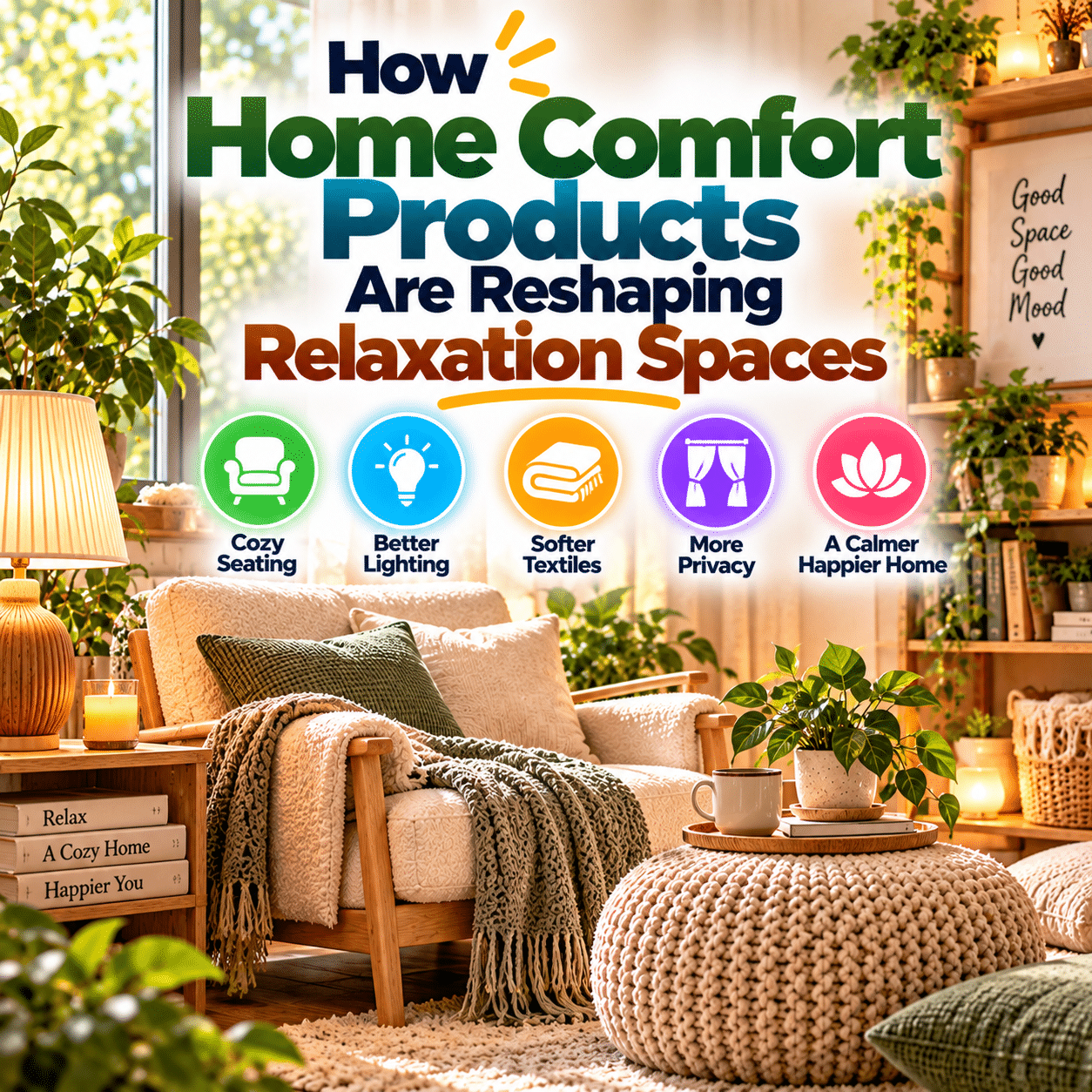
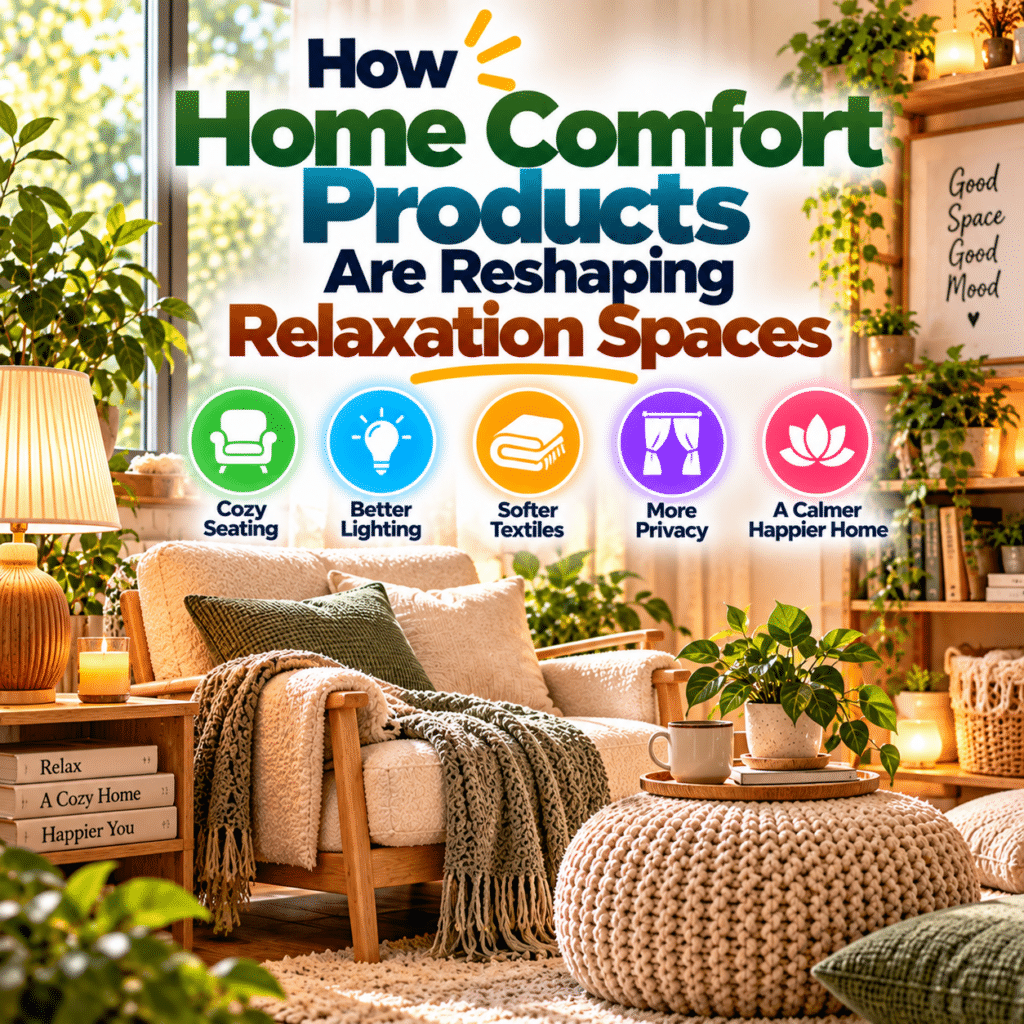
A relaxing home does not necessarily require a separate room, expensive furniture, or an elaborate interior design project.
Sometimes, a comfortable chair beside a window is enough to create a pleasant reading corner. A softer lamp can make an evening routine more inviting. Suitable curtains may reduce unwanted glare, while a washable throw blanket can add warmth and comfort to an ordinary sofa.
These everyday details help explain the lasting appeal of home comfort products.
Rather than focusing only on decoration, home comfort products address how a space feels and functions during ordinary activities.
They can influence seating comfort, lighting, temperature, privacy, noise, organization, and the ease of moving between different household routines.
As living spaces serve multiple purposes, the ability to create a comfortable environment without major renovations becomes increasingly useful.
However, more products do not automatically create a better relaxation space.
An oversized chair may crowd a small room. Decorative lighting may provide insufficient illumination for reading. A scented product may be unpleasant for someone with fragrance sensitivities.
The most successful relaxation spaces begin with the people who use them.
Understanding how home comfort products are reshaping relaxation spaces means looking beyond appearance and considering comfort, function, maintenance, safety, and long-term value.
1. What Are Home Comfort Products?
Home comfort products are items that help make indoor spaces more comfortable, convenient, or suitable for everyday activities.
Some provide direct physical comfort. Others help manage environmental conditions or improve how a room is used.
Common examples include:
- Cushions and supportive pillows.
- Throws, blankets, and comfortable textiles.
- Reading chairs and adjustable seating.
- Floor rugs and soft furnishings.
- Table lamps and adjustable lighting.
- Curtains, blinds, and window shades.
- Fans and suitable temperature-control accessories.
- Room thermometers and humidity monitors.
- Storage baskets and organizers.
- Acoustic furnishings and noise-management accessories.
- Footrests, side tables, and other convenience products.
A home comfort product does not have to be specialized or technologically advanced.
A well-positioned lamp or appropriately sized cushion can be more useful than a complicated device.
The important question is whether the product improves a genuine aspect of daily living.
2. Why Relaxation Spaces Are Becoming More Functional
A relaxation space is any part of a home used for activities that feel restful, comfortable, or enjoyable.
It might be a living room, bedroom corner, balcony seating area, or quiet spot beside a bookshelf.
Homes Support Multiple Activities
A living room may accommodate conversation, reading, entertainment, hobbies, and occasional work.
Comfort Needs Change Throughout the Day
Bright lighting may be useful during cleaning, while softer illumination may suit a quiet evening.
Personal Preferences Differ
Some people prefer supportive seating and structured surroundings.
Others enjoy floor cushions, blankets, or a more informal arrangement.
Space Is Often Limited
Many households cannot dedicate an entire room to relaxation.
Flexibility Has Practical Value
Movable lamps, compact tables, and portable textiles allow spaces to adapt without major changes.
Maintenance Matters
A space that is difficult to clean or organize may become less pleasant to use.
The goal is not to create a picture-perfect interior.
It is to make ordinary moments at home more comfortable.
3. Comfort Begins With Understanding the Activity
Before choosing products, identify how the relaxation space will actually be used.
A reading corner has different requirements from a place for watching movies or practicing gentle stretching.
Reading
Comfortable seating, suitable lighting, and convenient book storage are priorities.
Watching Movies
Viewing angles, seating arrangements, and light control may matter most.
Listening to Music
Seating comfort, speaker placement, and control over background noise may be important.
Quiet Reflection
A simple chair, soft lighting, and minimal distractions may be sufficient.
Stretching or Gentle Movement
Clear floor space and an appropriate surface can be more important than decorative furniture.
Socializing
Flexible seating and accessible surfaces for drinks or books can support conversation.
Resting
Temperature, privacy, and the ability to recline comfortably may be priorities.
Defining the activity first helps prevent unnecessary purchases.
4. Comfortable Seating Is the Foundation of Many Relaxation Spaces
Seating often has the greatest influence on how a relaxation area functions.
A chair or sofa should suit the person using it and the activities performed there.
Seat Height
A suitable height can make sitting down and standing up more comfortable.
Seat Depth
Deep seating may encourage lounging, while shallower seating may be preferable for more upright activities.
Back Support
Backrest shape and firmness influence comfort.
Armrests
Armrests may support relaxed sitting and make getting up easier for some users.
Upholstery
Fabric texture, breathability, and cleaning requirements affect daily satisfaction.
Reclining Features
Adjustable backrests or footrests may offer additional flexibility.
Room Proportions
Furniture should leave sufficient space for walking and other activities.
Try Seating When Possible
Comfort is individual.
An attractive chair may not be suitable for a particular body size or preferred sitting position.
Good seating should support the intended activity without dominating the room.
5. Cushions and Pillows Add Flexible Support
Cushions are among the easiest products to introduce into an existing relaxation space.
They can change how a chair, sofa, or bench feels without replacing the furniture.
Back Cushions
A suitable cushion may help fill an uncomfortable gap between the back and the seat.
Lumbar Cushions
Some people find additional lower-back support comfortable.
Neck Pillows
Certain designs may provide support during specific resting positions.
Seat Cushions
A cushion can alter seat firmness or height.
Decorative Cushions
These may add visual warmth, although their usefulness depends on size and placement.
Removable Covers
Washable covers can make routine care easier.
Avoid Excessive Cushioning
Too many pillows may reduce usable seating space or create awkward positioning.
The best cushion is one that solves a comfort problem rather than simply adding another decorative layer.
6. Throws and Blankets Make Spaces More Adaptable
Throws and blankets can provide warmth and tactile comfort.
They are especially useful because they can be moved between rooms and stored when unnecessary.
Material Choices
Cotton, wool, fleece, and other textiles have different textures, weights, and care requirements.
Seasonal Suitability
A lightweight throw may suit warmer conditions, while a heavier blanket may be preferred in cooler environments.
Texture Preferences
Some users enjoy plush materials; others prefer smoother fabrics.
Easy Maintenance
A washable blanket may be more practical for frequently used seating.
Size and Coverage
Choose dimensions appropriate for the intended use.
Storage
A basket or shelf can keep blankets accessible without leaving them scattered.
Safety
Heated blankets require particular attention to manufacturer instructions, condition, and appropriate use.
A simple throw can make an existing chair or sofa more inviting without requiring a major redesign.
7. Lighting Changes How a Relaxation Space Functions
Lighting influences visibility, atmosphere, and how comfortably different activities can be performed.
A single overhead fixture may not meet every need.
Ambient Lighting
General lighting allows people to move safely through the room.
Task Lighting
Reading lamps provide more focused illumination for activities that require clear visibility.
Accent Lighting
Small lamps or indirect lighting can add visual interest.
Adjustable Brightness
Dimmable fixtures may allow a space to serve different activities.
Color Appearance
Different light sources can create different visual impressions.
Preferences depend on the activity and surrounding materials.
Glare Control
Poorly positioned lamps can produce uncomfortable reflections or direct glare.
Practical Controls
Accessible switches and simple controls make lighting easier to use.
Electrical Safety
Use fixtures and bulbs according to their ratings and instructions.
A relaxing room still needs sufficient light for safe movement and appropriate tasks.
8. Curtains and Window Coverings Support Privacy and Light Control
Window coverings are both decorative and functional.
They can help control daylight, privacy, glare, and some aspects of thermal comfort.
Light-Filtering Curtains
These allow some daylight to enter while softening its intensity.
Room-Darkening Curtains
They may reduce unwanted light for activities such as watching movies or resting.
Blackout Options
Products marketed as blackout vary in performance, installation, and light leakage.
Blinds and Shades
Adjustable coverings can provide more precise control over light and privacy.
Thermal Considerations
Some window coverings can help manage heat gain or heat loss, depending on design, fit, climate, and use.
Easy Operation
Controls should be accessible and manageable.
Child Safety
Corded window coverings can present strangulation hazards. Cordless or otherwise appropriately designed options should be prioritized where children may be present.
The right window treatment depends on how the room is used throughout the day.
9. Temperature Comfort Is More Than a Thermostat Setting
People experience temperature differently.
Clothing, activity, air movement, humidity, sunlight, and individual preferences can all influence comfort.
Fans
A fan can increase air movement and may improve perceived comfort in suitable conditions.
Window Shades
Shading can help reduce unwanted solar heat gain.
Blankets and Throws
Additional layers provide flexible warmth without changing the entire room’s temperature.
Thermometers
A basic thermometer can help users understand indoor conditions.
Air Conditioning and Heating
Appropriate climate-control systems may help maintain comfortable temperatures.
Draft Management
Unwanted air leakage around doors or windows can contribute to discomfort.
Avoid Universal Temperature Claims
There is no single temperature that feels ideal to every person in every situation.
Temperature comfort is best managed through a combination of environmental controls and personal preferences.
10. Humidity and Indoor Air Quality Affect Comfort
A room can look attractive while still feeling damp, stuffy, or unpleasant.
Indoor air conditions deserve attention when planning a relaxation space.
Humidity Monitoring
A hygrometer can provide an estimate of indoor relative humidity.
Excess Moisture
Persistently damp conditions can contribute to mold growth and other problems.
Ventilation
Appropriate ventilation can help reduce certain indoor pollutants and moisture.
Air Cleaning
Portable air cleaners may help with some airborne particles when appropriately selected and maintained.
They do not address every pollutant or replace source control and adequate ventilation.
Humidifiers
Humidifiers may be useful in certain dry environments but require careful cleaning and monitoring.
Dehumidifiers
A dehumidifier may help manage excess moisture in suitable situations.
Address the Cause
A device should not be used to conceal leaks, persistent dampness, or other building problems.
A comfortable relaxation space depends on healthy environmental conditions, not merely pleasant decoration.
11. Noise Management Can Make a Space Feel Calmer
Sound is another important part of indoor comfort.
Traffic, household appliances, conversations, and electronic notifications can interrupt quiet activities.
Soft Furnishings
Rugs, curtains, and upholstered furniture can influence sound reflections within a room.
Door and Window Seals
Appropriate sealing may reduce some unwanted sound transmission and drafts.
Furniture Arrangement
Bookshelves and other furnishings may alter how sound behaves inside a space.
White-Noise Devices
Some people find steady background sounds useful for masking intermittent noise.
Others prefer silence.
Headphones
Suitable headphones may help with personal listening, although volume and duration matter.
Notification Management
Silencing unnecessary alerts can reduce interruptions without buying anything.
Know the Limits
Decorative acoustic panels and soft furnishings do not necessarily provide meaningful soundproofing against outside noise.
A quieter space often begins with identifying the actual source of disturbance.
12. Rugs and Soft Textiles Add More Than Visual Warmth
Rugs influence how a room looks, feels, and functions.
Surface Comfort
A rug may provide a softer surface for bare feet or certain seated activities.
Visual Definition
A rug can help establish a relaxation area within a larger room.
Acoustic Effects
Soft floor coverings may reduce some sound reflections.
Texture
Pile height and fiber type influence the feel underfoot.
Maintenance
Some rugs require more frequent cleaning than others.
Allergies and Sensitivities
Material and cleaning needs should be considered individually.
Slip Prevention
Appropriate backing or rug pads can help reduce movement on smooth floors.
Accessibility
Thick rugs or raised edges may create tripping difficulties for some users.
Choose rugs for the actual household, not solely for appearance.
13. Small Tables and Organizers Make Relaxation Easier
Convenience contributes to comfort.
A relaxation area is easier to use when essential items have a sensible place.
Side Tables
A small table can hold a book, water bottle, or lamp.
Storage Baskets
Baskets may keep blankets or accessories nearby.
Remote-Control Organizers
A simple organizer can reduce clutter around seating.
Book Storage
A compact shelf or magazine holder may support reading routines.
Charging Access
A conveniently located outlet or properly rated charging accessory can reduce awkward cable arrangements.
Clear Walkways
Storage should not obstruct movement through the room.
Avoid Over-Organization
Too many containers can create visual and physical clutter.
The best organizational products make daily activities easier without becoming another maintenance task.
14. Flexible Furniture Helps Small Relaxation Spaces Work Harder
Not every home has room for a dedicated lounge.
Multifunctional furniture can help one area serve several purposes.
Storage Ottomans
An ottoman may provide seating, foot support, or storage when designed for those uses.
Nesting Tables
These can offer temporary surface space and be stored compactly.
Foldable Seating
Suitable folding furniture may accommodate occasional guests.
Modular Sofas
Some designs can be rearranged as household needs change.
Movable Floor Cushions
Portable cushions may support informal seating where appropriate.
Convertible Furniture
Certain products serve multiple functions, but mechanisms and safety requirements should be evaluated carefully.
Avoid Overloading Features
A complicated product may be less comfortable or durable than a simpler alternative.
Flexibility is useful when it supports genuine needs rather than adding unnecessary features.
15. Creating a Relaxation Corner in a Small Home
A dedicated relaxation corner can often be created with existing furniture.
Step 1: Choose an Underused Area
Look for a space beside a window, bookshelf, or quiet wall.
Step 2: Identify the Main Activity
Decide whether the area is primarily for reading, resting, or another purpose.
Step 3: Select Appropriate Seating
Use a chair or cushion that fits the activity and available space.
Step 4: Improve Lighting
Add or reposition a lamp if necessary.
Step 5: Consider Privacy
Curtains or a thoughtful furniture arrangement may reduce distractions.
Step 6: Add One Useful Surface
A compact table can keep essentials accessible.
Step 7: Include Comfortable Textiles
A suitable cushion or throw may be enough.
Step 8: Keep the Area Uncluttered
Avoid filling the corner with decorations that reduce usable space.
Step 9: Test the Setup
Use the space for several days and observe what feels comfortable.
Step 10: Adjust Gradually
Make small changes before purchasing additional products.
A successful relaxation corner can be simple, compact, and affordable.
16. How Relaxation Spaces Differ From Decorative Displays
A visually appealing space is not necessarily comfortable to use.
This distinction matters when evaluating home comfort products.
| Consideration | Function-First Relaxation Space | Decoration-First Display |
|---|---|---|
| Main priority | Comfort and everyday usability | Visual appearance |
| Seating | Selected for fit and activity | May be selected mainly for style |
| Lighting | Supports actual tasks and preferences | May emphasize atmosphere alone |
| Storage | Keeps useful items accessible | May prioritize visual arrangements |
| Textiles | Chosen for feel, care, and suitability | May be chosen mainly for color |
| Maintenance | Fits household routines | May require extra upkeep |
| Success measure | The space is used comfortably | The space looks appealing |
A room can be both beautiful and functional.
The important point is that visual styling should support, not replace, practical comfort.
17. Choosing Home Comfort Products for Different Household Needs
No single relaxation setup works for every household.
People Who Read Frequently
Supportive seating and adjustable task lighting may be especially useful.
Households With Children
Durable, easy-clean materials and secure furniture arrangements can be priorities.
Pet Owners
Washable textiles and suitable upholstery may simplify maintenance.
Older Adults
Stable seating, accessible controls, clear pathways, and appropriate lighting may be important.
Shared Homes
Flexible layouts can accommodate different preferences.
Small Apartments
Compact, portable, or multifunctional products may be useful.
Warm or Humid Climates
Breathable textiles, shading, and moisture management may matter more than heavy layering.
Cooler Environments
Insulating window coverings and suitable blankets may provide additional comfort.
The best products reflect actual household circumstances rather than a universal design formula.
18. Common Mistakes When Designing Relaxation Spaces
Several choices can make a room less comfortable despite good intentions.
Buying Oversized Furniture
Large pieces can reduce walking space and make a room feel crowded.
Using Only Decorative Lighting
Atmospheric lamps may not provide sufficient illumination for reading or other tasks.
Adding Too Many Cushions
Excessive pillows can reduce usable seating space.
Ignoring Temperature and Ventilation
A beautiful room may still feel uncomfortable if environmental conditions are poor.
Relying on Strong Fragrances
Scented products can be unpleasant or irritating for some people.
Choosing Difficult-to-Clean Materials
High-maintenance textiles may not suit everyday use.
Overlooking Electrical Safety
Improperly arranged cords, overloaded outlets, and unsuitable heating devices can create hazards.
Blocking Walkways
Furniture and storage should not obstruct exits or normal movement.
Following a Trend Instead of a Need
A fashionable product may add little practical value.
Assuming More Products Mean More Comfort
Sometimes removing clutter improves a space more than adding new accessories.
The goal is to reduce friction in daily life, not create a showroom.
19. How to Buy Home Comfort Products Wisely
A thoughtful purchasing process can help avoid unnecessary expenses.
Step 1: Identify the Discomfort
Is the problem inadequate lighting, unsuitable seating, excess glare, noise, or temperature?
Step 2: Review What You Already Own
Rearranging furniture or using an existing lamp may solve the issue.
Step 3: Measure the Space
Check product dimensions and available clearances.
Step 4: Prioritize Everyday Function
Choose features that address the intended activity.
Step 5: Consider Material Care
Evaluate cleaning instructions, durability, and replacement requirements.
Step 6: Review Safety
Check stability, electrical ratings, heat-related warnings, and other relevant instructions.
Step 7: Compare Alternatives
A simple product may meet the need as well as a more elaborate one.
Step 8: Consider Energy Use
For powered products, assess operating requirements and expected frequency of use.
Step 9: Think About Long-Term Flexibility
Portable or adjustable products may remain useful as rooms change.
Step 10: Evaluate the Result
The purchase should make the space more comfortable or convenient in practice.
Long-term value depends on actual use rather than appearance alone.
20. The Future of Home Comfort Products
Home comfort products are likely to remain relevant because people will continue seeking spaces that support rest, convenience, and everyday activities.
Several design priorities may shape future products.
More Adjustable Features
Lighting, furniture, and environmental controls may become easier to customize.
Better Small-Space Solutions
Compact and multifunctional designs can help households use limited space more effectively.
Greater Attention to Accessibility
Simple controls and adaptable furniture may support a wider range of users.
More Practical Materials
Durable, easy-care fabrics and finishes can make products better suited to daily life.
Thoughtful Technology
Smart features may be useful when they simplify routines rather than introduce complexity.
Improved Energy Awareness
Efficient lighting and appropriate temperature-management solutions can support responsible household operation.
Repairability and Durability
Products that remain useful for years may offer better long-term value.
Greater Emphasis on Personal Comfort
Designs may increasingly accommodate different preferences instead of promoting one universal relaxation style.
The most meaningful change is not that relaxation spaces are becoming more elaborate.
It is that everyday products can help people create comfortable environments around the activities they genuinely enjoy.
Frequently Asked Questions
What are home comfort products?
Home comfort products are items that improve the comfort or usability of living spaces. Examples include supportive cushions, throws, adjustable lamps, curtains, rugs, comfortable seating, and temperature-control accessories.
How can I make a small room more relaxing?
Start with comfortable seating, suitable lighting, clear walkways, and minimal clutter. Compact furniture and a few useful textiles may be enough.
What products are most useful for a reading corner?
A comfortable chair, adjustable reading lamp, small side table, and suitable cushion or throw are practical starting points.
Do blackout curtains make a room more comfortable?
They can help reduce unwanted light and may be useful for rest or screen viewing. Performance depends on the product and installation.
Are scented candles necessary for relaxation?
No. Fragrance is optional, and some people are sensitive to scented products. Comfortable lighting, seating, and a quiet environment can be achieved without fragrance.
Can home comfort products improve sleep?
Some products can help create a more comfortable sleep environment, but they do not guarantee better sleep or treat sleep disorders.
How do I avoid overspending on relaxation accessories?
Identify the specific comfort problem first, use existing products where possible, and buy only items that improve the intended activity.
Conclusion: Relaxation Spaces Should Work for Everyday Life
Home comfort products are reshaping relaxation spaces by making them more functional, flexible, and responsive to personal needs.
Comfortable seating, supportive cushions, soft textiles, adjustable lighting, window coverings, and practical organizers can help ordinary rooms accommodate restful activities.
Yet the value of these products depends on more than their appearance.
A well-designed relaxation space should be comfortable to use, easy to maintain, appropriately safe, and suited to the people who live there.
That may mean choosing one supportive chair instead of a large furniture collection, improving lighting before buying decorations, or rearranging existing items rather than purchasing new ones.
The most inviting spaces are often those that feel natural to use.
A truly comfortable home is not defined by how many relaxation products it contains, but by how well its spaces support the everyday moments that matter.