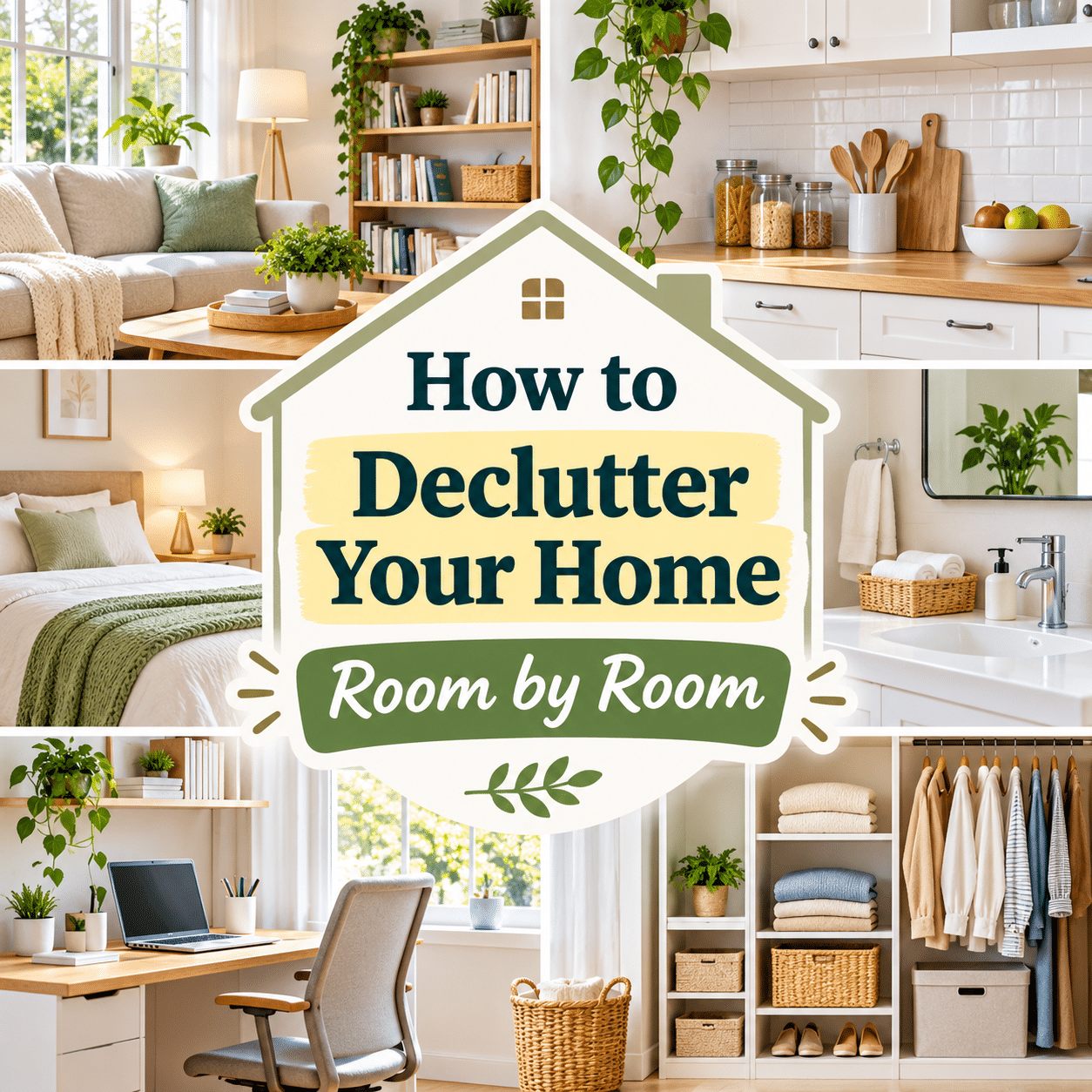
A clutter-free home is not necessarily a home with empty shelves, perfectly arranged furniture, or very few possessions. It is a living space where everyday belongings have a purpose, frequently used items are easy to find, and each room supports the activities that take place there.
Over time, even well-organized homes can accumulate unnecessary objects. Clothing that no longer fits, duplicate kitchen tools, forgotten paperwork, unused decorations, and miscellaneous household supplies gradually occupy valuable space. Because these items often arrive individually, their combined impact may go unnoticed until storage areas become crowded and daily routines feel more complicated.
Decluttering offers an opportunity to reconsider what deserves space in your home. Rather than simply moving belongings into different containers, the process involves identifying what you use, what you value, what you need to keep, and what can reasonably leave your household.
A room-by-room approach makes this process more manageable. Instead of attempting to organize an entire home in one exhausting weekend, you can concentrate on one area, make thoughtful decisions, and establish practical systems before moving elsewhere.
Whether you live in a compact apartment, a family home, or a shared living space, the following guide provides a structured approach to decluttering every major room while creating organization habits that are easier to maintain.
1. Understand What Decluttering Really Means
Decluttering is the process of evaluating belongings and reducing items that no longer serve a useful, meaningful, or necessary purpose.
It differs from cleaning, which removes dirt and dust, and organizing, which arranges belongings within an existing space.
These activities complement one another, but their order matters.
For example, purchasing storage containers before evaluating what you own may simply create a more attractive place to keep unnecessary possessions.
A more effective sequence is to declutter first, clean the available space, and then organize what remains.
The goal is not to own as little as possible. It is to create a comfortable relationship between your belongings, your available space, and your everyday needs.
2. Define What a More Organized Home Looks Like for You
Before removing anything, consider what you want to improve.
Perhaps you want kitchen counters that are easier to clean, a bedroom that feels more restful, or a living room where family members can relax without constantly moving objects.
Different households have different priorities.
A person who enjoys cooking may reasonably keep more kitchen equipment than someone who prepares simple meals. A craft enthusiast may need extensive supplies, while a frequent traveler may prefer a compact wardrobe.
Your decluttering decisions should reflect how you actually live rather than an idealized image of someone else’s home.
Ask yourself:
- Which areas feel most crowded?
- Where do I regularly lose things?
- What surfaces are difficult to clean?
- Which storage spaces are frustrating to use?
- What activities would become easier with less clutter?
Use these answers to establish practical goals for each room.
3. Start With a Simple Home Decluttering Plan
A written plan prevents the project from becoming overwhelming.
Walk through your home and identify the rooms or storage areas that need attention.
You might include the living room, kitchen, bedroom, bathroom, home office, entryway, laundry area, and storage spaces.
Next, estimate the difficulty of each area.
A bathroom drawer may take only a short session, while a crowded wardrobe or storage closet may require several sessions.
| Area | Common Clutter | Suggested Starting Point |
|---|---|---|
| Living room | Decorations, magazines, electronics | Coffee table and visible surfaces |
| Kitchen | Duplicate utensils, containers, pantry items | One drawer or cabinet |
| Bedroom | Clothing, accessories, bedside items | Nightstand |
| Bathroom | Toiletries, cosmetics, expired products | Bathroom counter |
| Home office | Paperwork, cables, stationery | Desktop |
| Entryway | Shoes, bags, mail, keys | Entryway console |
| Laundry area | Cleaning products, miscellaneous supplies | One shelf |
| Storage spaces | Seasonal items, forgotten belongings | One labeled box |
Begin with a manageable area where progress will be visible.
Completing a small project can make the next one easier to approach.
4. Gather Basic Decluttering Supplies
You do not need expensive equipment to begin.
A few ordinary household supplies are usually sufficient:
- Trash bags for genuine waste.
- Reusable bags or boxes for donations.
- A separate container for items to sell.
- A recycling container for accepted materials.
- A basket for belongings that belong elsewhere.
- A cleaning cloth for cleared surfaces.
- Labels and a marker for temporary sorting.
Avoid purchasing large quantities of storage organizers at this stage.
You may discover that existing drawers, shelves, baskets, and containers provide enough space once unnecessary items are removed.
5. Create a Clear Sorting System
Sorting categories help prevent belongings from being moved repeatedly without decisions.
A practical system uses five categories.
| Category | Purpose | Next Action |
|---|---|---|
| Keep | Items you use, need, or genuinely value | Return to an appropriate location |
| Donate | Usable items you no longer need | Give to a suitable organization or recipient |
| Sell | Items with realistic resale value | List within a defined timeframe |
| Recycle | Materials accepted by local recycling services | Sort according to local requirements |
| Discard | Unusable or non-recyclable waste | Dispose of appropriately |
You can also use a temporary relocation basket for objects that belong in another room.
Keep this separate from the main sorting categories so it does not become a permanent collection of undecided belongings.
For items that require additional thought, create a small, clearly labeled decision box with a review date.
Avoid allowing the undecided category to grow indefinitely.
6. Follow a Consistent Decluttering Method
Using the same basic process in each room reduces unnecessary decision-making.
Step 1: Choose One Defined Area
Select a drawer, shelf, cabinet, or small section of a room.
Avoid emptying several large storage areas simultaneously.
Step 2: Remove the Contents
Take items out so you can see what is actually stored there.
For a large room, work in sections rather than emptying everything at once.
Step 3: Group Similar Items
Place similar belongings together.
This reveals duplicates, forgotten supplies, and quantities that may be difficult to recognize when objects are scattered.
Step 4: Evaluate Each Item
Consider its usefulness, condition, frequency of use, and personal importance.
Step 5: Sort Items Into Categories
Decide whether each item should stay, be donated, sold, recycled, discarded, or relocated.
Step 6: Clean the Empty Space
Wipe shelves, vacuum corners, or clean drawers before replacing belongings.
Step 7: Organize What Remains
Return items according to their purpose and frequency of use.
Step 8: Remove Outgoing Items
Move donations, recycling, and waste to their appropriate destinations.
Step 9: Test the Arrangement
Use the space normally for several days and observe whether the organization works.
Step 10: Make Small Adjustments
Move frequently used belongings closer to where they are needed and simplify systems that feel inconvenient.
This repeatable process can be applied throughout the home.
7. Declutter Your Living Room
The living room often serves several purposes, including relaxation, entertainment, conversation, reading, and occasional work.
Because it is a shared space, belongings from other rooms can easily accumulate.
Start by clearing the most visible surfaces.
Remove unrelated objects from coffee tables, side tables, shelves, and entertainment furniture.
Then examine each category of belongings.
Keep remote controls, frequently used books, and other essentials accessible, but give them designated locations.
Decorative objects deserve attention as well. A collection of meaningful decorations can make a room feel personal, but displaying everything simultaneously may create visual crowding.
Consider rotating decorative items rather than keeping every piece on display.
The aim is to create a welcoming environment without removing the character that makes the room feel like home.
8. Organize Entertainment Equipment and Electronics
Televisions, speakers, gaming systems, charging devices, and accessories can produce significant clutter.
Begin by identifying which devices are currently used.
Separate active equipment from obsolete or unused accessories.
Check cables carefully before discarding them, especially when their purpose is uncertain.
Group necessary cables by device or function and label them where helpful.
Use appropriate cable clips, ties, or organizers to keep cords from becoming tangled.
Avoid tightly bundling cables around hot equipment or obstructing ventilation.
Old electronic devices and batteries may require specialized recycling rather than ordinary household disposal.
Check available local collection options before removing them.
9. Simplify Books, Magazines, and Decorative Collections
Books and personal collections often have emotional or intellectual value.
Decluttering these categories does not require abandoning meaningful interests.
Instead, consider which items you genuinely enjoy keeping.
For books, distinguish between frequently referenced titles, personal favorites, books you intend to read, and titles that no longer interest you.
For magazines, keep selected issues or specific reference materials rather than automatically retaining every publication.
Collections can be organized by theme, size, or display location.
If space is limited, rotating displayed pieces can preserve variety without overcrowding shelves.
A thoughtful collection should feel enjoyable rather than burdensome to maintain.
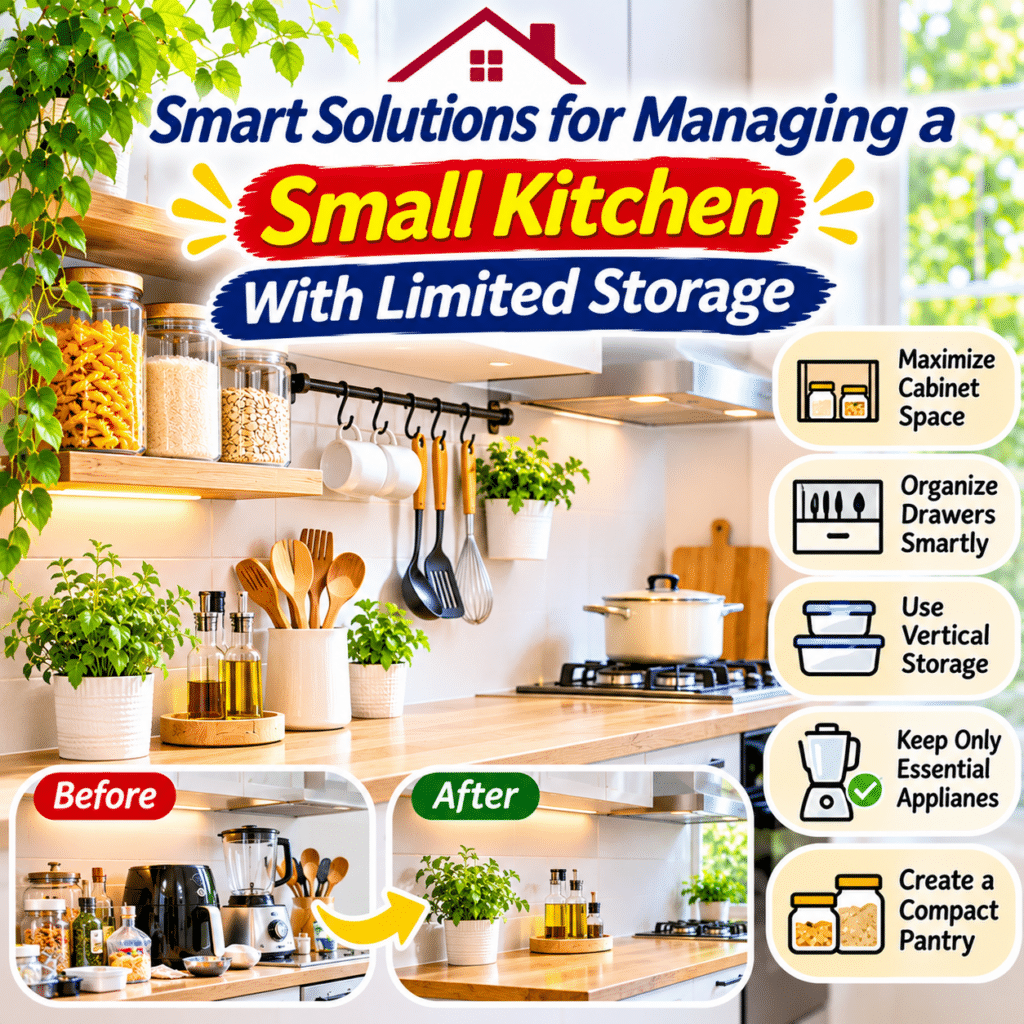
10. Declutter Your Kitchen Countertops
Kitchen countertops often become temporary storage for appliances, mail, food packages, and miscellaneous household objects.
Begin by removing everything that does not support food preparation or another intentional kitchen activity.
Evaluate countertop appliances according to how frequently they are used.
Daily essentials may deserve permanent countertop space.
Occasionally used appliances can often be stored in accessible cabinets.
Keep enough clear surface area for meal preparation, serving, and cleaning.
Avoid placing unnecessary objects near cooking heat, sinks, or other areas where they may create hazards.
A functional countertop arrangement should support your cooking habits rather than follow a rigid decorative formula.
11. Sort Kitchen Drawers and Utensils
Kitchen drawers frequently contain duplicate utensils, damaged tools, and objects that belong elsewhere.
Empty one drawer at a time.
Group items into categories such as cooking utensils, measuring tools, cutlery, preparation accessories, and miscellaneous equipment.
Examine duplicates carefully.
Owning several similar utensils may be useful if you cook frequently or prepare multiple dishes simultaneously.
However, keeping several damaged or rarely used versions of the same tool may provide little benefit.
Return frequently used utensils to convenient locations.
Drawer dividers can help, but simple containers or existing compartments may work equally well.
The most effective arrangement allows you to find and return items without unnecessary effort.
12. Organize Kitchen Cabinets and Food Storage Containers
Food storage containers are a common source of cabinet clutter.
Gather containers and lids in one location.
Match compatible pieces and inspect them for cracks, damage, persistent odors, or deterioration.
Keep containers that suit your actual food storage needs.
Consider nesting compatible containers to save space.
Store lids vertically or in a dedicated compartment if this makes them easier to retrieve.
Apply similar principles to dishes, serving bowls, mugs, and cookware.
Place everyday items within comfortable reach and reserve higher or less accessible cabinets for lighter, infrequently used belongings.
Avoid overloading shelves or stacking heavy items where they may fall.
13. Declutter Your Pantry
A pantry becomes difficult to manage when food packages are hidden behind one another or stored without a clear system.
Remove items from one shelf at a time.
Check expiration or best-before dates, packaging condition, and signs of spoilage or pests.
Remember that best-before dates generally concern quality, while food safety depends on the product, storage conditions, and applicable labeling.
Discard food that is unsafe, spoiled, contaminated, or otherwise unsuitable for consumption.
Group remaining items into useful categories:
- Grains and pasta.
- Baking ingredients.
- Canned and packaged foods.
- Snacks.
- Breakfast foods.
- Beverages.
- Cooking oils and condiments.
Position older usable products toward the front when appropriate.
Use transparent or clearly labeled containers only when they improve storage and allow you to retain necessary product information.
Avoid transferring food into decorative containers without considering freshness, labeling, and food safety.
14. Simplify Your Refrigerator and Freezer
Refrigerators and freezers can accumulate forgotten leftovers, duplicate condiments, and food that is no longer suitable to eat.
Work efficiently so refrigerated food does not remain at room temperature unnecessarily.
Remove expired or spoiled items and inspect containers for leaks or damage.
Group foods according to safe storage practices and your appliance’s layout.
Keep raw meat and seafood securely contained and separated from ready-to-eat foods to prevent cross-contamination.
Label leftovers with preparation dates when useful.
Avoid overcrowding compartments in ways that interfere with airflow.
A regular refrigerator review can reduce waste and make meal planning easier.
15. Declutter Your Bedroom for Better Everyday Function
Bedrooms often contain clothing, personal accessories, books, electronics, and miscellaneous objects.
Begin with visible surfaces.
Clear bedside tables, dressers, chairs, and other areas where belongings tend to accumulate.
Keep items that support your regular bedroom activities.
For example, a bedside table may reasonably hold a lamp, book, glasses, and a few personal essentials.
Move unrelated paperwork, unused electronics, and unnecessary packaging elsewhere.
Consider whether the room’s layout makes everyday activities easy.
You should be able to access storage, move around furniture, and use the bed comfortably.
A less crowded bedroom may create a calmer environment, although comfort depends on individual preferences.
16. Declutter Your Wardrobe
Clothing often requires more decision-making than many other household categories.
Begin with one category rather than emptying an entire wardrobe.
You might start with shirts, trousers, dresses, outerwear, or seasonal clothing.
Evaluate each piece according to:
- Fit and comfort.
- Physical condition.
- Frequency of use.
- Suitability for your lifestyle.
- Personal preference.
- Practical need.
Clothing that requires minor repair may be worth keeping if you realistically intend to repair it.
Special-occasion clothing may remain useful even when worn infrequently.
Avoid discarding functional clothing solely because it does not match a particular minimalist wardrobe ideal.
Once you have made decisions, arrange clothing by category or frequency of use.
The goal is to make getting dressed easier while preserving enough variety for your needs.
17. Organize Shoes, Bags, and Accessories
Shoes and accessories can become scattered across closets, bedrooms, and entryways.
Gather similar items together before deciding what to keep.
Inspect shoes for comfort, condition, and realistic usefulness.
Consider whether bags serve different purposes or simply duplicate one another.
For jewelry and smaller accessories, use shallow compartments, hooks, or existing organizers to prevent tangling.
Store frequently used items where they can be reached easily.
Keep occasional-use accessories protected from dust and moisture as appropriate.
Avoid purchasing elaborate storage systems before understanding the quantity and types of belongings you intend to retain.
18. Declutter Your Bathroom Counter
Bathrooms often have limited storage and frequently used surfaces.
Begin with the sink area.
Remove empty packaging, unused accessories, and products that do not need to remain on the counter.
Keep essential daily toiletries within easy reach.
Store backup products separately so they do not crowd everyday supplies.
Avoid leaving items in locations where they may become wet, fall, or interfere with cleaning.
If several people share the bathroom, consider assigning individual storage sections.
A simple arrangement makes it easier to identify what belongs to whom and maintain a tidy shared space.
19. Review Cosmetics, Toiletries, and Personal Care Products
Gather similar products together to identify duplicates and forgotten purchases.
Check product labels, expiration information, and recommended periods of use after opening where applicable.
Discard products that have deteriorated, developed unusual odors, changed appearance, or become contaminated.
Do not assume that every unopened product remains safe indefinitely.
For medications, follow labeled storage and disposal instructions and consult a pharmacist or appropriate local disposal service when needed.
Keep frequently used personal care products accessible.
Store backups in a suitable location away from excessive heat, moisture, or direct sunlight when required.
Avoid stockpiling quantities that are unlikely to be used before their practical shelf life ends.
20. Organize Towels, Linens, and Bathroom Supplies
Towels, washcloths, and spare linens can occupy substantial storage space.
Gather items by category.
Inspect them for wear, damage, and usefulness.
Keep enough for your household’s normal laundry routine, guests, and reasonable emergencies.
Excess quantities may be donated when clean and suitable for reuse.
Fold or roll linens according to your available shelves and personal preference.
Store cleaning products separately from personal care items and keep hazardous supplies securely away from children and pets.
The best system is one that makes it easy to retrieve clean items and return freshly washed ones.
21. Declutter Your Home Office or Study Area
A home office should support concentration and efficient access to work materials.
Start with the desktop.
Remove unrelated objects, outdated notes, empty packaging, and supplies that are no longer useful.
Group remaining items into categories such as writing tools, documents, electronics, notebooks, and reference materials.
Keep frequently used supplies nearby.
Store occasional-use materials in drawers or cabinets.
Avoid allowing every available surface to become permanent storage.
If the workspace serves multiple purposes, consider portable organizers that allow you to clear the area between activities.
22. Sort Paperwork and Important Documents
Paper clutter often persists because people are uncertain what should be kept.
Separate documents into meaningful categories.
| Document Type | Suggested Approach |
|---|---|
| Identity and legal records | Store securely and retain according to applicable requirements |
| Financial and tax documents | Follow relevant retention rules |
| Medical records | Keep important records securely and protect privacy |
| Warranties and manuals | Retain useful information for products you own |
| Current bills and correspondence | File or process according to need |
| Unnecessary duplicates | Shred securely when they contain sensitive information |
| General reference papers | Keep only when they remain useful |
Do not discard legal, financial, property, or medical records without considering applicable retention requirements.
For documents containing personal information, use secure shredding or an appropriate confidential disposal method.
A small number of clearly labeled folders can often provide an effective filing system.
23. Organize Digital Devices and Office Accessories
Physical office clutter often includes chargers, adapters, external drives, cables, and outdated accessories.
Identify what each item belongs to.
Test uncertain equipment when safe and practical.
Separate essential accessories from duplicates and obsolete devices.
Label cables or place them in small compartments.
Keep important digital storage devices protected from physical damage.
Before recycling or donating computers, phones, or storage devices, securely remove personal information using an appropriate device-specific process.
Digital decluttering can complement physical organization, but it should not replace secure data management.
24. Declutter Your Entryway
The entryway is a transition between the outside world and your home.
It often collects shoes, bags, umbrellas, keys, mail, and items waiting to be taken elsewhere.
Begin by removing belongings that do not need to remain near the entrance.
Create designated locations for everyday essentials.
A small tray may hold keys, while hooks can accommodate frequently used bags or jackets.
A shoe rack or designated shoe area may prevent footwear from spreading across the floor.
Keep walking paths clear and avoid blocking doors or exits.
A practical entryway should make leaving and returning home easier.
25. Organize Your Laundry Area
Laundry spaces frequently become storage areas for unrelated household supplies.
Remove empty containers, unnecessary packaging, and items that belong elsewhere.
Group laundry products according to their purpose.
Keep detergents, stain removers, and other cleaning chemicals in their original labeled containers unless the manufacturer specifically permits otherwise.
Store hazardous products securely and never combine cleaning chemicals without reliable instructions.
Create separate spaces for dirty laundry, clean laundry, and supplies when possible.
If space is limited, use vertical shelving or compact storage that does not interfere with appliance ventilation, access, or safe operation.
26. Declutter Storage Closets and Utility Cabinets
Storage closets often contain belongings that are rarely seen.
Work through one shelf or box at a time.
Identify seasonal supplies, household tools, spare parts, decorations, and items saved for uncertain future use.
Ask whether each object has a realistic purpose.
Keep necessary household maintenance supplies accessible and organized.
Label boxes according to their contents rather than using vague descriptions such as “miscellaneous.”
Place heavier objects on lower shelves and avoid overloading storage structures.
Do not block electrical panels, ventilation equipment, or emergency access points.
27. Review Seasonal Decorations and Occasional-Use Items
Seasonal belongings may be used only a few times each year, but that does not automatically make them unnecessary.
Gather decorations, seasonal textiles, and occasional-use equipment by category.
Inspect items for damage and missing components.
Keep meaningful or functional pieces that you expect to use again.
Consider donating decorations that no longer match your preferences or circumstances.
Store delicate objects with suitable protection.
Label containers clearly and keep seasonal items together.
This makes future setup and cleanup more convenient.
28. Declutter Children’s Rooms and Shared Family Spaces
Shared spaces require cooperation rather than unilateral decisions.
When decluttering children’s belongings, involve them in age-appropriate choices.
Explain why certain items need to be organized and allow reasonable input about favorite toys, books, and personal possessions.
Group toys and supplies by type.
Use accessible storage that encourages independent cleanup.
Keep small parts and potentially hazardous objects away from children who may be at risk.
For shared family areas, establish agreements about where common items belong.
Respecting individual preferences can make organization systems more sustainable.
29. Handle Sentimental Belongings Thoughtfully
Sentimental items may include photographs, letters, gifts, inherited objects, and reminders of important experiences.
These belongings should not be evaluated solely according to frequency of use.
Instead, consider their personal meaning and how you want to preserve them.
You might display a few favorite objects, organize photographs into albums, or store important keepsakes in a dedicated container.
Digitizing suitable paper materials can improve accessibility, but digital copies may not replace the emotional or historical value of originals.
Avoid making rushed decisions about irreplaceable possessions.
Sentimental decluttering is often best approached after easier categories have been completed.
30. Decide What to Donate, Sell, Recycle, or Discard
Removing unwanted belongings is an essential part of decluttering.
A home is not truly less cluttered if donation bags remain in the hallway for months.
Choose an appropriate destination for each outgoing category.
Donate clean, functional items that meet a recipient organization’s requirements.
Sell belongings only when their likely resale value justifies the time and effort involved.
Recycle materials according to local collection rules.
Dispose of damaged or unsafe items responsibly.
Certain products, including batteries, electronics, chemicals, and medications, may require specialized handling.
Check local disposal guidance rather than assuming ordinary trash collection is suitable.
31. Choose Storage Solutions After Decluttering
Storage products can improve organization, but they should support your belongings rather than determine how much you keep.
Measure shelves, drawers, and cabinets before purchasing organizers.
Consider the following options.
| Storage Solution | Useful For | Important Consideration |
|---|---|---|
| Drawer dividers | Small utensils and accessories | Match actual drawer dimensions |
| Open baskets | Frequently used household items | Avoid overfilling |
| Clear containers | Supplies that benefit from visibility | Choose appropriate materials |
| Labeled boxes | Seasonal or occasional-use belongings | Keep labels specific |
| Wall hooks | Bags, coats, and accessories | Install securely |
| Vertical shelving | Limited floor space | Follow weight and anchoring requirements |
| Under-bed storage | Suitable occasional-use items | Consider dust and accessibility |
Reuse existing containers when they work well.
An effective storage system does not need to be expensive or visually elaborate.
32. Create a Place for Frequently Used Items
One of the simplest ways to maintain organization is to store belongings near where they are used.
Keep cooking utensils near food preparation areas.
Store keys near the entrance.
Place cleaning supplies in safe, convenient locations appropriate to their use.
Keep office materials close to the workspace.
This principle reduces unnecessary movement and makes returning items more intuitive.
However, convenience should never override safety.
Potentially hazardous objects, medications, chemicals, and sharp tools must be stored appropriately even when this makes access less immediate.
33. Use Vertical Space Without Creating New Clutter
Vertical storage can help when floor space is limited.
Wall-mounted shelves, hooks, cabinets, and tall storage units may increase usable capacity.
However, additional storage should not become an invitation to accumulate more belongings.
Before installing shelves or wall organizers, consider the wall structure, installation requirements, and weight limits.
Secure tall furniture when necessary to reduce tipping risks.
Keep frequently used items within comfortable reach.
Reserve higher storage areas for lightweight, occasional-use belongings.
The goal is to improve accessibility and safety, not simply maximize the number of objects a room can hold.
34. Adapt Decluttering to Small Homes and Apartments
Small homes benefit from careful use of space, but they do not require extreme minimalism.
Begin by prioritizing the activities that matter most.
A compact living room may need to support relaxation, dining, and occasional work.
Choose storage locations that accommodate these activities without obstructing movement.
Consider furniture with practical built-in storage when replacing furniture is already necessary.
Use doors, shelves, and underused corners thoughtfully.
Avoid filling every available gap.
Some open space is valuable because it allows rooms to function comfortably.
In small homes, reducing unnecessary duplicates can be especially effective.
35. Declutter Without Spending Much Money
Decluttering should not require a large shopping budget.
In fact, buying too many organizers can create additional clutter.
Start with existing household materials.
Clean and reuse suitable boxes, baskets, jars, and containers where appropriate.
Rearrange shelves before considering new furniture.
Use simple labels to identify storage categories.
Repurpose furniture that already meets your needs.
Focus first on reducing unnecessary belongings and improving the placement of useful items.
Only purchase storage products when a specific, recurring problem remains unresolved.
36. Build a Realistic Room-by-Room Decluttering Schedule
A manageable schedule helps prevent fatigue.
The following four-week plan is an example rather than a strict requirement.
| Week | Main Focus | Suggested Tasks |
|---|---|---|
| Week 1 | Living room and entryway | Clear surfaces, sort accessories, organize everyday essentials |
| Week 2 | Kitchen and pantry | Review utensils, containers, food storage, and cabinets |
| Week 3 | Bedroom and bathroom | Declutter clothing, accessories, toiletries, and linens |
| Week 4 | Office and storage spaces | Sort paperwork, electronics, utility supplies, and stored belongings |
Large households may need more time.
Smaller homes or lightly cluttered spaces may require less.
You can divide each task into sessions of approximately 15–30 minutes when that feels manageable.
The most important factor is maintaining a pace that allows you to make thoughtful decisions and complete each selected area.
37. Avoid Common Decluttering Mistakes
Several habits can make decluttering less effective.
1. Trying to declutter the entire home at once.
Choose smaller areas to reduce fatigue and unfinished projects.
2. Buying organizers before sorting belongings.
Evaluate what you need to keep before selecting storage products.
3. Moving clutter between rooms.
Assign every retained item an appropriate location.
4. Keeping unnecessary duplicates automatically.
Consider whether additional copies serve a realistic purpose.
5. Discarding sentimental items too quickly.
Allow extra time for emotionally meaningful decisions.
6. Creating an oversized undecided pile.
Limit temporary storage and establish a review date.
7. Ignoring household members’ preferences.
Discuss shared spaces and respect personal belongings.
8. Keeping broken items without a repair plan.
Decide whether repair is practical and establish a reasonable timeframe.
9. Overfilling newly organized storage.
Leave enough room to retrieve and return belongings comfortably.
10. Forgetting to remove donation bags.
Schedule the next step for outgoing items.
11. Using complicated organization systems.
Choose arrangements that are easy to maintain.
12. Expecting permanent perfection.
Recognize that everyday living naturally creates temporary disorder.
Decluttering is most successful when the process supports real household behavior.
38. Troubleshoot Common Decluttering Problems
Even a thoughtful plan may encounter obstacles.
| Problem | Possible Cause | What to Try |
|---|---|---|
| Clutter returns quickly | Items lack convenient storage locations | Assign accessible homes to frequently used objects |
| Decisions take too long | Too many items are evaluated at once | Work with one category or small area |
| Storage remains overcrowded | Too many belongings are being retained | Reevaluate duplicates and unused items |
| Family members resist changes | Shared expectations are unclear | Agree on practical household rules |
| Donation bags accumulate | No removal plan exists | Schedule a drop-off or collection |
| Organizers do not fit | Measurements were not checked | Measure spaces before purchasing |
| Sentimental items cause delays | Decisions feel emotionally difficult | Set them aside for a separate session |
| Paperwork keeps accumulating | Incoming documents lack a process | Create an inbox and regular review routine |
| Surfaces become cluttered | Objects are placed wherever convenient | Establish designated drop zones |
| Decluttering feels exhausting | Sessions are too long or ambitious | Shorten sessions and define smaller goals |
If a system repeatedly fails, consider whether it matches the way your household actually functions.
Sometimes the solution is not greater discipline but a simpler arrangement.
39. Maintain a Decluttered Home With Small Daily Habits
Once the major decluttering work is complete, maintenance becomes the priority.
A few practical habits can prevent unnecessary accumulation.
Return frequently used items after use whenever convenient.
Clear kitchen counters after meal preparation.
Place incoming mail in a designated location.
Put clothing into appropriate laundry or storage areas.
Review shopping decisions before bringing additional objects into the home.
Schedule occasional checks of high-clutter areas such as entryways, kitchen drawers, and bedside tables.
Avoid rigid rules that create unnecessary pressure.
A home is meant to be lived in, and temporary clutter is normal.
Consistent, manageable habits are generally more useful than occasional attempts to achieve perfection.
40. Make Decluttering Part of Long-Term Home Care
Decluttering becomes easier when it is treated as an ongoing household practice rather than a one-time event.
Your needs may change as your work, interests, family circumstances, and living arrangements evolve.
Items that were useful several years ago may no longer serve the same purpose.
Other belongings may become more important.
Review storage areas periodically and adjust them to current needs.
Pay particular attention to spaces where unnecessary items tend to accumulate.
A well-maintained home does not need to remain unchanged.
Its organization should evolve alongside the people who live there.
Practical Room-by-Room Decluttering Checklist
Use this checklist to track progress without attempting everything in one session.
Planning and Preparation
- Identify the rooms that need attention.
- Define a practical goal for each room.
- Choose a manageable starting area.
- Gather sorting bags and containers.
- Establish keep, donate, sell, recycle, and discard categories.
- Plan how outgoing belongings will leave the home.
Living Room and Entryway
- Clear coffee tables and side tables.
- Review decorative objects and collections.
- Organize entertainment accessories.
- Sort books and magazines.
- Create designated locations for keys and bags.
- Keep entryways and walking paths clear.
Kitchen and Pantry
- Clear unnecessary countertop items.
- Sort kitchen utensils and tools.
- Match food storage containers and lids.
- Review pantry contents.
- Check refrigerator and freezer items.
- Arrange frequently used kitchen supplies for easy access.
Bedroom and Bathroom
- Clear bedside tables and dressers.
- Review clothing by category.
- Organize shoes, bags, and accessories.
- Sort toiletries and personal care products.
- Check product condition and expiration information.
- Organize towels and spare linens.
Office and Storage Areas
- Clear the desktop.
- Sort paperwork and important records.
- Organize cables and electronics.
- Review seasonal belongings.
- Label storage boxes clearly.
- Store heavy and hazardous items safely.
Long-Term Maintenance
- Give frequently used belongings designated locations.
- Remove donation and recycling items promptly.
- Review high-clutter areas regularly.
- Avoid unnecessary duplicate purchases.
- Adjust storage systems when household needs change.
Frequently Asked Questions
1. What is the best room to declutter first?
Start with a room or small area where you can make visible progress without becoming overwhelmed. A bathroom counter, entryway, or living room surface can be a practical starting point.
2. How do I declutter my home when I feel overwhelmed?
Choose one drawer, shelf, or category of belongings. Set a manageable time limit and complete that area before beginning another. Small completed tasks are often easier to sustain than an ambitious whole-home project.
3. Should I clean or declutter first?
Declutter first, then clean the cleared space before organizing retained belongings. This avoids repeatedly cleaning around items that may eventually be removed.
4. How long does it take to declutter an entire home?
The time required depends on home size, quantity of belongings, household participation, and decision-making needs. Some projects take several days, while others are better completed gradually over weeks or months.
5. How do I decide what to keep?
Consider whether an item is useful, necessary, meaningful, in suitable condition, and appropriate for your current lifestyle. Frequency of use is helpful but should not be the only criterion.
6. What should I do with items I might need someday?
Evaluate how likely you are to need the item, whether it would be difficult to replace, and how much storage space it occupies. Essential emergency supplies and important spare parts may deserve retention even when rarely used.
7. How can I declutter without becoming a minimalist?
Focus on removing unnecessary clutter rather than reducing possessions to a specific number. You can maintain collections, hobbies, decorations, and personal belongings while organizing them thoughtfully.
8. How do I declutter sentimental belongings?
Begin with less emotionally demanding categories. For meaningful items, consider preserving selected originals, displaying favorites, or organizing them in dedicated storage. Avoid rushed decisions about irreplaceable possessions.
9. What is the easiest way to declutter a kitchen?
Start with one drawer or cabinet. Group similar items, remove unnecessary duplicates, check their condition, and return frequently used tools to convenient locations.
10. How can I keep my bedroom clutter-free?
Provide designated storage for clothing, accessories, and bedside essentials. Keep unrelated objects out of the bedroom when possible and return items to their places as part of regular routines.
11. Do I need to buy storage containers to declutter?
No. Many homes can become significantly more organized by reducing unnecessary belongings and using existing storage more effectively. Purchase additional organizers only when they solve a specific problem.
12. How should I handle clutter in a shared home?
Discuss shared spaces with other household members and establish practical expectations together. Avoid discarding someone else’s personal belongings without their agreement.
13. What should I do with unwanted electronics?
Consider responsible reuse, donation, or specialized electronic recycling. Before transferring devices, securely remove personal information and follow appropriate battery and electronic waste handling guidance.
14. How often should I declutter my home?
There is no universal schedule. Small daily habits, periodic reviews of high-clutter areas, and occasional seasonal assessments may be sufficient for many households.
15. How do I stop clutter from coming back?
Create accessible storage locations, review new purchases thoughtfully, remove unwanted items promptly, and simplify organization systems that are difficult to maintain. Sustainable habits matter more than perfect appearances.
Final Thoughts
Decluttering your home room by room is an opportunity to make everyday spaces more functional, comfortable, and aligned with your needs.
The process does not require expensive organizers, dramatic transformations, or strict minimalist rules. It begins with thoughtful decisions about what deserves space and continues with practical arrangements that support daily activities.
By working through one area at a time, you can reduce unnecessary belongings without turning the project into an exhausting undertaking. Clear sorting categories, realistic schedules, and simple storage systems make the process easier to manage.
The most effective home organization is not necessarily the most elaborate. It is the arrangement that allows you and your household to find what you need, care for what you value, and use your living space comfortably.
As your circumstances change, your organization systems can change with them. Regular reviews and small daily habits help ensure that decluttering remains a manageable part of home care rather than a recurring major project.
A thoughtfully decluttered home is not defined by how little you own, but by how comfortably your belongings support the life you want to live.