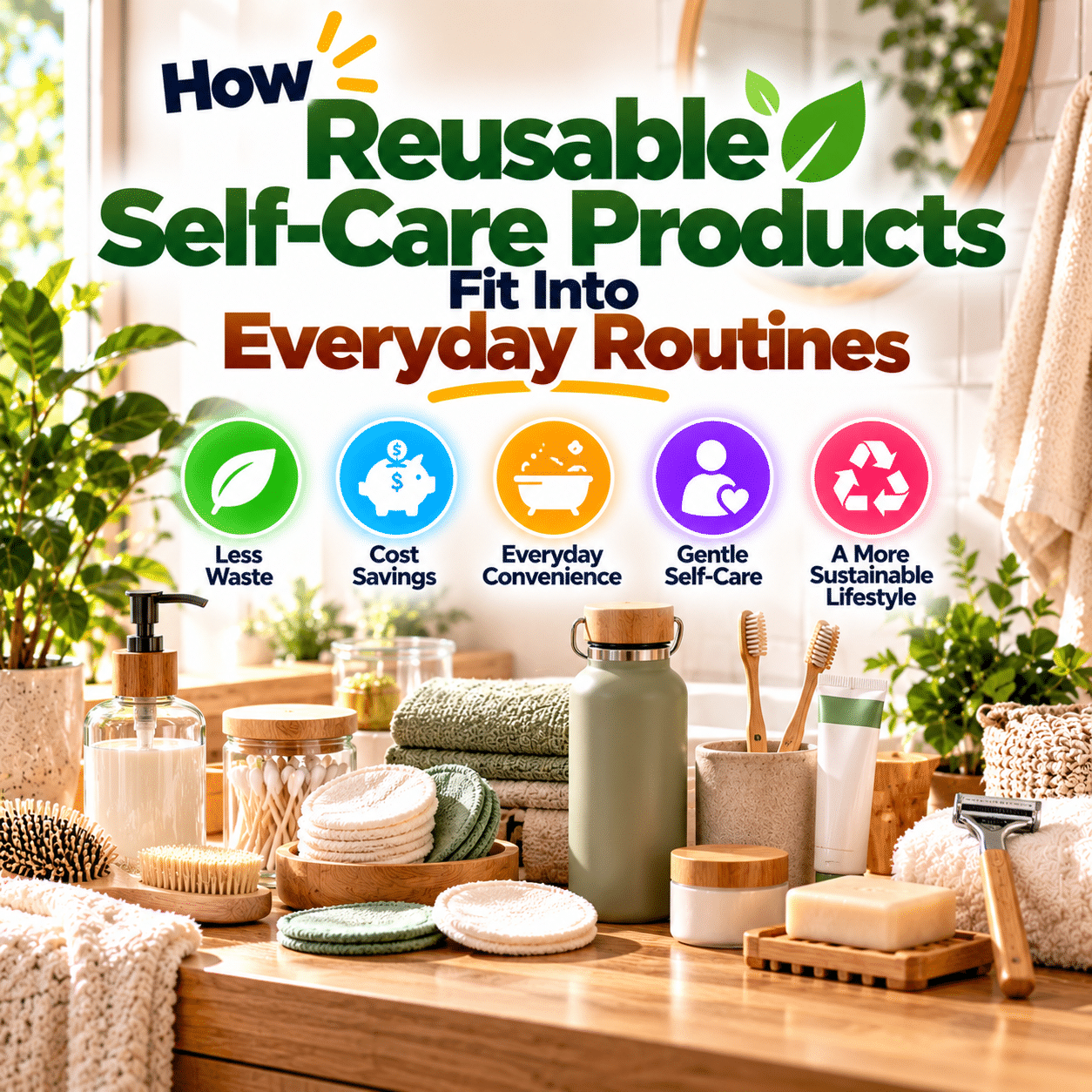
A daily self-care routine often involves small items that are easy to overlook.
Cotton pads, cleansing cloths, razors, personal care containers, and other accessories may be used regularly without much thought about how often they need to be replaced.
Reusable self-care products offer an alternative for some of these everyday tasks.
A washable cleansing pad may replace certain disposable cotton rounds. A refillable container can be used repeatedly with compatible products. A durable razor may allow users to replace a blade rather than the entire handle.
These changes can appear minor, but they may influence purchasing habits, bathroom organization, cleaning routines, and the amount of waste generated over time.
However, reusable does not automatically mean better.
A product must be cleaned appropriately, maintained safely, and replaced when it becomes damaged or unsuitable. Some reusable products also require more water, energy, or effort than disposable alternatives.
The best choices depend on personal preferences, hygiene requirements, product quality, and how frequently an item will actually be used.
Understanding how reusable self-care products fit into everyday routines can help households make practical decisions without turning personal care into an unnecessarily complicated process.
1. What Are Reusable Self-Care Products?
Reusable self-care products are items designed to be used repeatedly for personal hygiene, grooming, skincare, or related daily activities.
Unlike single-use products, they are intended to remain functional through multiple uses when cleaned and maintained according to their instructions.
Examples include:
- Washable facial cleansing pads.
- Reusable makeup-removal cloths.
- Refillable personal care bottles.
- Durable razors with replaceable blades.
- Washable hair wraps and towels.
- Reusable menstrual care products.
- Personal grooming tools designed for long-term use.
- Washable applicators and accessories intended for repeated use.
The key phrase is designed for repeated use.
A disposable item should not be reused simply because it appears physically intact.
Products must be suitable for the intended application and capable of being cleaned or maintained appropriately.
2. Why Reusable Personal Care Products Appeal to Everyday Consumers
Reusable products are often associated with reducing disposable waste.
That can be part of their appeal, but it is not the only reason people choose them.
Fewer Repeat Purchases
A durable product may reduce the need to buy disposable alternatives frequently.
Familiarity and Convenience
Some users appreciate keeping the same personal care tool rather than repeatedly replacing it.
Less Packaging to Manage
Certain reusable systems may reduce the number of individually packaged items entering the home.
Bathroom Organization
A small collection of reusable accessories may be easier to organize than multiple packages of disposables.
Material and Texture Preferences
Some people prefer the feel of washable fabrics or durable grooming tools.
Potential Long-Term Value
A well-made product may cost less per use when it lasts long enough.
More Intentional Purchasing
Choosing a reusable item can encourage consumers to consider durability, maintenance, and actual needs.
These benefits are possible rather than guaranteed.
A product that is difficult to clean or rarely used may provide little practical advantage.
3. Reusable Facial Cleansing Pads
Washable facial pads are among the most familiar reusable self-care accessories.
They are commonly used for applying or removing suitable skincare products, depending on the pad’s material and manufacturer instructions.
Common Materials
Reusable pads may be made from cotton, bamboo-derived textiles, microfiber, or fabric blends.
The finished fabric’s properties depend on its construction, not merely the fiber name.
Potential Advantages
Washable pads may reduce reliance on disposable cotton rounds.
They can also be convenient when kept near other skincare essentials.
Texture Matters
Some pads are soft and smooth, while others have a more textured surface.
The best choice depends on skin tolerance and the intended task.
Cleaning Requirements
Pads that contact skin and skincare products should be washed as directed and dried thoroughly.
Avoid Excessive Friction
Rubbing too firmly can irritate skin, regardless of whether a pad is disposable or reusable.
When They May Be Less Suitable
People with highly sensitive skin or particular skin conditions may need to avoid certain fabrics or use a different method.
Reusable pads are most useful when they feel comfortable and can be cleaned reliably.
4. Reusable Makeup-Removal Cloths
Washable makeup-removal cloths are designed for repeated use.
Some are marketed as removing makeup with water alone, while others are intended to be used with a suitable cleanser.
How They Work
Different fabrics use different fiber structures and surface textures.
Performance varies with makeup type, product formulation, and the cloth itself.
Potential Convenience
A washable cloth may replace some disposable wipes or cotton products.
Gentle Use Is Important
Repeated rubbing can cause irritation, especially around delicate areas such as the eyes.
Clean After Use
Makeup, oils, and skincare residues can accumulate in fabric.
Follow washing instructions and allow the cloth to dry completely.
Avoid Unsupported Claims
A reusable cloth should not be assumed to remove every cosmetic product effectively or replace appropriate cleansing in all situations.
Evaluate Durability
Check stitching, fabric quality, and how the material performs after repeated washing.
A practical makeup-removal cloth should be comfortable, effective for its intended use, and easy to maintain.
5. Refillable Bottles and Personal Care Containers
Refillable containers are another common way to incorporate reuse into daily self-care.
They may be used for compatible soaps, shampoos, conditioners, lotions, or other products.
Reduced Need for New Containers
Refilling an existing bottle may reduce the number of new containers purchased.
Bathroom Organization
Matching or clearly labeled containers can create a more organized appearance.
Travel Convenience
Some reusable travel bottles are designed for carrying permitted quantities of compatible personal care products.
Material Compatibility
Not every container is suitable for every formulation.
Certain ingredients may interact with container materials or dispensing mechanisms.
Hygiene Considerations
Containers should be cleaned and dried according to the product manufacturer’s instructions.
Avoid Mixing Old and New Products Indiscriminately
Adding fresh product to an unclean container can introduce contamination.
Preserve Important Information
Refilling should not result in losing essential ingredient, warning, expiration, or usage information.
Refillable packaging works best when it is supported by appropriate cleaning practices and compatible refill products.
6. Durable Razors With Replaceable Blades
Razors provide another example of a product that can combine reusable and replaceable components.
Some shaving systems use a long-lasting handle with replaceable cartridges or blades.
Reusable Handles
A durable handle may remain useful through many blade replacements.
Different Razor Designs
Cartridge razors, safety razors, and other systems differ in operation and maintenance.
Learning Curve
Some designs require more technique and care than others.
Skin Comfort
Shaving results depend on blade condition, technique, skin sensitivity, and suitable preparation.
Blade Replacement
Blades should be replaced when they become dull, damaged, or otherwise unsuitable.
Safe Storage
Razors should be stored in a way that reduces accidental cuts and inappropriate access.
Cleaning
Follow manufacturer guidance for rinsing, drying, and maintenance.
A reusable razor is valuable when it provides safe, comfortable performance over time.
7. Washable Hair Towels and Wraps
Hair care routines often involve towels, wraps, and other textile accessories.
Reusable hair wraps may be designed to secure wet hair more conveniently than a conventional towel.
Practical Convenience
A suitable wrap may stay in place while someone completes other activities.
Fabric Choices
Cotton, microfiber, and other fabrics have different absorbency and drying characteristics.
Comfort
Weight, size, fastening method, and texture influence usability.
Cleaning
Hair wraps should be washed and dried according to their care instructions.
Avoid Excessive Tension
A wrap should not pull uncomfortably on the hair or scalp.
Consider Existing Alternatives
A regular towel may already meet the need.
A specialized reusable wrap is useful only when it improves convenience or comfort.
8. Reusable Menstrual Care Products
Reusable menstrual products are an important category of personal care, but they require particular attention to fit, hygiene, and individual health needs.
Common options include menstrual cups, reusable menstrual discs, and period underwear.
Menstrual Cups
A menstrual cup is designed to collect menstrual fluid internally.
Products vary in material, size, shape, and usage instructions.
Reusable Menstrual Discs
Some discs are designed for repeated use, while others are disposable.
The product’s intended use must be verified.
Period Underwear
Period underwear uses absorbent layers designed to manage menstrual flow.
Capacity and suitability vary by product.
Hygiene Is Essential
Follow the manufacturer’s instructions for washing, sanitizing where applicable, drying, and storage.
Fit and Comfort Vary
A product that works well for one person may not suit another.
Understand Safety Information
Internal menstrual products require careful attention to usage duration, cleaning, and relevant warnings.
Seek Individualized Guidance When Needed
People with specific medical concerns, unusual symptoms, or uncertainty about product suitability should consult a qualified healthcare professional.
Reusable menstrual care can be a practical option, but it should never be treated as a universal solution.
9. Reusable Grooming Tools and Accessories
Many familiar grooming tools are already designed for repeated use.
Examples include combs, hairbrushes, nail clippers, tweezers, and suitable applicators.
Long-Term Use
A well-made grooming tool may remain functional for years.
Cleaning Requirements
Hair, skin oils, and other residues can accumulate.
Cleaning methods depend on the tool and materials.
Material Durability
Metal, wood, plastic, and composite components require different care.
Personal Use
Some grooming tools should not be shared without appropriate cleaning or disinfection.
Replacement
Tools should be replaced when they become damaged, difficult to clean, or unsafe.
Avoid Unnecessary Upgrades
An existing functional tool may be more practical than purchasing a new reusable version.
Reuse includes continuing to use durable products that are already owned.
10. Reusable Products and Bathroom Organization
Reusable self-care accessories can change how bathroom storage is arranged.
Disposable products often require space for replacement packages.
Reusable items may require space for cleaning, drying, and storage.
Separate Clean and Used Items
Washable products should have an appropriate system for handling items awaiting cleaning.
Provide Drying Space
Damp fabrics stored in enclosed containers may develop unpleasant odors or other hygiene problems.
Use Accessible Storage
Frequently used products should be easy to reach.
Label Refillable Containers
Clear identification helps prevent confusion.
Avoid Excessive Storage Accessories
Buying numerous containers can create clutter.
Consider Moisture
Bathrooms are often humid environments.
Storage materials should be suitable for the conditions.
Good organization supports hygiene and convenience rather than merely creating a coordinated appearance.
11. Hygiene Is the Most Important Part of Reusable Self-Care
The main difference between reusable and disposable products is the need for appropriate care between uses.
Follow Product-Specific Instructions
Different materials and product categories require different cleaning methods.
Avoid Improvised Sanitizing Methods
Boiling, bleaching, or applying harsh disinfectants may damage products that are not designed for those methods.
Dry Thoroughly When Required
Damp storage can create hygiene problems for some products.
Inspect for Damage
Cracks, worn surfaces, loose components, and persistent odors may indicate that replacement is needed.
Do Not Share Personal Items Indiscriminately
Products that contact skin, mucous membranes, or bodily fluids may require individual use or specific hygiene procedures.
Understand Product Lifespan
Reusable does not mean permanent.
When in Doubt, Prioritize Safety
An item that cannot be cleaned adequately should not be kept in service simply to avoid disposal.
The success of a reusable routine depends on consistent, appropriate maintenance.
12. Are Reusable Self-Care Products More Sustainable?
Reusable products can sometimes reduce the number of disposable items consumed.
However, environmental impact depends on several factors.
Raw Materials
Cotton, synthetic fibers, metals, and plastics have different production requirements.
Manufacturing
Processing, dyeing, finishing, and assembly may consume energy and other resources.
Product Lifespan
A reusable product needs to remain useful long enough to justify its production.
Washing and Drying
Cleaning may require water, energy, detergent, or other supplies.
Transportation
Shipping and distribution contribute to environmental impacts.
Packaging
Reusable products may still arrive with substantial packaging.
Disposal
Mixed materials and complex components can complicate recycling.
Actual Use
A reusable item that remains unused offers little benefit.
Environmental comparisons should consider the full lifecycle rather than assuming that reuse is automatically the better option.
13. Reusable Does Not Always Mean Plastic-Free
Some reusable self-care products contain synthetic materials.
Examples may include microfiber cloths, plastic dispensers, silicone components, and synthetic textile blends.
Material Choice Depends on Function
Different materials offer different performance characteristics.
Durability Matters
A well-made synthetic product may remain useful for a long time.
Microfiber Considerations
Some synthetic textiles can release microplastic fibers during washing.
Release levels vary with fabric construction, washing conditions, and other factors.
Silicone Products
Silicone is used in some reusable personal care products because of its particular material properties.
However, silicone products vary in formulation, quality, and intended use.
Avoid Simplistic Labels
A product’s environmental profile cannot be determined solely by whether it contains plastic.
Material selection should consider performance, safety, durability, and end-of-life options.
14. Do Reusable Self-Care Products Save Money?
Reusable products may offer long-term savings when they replace frequent disposable purchases.
However, cost depends on usage and maintenance.
Initial Purchase Price
Reusable items may cost more upfront.
Replacement Frequency
A durable product may remain useful through many applications.
Cleaning Costs
Washing, drying, and replacement supplies may add expenses.
Product Failure
Poor-quality products may wear out earlier than expected.
A Hypothetical Comparison
Suppose disposable facial pads cost $4 per package, and a household purchases one package every month.
Annual spending would be $48.
A set of reusable pads might cost $18.
If the reusable pads remain suitable for a year, the initial purchase cost would be lower than the disposable alternative.
However, washing costs, product lifespan, and actual usage must also be considered.
These figures are illustrative rather than verified retail prices.
Cost Per Use
A useful comparison is:
Cost per use = total ownership cost ÷ number of actual uses
This approach can help evaluate products without relying on marketing claims.
15. Convenience Determines Whether Reusable Products Become Habits
A reusable product may be environmentally appealing or economical on paper but inconvenient in practice.
Easy Cleaning
Products that fit an existing laundry or cleaning routine may be easier to maintain.
Accessible Storage
A product should be easy to retrieve when needed.
Comfortable Use
An unpleasant texture or awkward design may discourage regular use.
Reasonable Drying Time
Some washable products require enough time to dry before the next use.
Appropriate Quantity
A household may need enough reusable items to rotate between uses and cleaning.
Portability
Travel routines may require different storage and hygiene arrangements.
Simple Maintenance
Complicated care instructions can reduce long-term convenience.
Reusable products succeed when they work with everyday routines rather than demanding major changes.
16. How to Transition Gradually to Reusable Self-Care Products
Replacing every disposable product at once is unnecessary.
A gradual approach allows households to evaluate what actually works.
Step 1: Identify Frequently Used Disposable Items
Review which products are purchased regularly.
Step 2: Choose One Practical Alternative
Select an item with a clear reusable option.
Step 3: Check Safety and Hygiene Requirements
Understand how the product should be cleaned and maintained.
Step 4: Evaluate Existing Supplies
Use suitable products already owned rather than discarding them unnecessarily.
Step 5: Test the New Routine
Consider comfort, convenience, cleaning, and actual frequency of use.
Step 6: Create a Storage System
Keep clean products accessible and used items appropriately separated.
Step 7: Review Long-Term Value
Assess whether the product reduces repeat purchases or improves convenience.
Step 8: Keep What Works
Not every disposable item needs a reusable replacement.
The best routine is one that remains safe, manageable, and useful.
17. Common Mistakes When Buying Reusable Self-Care Products
Several assumptions can lead to disappointing purchases.
Buying Too Many Alternatives at Once
A large collection may become difficult to use and maintain.
Ignoring Cleaning Instructions
Improper care can damage products or create hygiene concerns.
Assuming Every Reusable Product Is Sustainable
Environmental impact depends on the complete lifecycle.
Choosing Based Only on Appearance
Attractive packaging does not establish functionality.
Overlooking Skin Sensitivity
Fabrics and accessories may not suit every user.
Assuming Reusable Means Permanent
Products still have useful lifespans.
Purchasing Unnecessary Accessories
Extra containers, bags, and organizers can offset some of the intended simplicity.
Reusing Disposable Products
Single-use items should not be repurposed for repeated personal care without appropriate design and safety information.
Ignoring Personal Preferences
A product that is inconvenient or uncomfortable is unlikely to become part of a lasting routine.
Thoughtful selection is more useful than attempting to replace every disposable item.
18. Choosing Quality Reusable Self-Care Products
A good purchasing decision considers more than the word reusable.
Intended Use
Confirm that the product is designed for the specific task.
Material Information
Review the stated materials and any relevant warnings.
Construction Quality
Look for suitable stitching, secure components, and durable finishes.
Cleaning Instructions
Choose products that can be maintained realistically.
Comfort
Consider texture, size, weight, and ease of handling.
Replacement Parts
For products with replaceable components, check compatibility and availability.
Manufacturer Transparency
Clear instructions and accurate product descriptions are valuable.
Value Over Time
Compare expected lifespan and maintenance with alternatives.
Appropriate Safety Information
Products involving skin contact, internal use, or sharp components deserve particular care.
The best reusable item is one that performs its intended function safely and consistently.
19. When Disposable Products May Still Be Appropriate
Reusable products are not the best choice in every situation.
Hygiene Requirements
Some applications require single-use products or specific infection-control practices.
Limited Cleaning Access
Travel or other circumstances may make appropriate cleaning difficult.
Medical or Specialized Needs
Certain personal care products must follow healthcare guidance.
Product Compatibility
Not every formulation or application is suitable for reusable accessories.
Personal Comfort
Some users may prefer disposable alternatives for specific tasks.
Occasional Use
A specialized reusable product may not be worthwhile for an infrequent activity.
Avoid Moralizing Personal Care Choices
People have different health needs, resources, abilities, and living conditions.
A practical approach recognizes that reusable and disposable products can both have appropriate roles.
20. The Future of Reusable Self-Care Products
Reusable self-care products are likely to remain relevant because they address ongoing concerns about convenience, waste, durability, and purchasing habits.
Several priorities may influence future product design.
Easier Cleaning
Products that are simpler to maintain may fit better into daily routines.
Improved Material Information
Clear descriptions can help consumers understand product construction and suitability.
Durable Components
Longer-lasting products may provide better value.
Better Refill Systems
Compatible packaging and convenient refill options can make repeated use more practical.
Replaceable Parts
Products with serviceable components may avoid unnecessary replacement.
Clearer Environmental Claims
Consumers benefit from evidence-based information rather than broad sustainability slogans.
More Accessible Designs
Comfortable grips, simple closures, and easy-to-use systems can support different users.
Greater Emphasis on Practicality
The strongest products will be those that offer genuine benefits without making self-care more complicated.
The future of reusable self-care is not about eliminating every disposable item.
It is about providing useful alternatives that work well in everyday life.
Frequently Asked Questions
What are reusable self-care products?
Reusable self-care products are personal care items designed for repeated use, such as washable cleansing pads, makeup-removal cloths, refillable bottles, durable razors, and certain menstrual care products.
Are reusable self-care products hygienic?
They can be when they are designed for repeated use and cleaned, dried, stored, and replaced according to their instructions. Hygiene requirements vary by product.
Do reusable self-care products save money?
Sometimes. Savings depend on purchase price, lifespan, cleaning costs, and how frequently the product is used.
Are reusable products always better for the environment?
No. Environmental impact depends on materials, manufacturing, transportation, washing, durability, and disposal.
Can reusable makeup-removal pads irritate skin?
Yes. Some fabrics or cleaning methods may irritate sensitive skin. Gentle use and appropriate product selection are important.
Should I replace all disposable self-care products?
No. A gradual approach is more practical, and some disposable products remain appropriate for hygiene, medical, or personal reasons.
How do I choose reusable products for a daily routine?
Prioritize intended use, comfort, cleaning requirements, durability, safety information, and compatibility with existing habits.
Conclusion: Reusable Self-Care Works Best When It Fits Real Life
Reusable self-care products can offer practical alternatives to certain disposable personal care items.
Washable cleansing pads, refillable containers, durable razors, reusable grooming accessories, and other thoughtfully designed products may reduce repeat purchases and support more intentional routines.
However, successful reuse requires more than choosing a product labeled environmentally friendly.
Hygiene, comfort, durability, cleaning, storage, and individual needs all influence whether an item provides lasting value.
A gradual approach allows households to keep useful existing products, test suitable alternatives, and avoid unnecessary purchases.
The best reusable self-care routine is not the one with the most reusable products. It is the one that remains safe, convenient, comfortable, and practical over time.