Traveling can be exciting, refreshing, and full of memorable experiences, but preparing for a trip often comes with one familiar frustration: searching for important belongings at the last minute. A missing passport, misplaced charging cable, forgotten toiletry item, or buried travel document can turn an otherwise smooth departure into an unnecessarily stressful experience.
The challenge is not always having too many things. More often, it is the absence of a reliable organization system that makes essential items difficult to locate when they are needed.
Fortunately, keeping travel essentials organized does not require expensive luggage, complicated packing accessories, or elaborate planning methods. A few thoughtful habits, designated storage locations, and practical packing strategies can make a meaningful difference.
Whether you travel frequently for work, take occasional family vacations, enjoy weekend getaways, or simply want to be better prepared for future trips, a consistent organization system can help you save time and reduce unnecessary stress.
This comprehensive guide explores simple, effective ways to keep travel essentials easy to find before departure, during your journey, and after returning home.
1. Understand Why Travel Essentials Are So Easy to Misplace
Before creating an organization system, it helps to understand why travel-related items frequently become scattered.
Travel Involves Many Small Items
Unlike everyday routines, travel often requires a collection of belongings that are not used together at home.
These may include:
- Passports and identification documents.
- Boarding passes and reservation details.
- Charging cables and power adapters.
- Toiletries and personal care products.
- Medications and health-related supplies.
- Travel wallets and payment cards.
- Earphones and entertainment accessories.
- Keys, luggage locks, and small tools.
Because these items serve different purposes, they often end up in different drawers, bags, and storage areas.
Packing Happens Under Time Pressure
When packing is delayed until shortly before departure, people may place items wherever space is available rather than following a consistent system.
Travel Essentials Change Between Trips
A weekend getaway may require different belongings from an international vacation or business trip.
Without a flexible packing routine, important items may be overlooked.
Unpacking Can Disrupt Organization
After returning home, travel accessories may be left inside luggage, placed on countertops, or mixed with everyday belongings.
A reliable system should cover the entire travel cycle, not just packing.
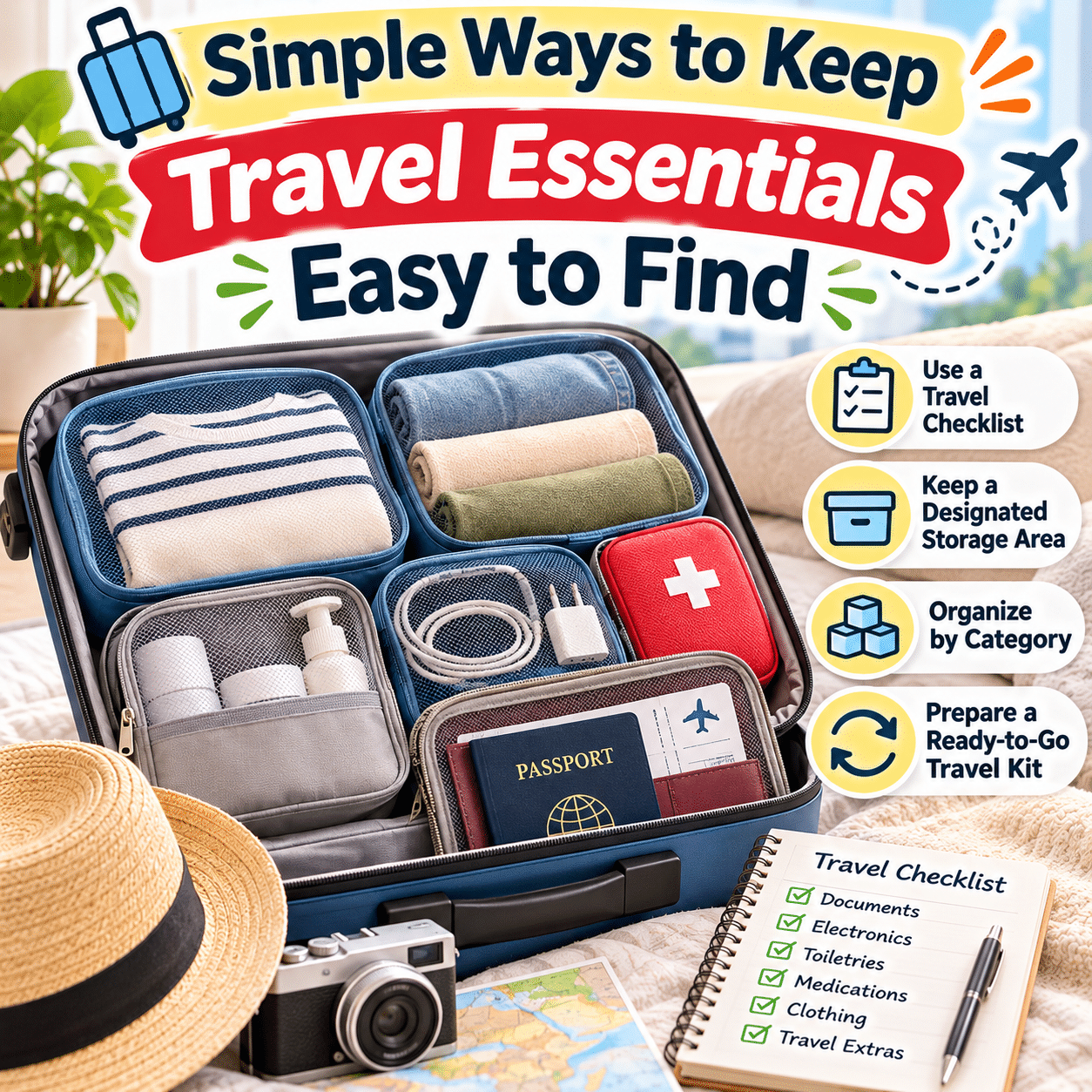
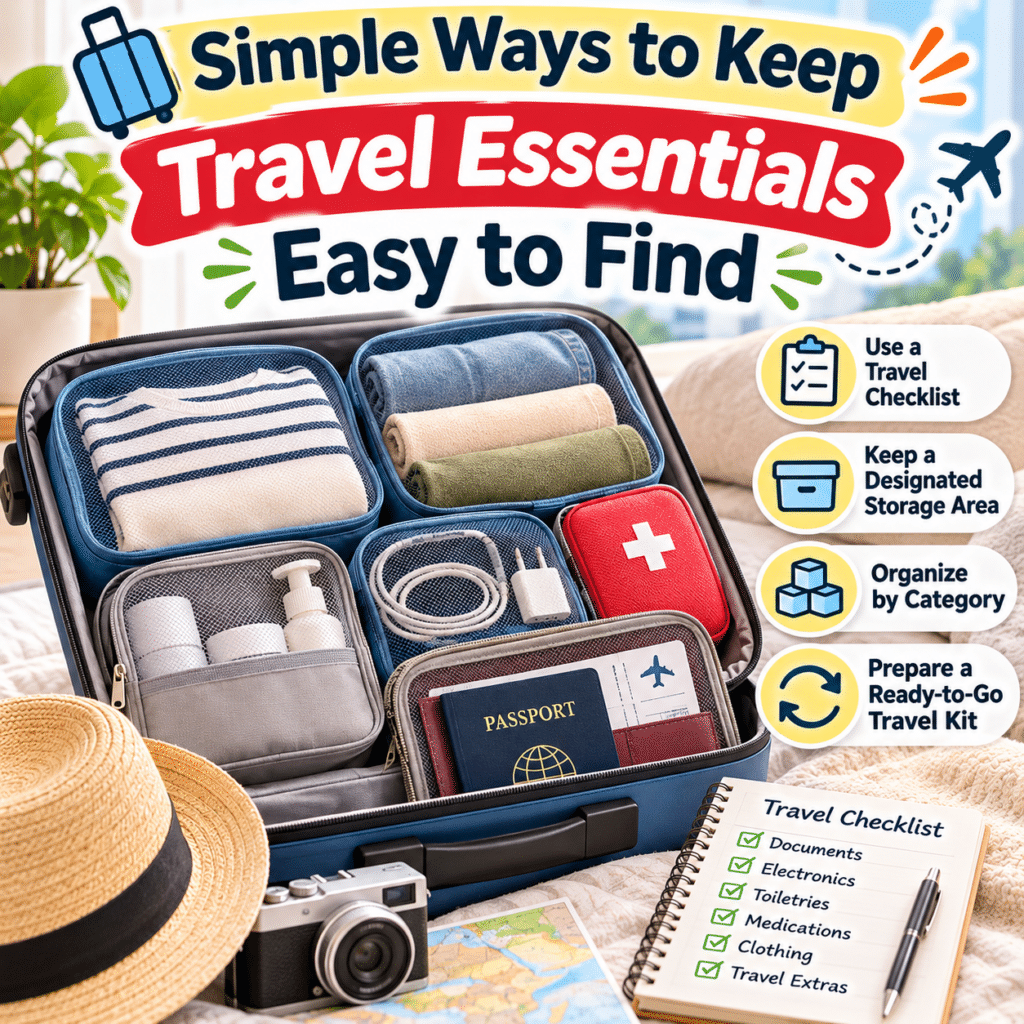
2. Create a Master Travel Essentials Checklist
A reusable checklist is one of the simplest tools for preventing forgotten items.
Start With Universal Essentials
Most travel checklists should include categories such as:
- Identification and required documents.
- Money and payment methods.
- Communication devices.
- Chargers and compatible adapters.
- Clothing and footwear.
- Toiletries.
- Medications and personal health supplies.
- Travel confirmations.
- Emergency contact information.
Separate Essentials From Optional Items
Not every travel accessory is necessary for every trip.
Distinguish between:
Essential items: Belongings required for safety, identification, communication, health, or the planned journey.
Optional items: Accessories that improve comfort or convenience but are not always necessary.
Keep the Checklist Reusable
Store the checklist in a notes application, document, or printed format.
Update it when your travel needs change.
Review Requirements for Each Trip
Travel requirements vary by destination, transportation provider, and personal circumstances.
Always verify current rules rather than assuming that a previous checklist covers every journey.
3. Establish a Dedicated Travel Storage Area at Home
One of the most effective ways to keep travel essentials easy to find is to give them a consistent storage location.
Choose a Practical Storage Space
Possible locations include:
- A designated drawer.
- A small cabinet.
- A labeled storage box.
- A closet shelf.
- A travel accessories organizer.
The best location is one that is secure, dry, and easy for you to remember.
Keep Related Items Together
Store reusable travel accessories in the same general area.
Examples include:
- Luggage tags.
- Travel adapters.
- Packing cubes.
- Toiletry bags.
- Empty travel bottles.
- Luggage locks.
- Portable organizers.
Protect Sensitive Documents
Passports, identity documents, and other sensitive records should be stored securely rather than left in an openly accessible travel basket.
Avoid Overcrowding
A storage area becomes less useful when it contains unrelated household items.
Keep the space dedicated primarily to travel preparation.
4. Organize Travel Essentials by Category
Grouping similar items together makes them easier to locate and pack.
Useful Travel Categories
| Category | Typical Items | Suggested Organization |
|---|---|---|
| Documents | Passport, identification, travel confirmations | Secure document organizer |
| Electronics | Chargers, cables, adapters, earphones | Small electronics pouch |
| Toiletries | Toothbrush, skincare, hygiene products | Washable toiletry bag |
| Health essentials | Medications, basic medical supplies | Clearly labeled personal health pouch |
| Clothing accessories | Socks, belts, scarves | Packing cubes or small organizers |
| Travel comfort | Eye mask, earplugs, neck pillow | Dedicated comfort pouch |
| Miscellaneous | Luggage tags, locks, reusable bags | Small labeled container |
Avoid Mixing Unrelated Items
A bag containing toiletries, electronics, medications, and loose documents can become difficult to search.
Use separate compartments where practical.
Keep Categories Flexible
Some items may reasonably belong in more than one category.
Choose the arrangement that feels natural and is easy to maintain.
5. Use Packing Cubes to Keep Luggage Organized
Packing cubes can divide luggage into smaller, manageable sections.
Organize Clothing by Type
For example:
- Tops.
- Bottoms.
- Underwear and socks.
- Sleepwear.
- Activewear.
Consider Organizing by Activity
For short trips, it may be convenient to group clothing into complete outfits.
Choose Practical Sizes
Smaller cubes are useful for accessories, while larger cubes accommodate bulkier garments.
Avoid Overpacking
Packing cubes improve organization, but they do not increase airline baggage allowances or eliminate weight restrictions.
Use Consistent Placement
Keeping similar categories in the same part of your suitcase can make unpacking and repacking easier.
6. Create a Dedicated Travel Documents Organizer
Travel documents are among the most important belongings to keep accessible.
Identify Required Documents
Depending on the journey, these may include:
- Passport.
- National identification.
- Visa or travel authorization.
- Transportation tickets.
- Accommodation confirmations.
- Travel insurance information.
- Driving documents when applicable.
Use a Secure Organizer
A document wallet or dedicated compartment can help prevent papers from becoming scattered.
Keep Frequently Needed Documents Accessible
Store documents required at checkpoints where you can retrieve them without unpacking your entire bag.
Protect Personal Information
Avoid leaving documents unattended in public spaces.
Keep digital copies secure and use appropriate device protection.
Verify Validity Before Departure
Check passport validity, entry requirements, and other documentation well before traveling.
Requirements vary and may change, so consult official authorities and transportation providers.
7. Keep Digital Travel Documents Organized
Digital documents can reduce paper clutter, but they still need a reliable organization system.
Create a Trip-Specific Folder
Organize digital files under a clear trip name.
For example:
Travel → Destination → Trip Documents
Include Important Information
Depending on the trip, the folder may contain:
- Booking confirmations.
- Transportation details.
- Accommodation addresses.
- Travel insurance information.
- Itinerary documents.
- Emergency contacts.
Use Clear File Names
Instead of vague names such as “Document1,” use descriptive titles.
Examples include:
- Flight Confirmation
- Hotel Reservation
- Travel Insurance
- Train Tickets
- Rental Car Booking
Prepare for Limited Internet Access
Some travel situations involve unreliable connectivity.
Where permitted and appropriate, save important documents for offline access.
Protect Sensitive Files
Use device security, strong authentication, and secure storage.
Avoid placing unprotected copies of sensitive identification documents in publicly accessible folders.
8. Create an Electronics and Charging Essentials Kit
Charging accessories are easy to misplace because they are small and frequently used.
Use a Dedicated Electronics Pouch
Keep compatible accessories together, such as:
- Charging cables.
- Power adapters.
- Earphones.
- Travel plug adapters.
- Approved power banks.
- Small device accessories.
Separate Cables
Cable ties or individual compartments can reduce tangling.
Label Similar Accessories
When several cables look alike, simple labels can help identify their purpose.
Check Compatibility
Different destinations may use different plug configurations and electrical systems.
Verify that devices and adapters are suitable for the destination.
Follow Battery Transportation Rules
Lithium batteries and power banks may be subject to specific airline restrictions.
Check the current rules of your airline and relevant aviation authorities before packing.
Do not assume that all batteries can be placed in checked luggage.
9. Keep Toiletries Easy to Access and Maintain
Toiletries can create unnecessary mess when they are stored loosely.
Use a Washable Toiletry Bag
Choose a bag with suitable compartments and materials that tolerate routine cleaning.
Separate Liquids From Dry Items
Consider organizing:
- Liquids and gels.
- Dental care products.
- Hair accessories.
- Skincare items.
- Grooming tools.
Prevent Leaks
Ensure containers are securely closed.
Use suitable protective bags or leak-resistant containers when necessary.
Follow Transportation Rules
Carry-on liquid restrictions vary by airport, route, and security procedures.
Verify current requirements before departure.
Clean the Bag After Travel
Remove spills, wipe compartments, and allow the bag to dry completely before storage.
10. Organize Medications and Personal Health Essentials
Medications and health-related supplies require particular attention because they may be difficult or unsafe to replace during travel.
Prepare a Personal Health Checklist
Depending on individual needs, this may include:
- Prescription medications.
- Necessary medical devices.
- Basic first-aid supplies.
- Personal hygiene products.
- Relevant medical documentation.
Keep Medications Accessible
Important medications should generally remain accessible during travel.
For air travel, consider the risk of checked baggage being delayed or lost.
Preserve Labels and Documentation
Keep medications appropriately labeled, particularly when traveling internationally.
Some destinations restrict certain substances or require additional documentation.
Check Storage Conditions
Certain medications require temperature control or other special handling.
Follow pharmacist or manufacturer instructions.
Avoid Unnecessary Repackaging
Do not transfer medications into unlabeled containers when doing so could create confusion or conflict with travel requirements.
Confirm Destination Rules
Check official guidance for carrying prescription medicines, controlled substances, medical equipment, and related supplies.
11. Keep Frequently Used Items in Your Personal Bag
Items needed during the journey should not be buried in the main suitcase.
Identify Immediate Essentials
Examples may include:
- Identification documents.
- Phone.
- Wallet.
- Necessary medications.
- Travel confirmations.
- Charging cable.
- Tissues.
- Eyeglasses.
- Small personal care items.
Use Dedicated Compartments
Assign predictable locations for important belongings.
For example:
- Front compartment: travel documents.
- Interior pocket: wallet.
- Small pouch: charging accessories.
- Secure compartment: personal valuables.
Avoid Overloading
A personal bag should remain comfortable to carry and easy to search.
Review Before Leaving Each Location
Check essential compartments before leaving transportation, accommodation, or public spaces.
12. Create a Consistent Packing Order
Packing in a predictable sequence reduces unnecessary searching.
Start With Essential Documents
Confirm that required identification and travel information are ready.
Pack Health and Communication Items
Prepare necessary medications, devices, and chargers.
Organize Clothing and Toiletries
Use suitable containers and packing cubes.
Add Comfort Accessories
Include optional items after essential belongings are accounted for.
Complete a Final Review
Use your checklist rather than relying entirely on memory.
Keep Critical Items Accessible
Items needed during transit should remain in appropriate carry-on or personal storage.
13. Use Clear Labels Without Exposing Sensitive Information
Labels can make storage more intuitive.
Label Travel Storage Containers
Examples include:
- Electronics
- Toiletries
- Packing Accessories
- Travel Comfort
- Outdoor Essentials
Choose Easy-to-Read Labels
Use short, descriptive names.
Avoid Excessive Detail on Luggage
Do not display unnecessary personal information on external luggage tags.
Use Internal Identification
An internal contact card may help identify luggage if external tags become detached.
Keep Labels Durable
Choose labels that tolerate normal handling without creating loose parts or adhesive residue.
14. Organize Travel Essentials for Different Types of Trips
Different journeys require different equipment.
Weekend Getaways
Focus on compact essentials and versatile clothing.
Business Travel
Prioritize:
- Work devices.
- Charging accessories.
- Meeting documents.
- Appropriate clothing.
- Travel confirmations.
International Travel
Pay additional attention to:
- Passport and visa requirements.
- Currency and payment options.
- Electrical compatibility.
- Medication restrictions.
- Transportation arrangements.
Outdoor Adventures
Consider:
- Weather-appropriate equipment.
- Navigation tools.
- Suitable footwear.
- Emergency supplies.
- Activity-specific gear.
Family Travel
Create separate checklists for individual travelers when appropriate.
A flexible system allows you to adapt without rebuilding your entire packing routine.
15. Make Travel Essentials Easy to Find in Small Bags
Compact luggage requires thoughtful organization.
Prioritize Multi-Purpose Items
Choose accessories that serve more than one practical function when suitable.
Use Small Pouches
Separate loose items into manageable groups.
Avoid Excessive Containers
Too many pouches can consume space and make searching more complicated.
Place Heavy Items Appropriately
Distribute weight for stability and comfort.
Keep Frequently Used Items Near the Opening
Avoid placing essential documents or chargers beneath bulky clothing.
16. Prevent Small Items From Disappearing Inside Luggage
Small objects can easily become buried or lost.
Use Zippered Compartments
Store tiny accessories in secure pockets.
Keep Similar Items Together
Avoid scattering charging adapters or jewelry across multiple locations.
Choose Contrasting Pouch Colors
A brightly colored pouch may be easier to identify inside dark luggage.
Check Hidden Compartments
Before unpacking or repacking, inspect all pockets.
Avoid Loose Storage
Small essentials should generally have a dedicated container or compartment.
17. Keep Travel Essentials Organized During Transit
Organization becomes especially important when moving between transportation methods.
Prepare Documents Before Checkpoints
Retrieve necessary items before approaching security or boarding areas when appropriate.
Return Items Immediately
After using a passport, ticket, or payment card, return it to its designated secure location.
Avoid Frequent Bag Reorganization
Constantly moving items between compartments increases the risk of misplacement.
Keep Bags Closed
Secure zippers and compartments after retrieving belongings.
Perform Quick Checks
Before leaving a seat or waiting area, check for essential items.
18. Maintain Organization in Hotels and Temporary Accommodation
Even carefully packed luggage can become disorganized after arrival.
Designate a Small Essentials Area
Choose a safe location for frequently used items.
Keep Documents Secure
Use appropriate secure storage rather than leaving sensitive items exposed.
Separate Clean and Used Clothing
A laundry pouch can prevent clothing from becoming mixed.
Keep Electronics Together
Use one consistent location for chargers and accessories.
Avoid Spreading Belongings Across the Room
Keeping items in predictable places simplifies departure.
Check the Room Before Leaving
Inspect drawers, outlets, bathrooms, and storage spaces.
19. Use a Simple Arrival and Departure Routine
A consistent routine can reduce the risk of leaving belongings behind.
Upon Arrival
- Identify a secure place for documents and valuables.
- Set up charging accessories.
- Organize toiletries.
- Separate frequently used clothing.
- Keep luggage and storage areas orderly.
Before Departure
- Collect charging cables and adapters.
- Check bathrooms and drawers.
- Inspect bedding and seating areas.
- Confirm documents and payment methods.
- Review the travel checklist.
- Check all luggage compartments.
- Perform a final room inspection.
These habits become easier with repetition.
20. Keep Travel Essentials Organized After Returning Home
Unpacking is an important part of long-term travel organization.
Empty Luggage Promptly
Avoid leaving frequently needed items inside suitcases for extended periods.
Return Accessories to Their Storage Area
Place reusable travel items in their designated containers.
Clean and Dry Equipment
Wash suitable toiletry bags, reusable bottles, and other accessories when necessary.
Inspect for Damage
Check luggage, cables, containers, and other items for wear.
Replenish Supplies
Replace used travel-size products or other consumables before the next journey.
Update Your Checklist
Record items you forgot, did not use, or wished you had brought.
This makes future packing more efficient.
21. Create a Ready-to-Go Travel Essentials Kit
A reusable travel kit can simplify preparation for frequent travelers.
Choose Appropriate Items
Examples include:
- Spare charging cable.
- Travel plug adapter.
- Luggage tag.
- Compact reusable bag.
- Empty toiletry containers.
- Eye mask.
- Earplugs.
- Small organizer pouches.
Avoid Storing Sensitive Items Carelessly
Passports, medications, cash, and important documents may require separate secure storage.
Review the Kit Before Every Trip
Do not assume that accessories remain functional or appropriate for every destination.
Replace Worn Components
Inspect cables, containers, and other equipment.
Keep the Kit Simple
A useful travel kit contains practical essentials rather than unnecessary gadgets.
22. Common Travel Organization Mistakes to Avoid
Even experienced travelers can develop habits that make essentials harder to find.
Mistake 1: Packing Without a Checklist
Important items may be forgotten.
Better approach: Maintain a reusable master checklist.
Mistake 2: Mixing Every Small Item Together
Searching becomes frustrating.
Better approach: Group belongings by purpose.
Mistake 3: Using Too Many Organizers
Excessive containers can create confusion.
Better approach: Choose a manageable number of useful pouches.
Mistake 4: Changing Storage Locations Constantly
Items become difficult to locate.
Better approach: Assign consistent compartments.
Mistake 5: Leaving Important Documents in Checked Luggage
Documents may become inaccessible if luggage is delayed.
Better approach: Keep essential travel documents securely accessible.
Mistake 6: Ignoring Destination Requirements
Previously acceptable arrangements may not meet current rules.
Better approach: Verify official requirements before traveling.
Mistake 7: Forgetting to Check Charging Accessories
Missing or incompatible chargers can create inconvenience.
Better approach: Test equipment and confirm compatibility.
Mistake 8: Leaving Everything Inside Luggage After Returning
Accessories become difficult to find before the next trip.
Better approach: Unpack and reset the travel storage system.
Mistake 9: Overpacking Small Bags
Overfilled compartments make items difficult to retrieve.
Better approach: Prioritize essential belongings and leave accessible space.
Mistake 10: Relying Entirely on Memory
Travel involves many details that are easy to overlook.
Better approach: Use repeatable routines and written checklists.
23. Troubleshooting Common Travel Essentials Problems
| Problem | Possible Cause | Practical Solution |
|---|---|---|
| Passport is difficult to locate | No designated secure storage | Establish a consistent document location |
| Chargers become tangled | Loose cables in luggage | Use an electronics pouch and cable organizers |
| Toiletries leak | Poorly secured containers | Check closures and use suitable protective storage |
| Small accessories disappear | Unorganized compartments | Use small zippered pouches |
| Packing takes too long | No reusable system | Create a master checklist and ready-to-go kit |
| Travel documents are scattered | Multiple unrelated storage locations | Consolidate documents securely |
| Luggage becomes disorganized | No category-based packing | Use packing cubes or simple compartments |
| Items are forgotten at hotels | No departure inspection routine | Use a final room checklist |
| Travel supplies are missing | No post-trip replenishment | Reset the travel kit after returning |
| Bag feels overcrowded | Too many unnecessary items | Review essentials and reduce duplicates |
| Digital reservations are hard to find | Unclear file organization | Create a trip-specific digital folder |
| Accessories are damaged | Poor storage or lack of inspection | Clean, inspect, and replace worn items |
Troubleshooting works best when the organization system is adjusted to address the actual source of inconvenience.
24. Build a Practical Travel Essentials Checklist
A clear checklist makes travel preparation more reliable.
Before Packing
- Confirm travel dates and transportation details.
- Verify identification and document requirements.
- Review destination-specific rules.
- Check luggage allowances.
- Prepare a trip-specific checklist.
- Inspect luggage and travel accessories.
- Confirm medication and health-related needs.
During Packing
- Place documents in a secure, accessible location.
- Organize electronics and charging accessories.
- Pack toiletries in suitable containers.
- Separate clothing into practical categories.
- Secure small accessories.
- Check medications and essential supplies.
- Keep frequently needed items accessible.
- Review the complete checklist.
During Travel
- Return documents to their designated compartment.
- Keep valuables secure.
- Check personal belongings before leaving transportation.
- Maintain consistent storage locations.
- Protect electronics and sensitive items.
- Keep luggage compartments closed.
Before Leaving Accommodation
- Check electrical outlets for chargers.
- Inspect drawers and wardrobes.
- Check bathrooms and countertops.
- Look beneath beds and furniture.
- Confirm documents and payment methods.
- Check all bags and compartments.
- Perform a final room inspection.
After Returning Home
- Empty luggage.
- Return travel accessories to storage.
- Clean and dry reusable items.
- Replenish supplies.
- Inspect equipment for damage.
- Update the master checklist.
- Store luggage appropriately.
25. Frequently Asked Questions About Organizing Travel Essentials
1. What is the easiest way to keep travel essentials organized?
Assign consistent storage locations, group related items into a few practical categories, and use a reusable travel checklist.
2. How can I avoid forgetting important travel items?
Prepare a master checklist and review it before every departure. Adjust it to match the destination and type of trip.
3. What travel essentials should always be easy to access?
Identification, necessary travel documents, payment methods, communication devices, and essential medications should generally remain securely accessible.
4. Are packing cubes useful for organizing luggage?
Yes. Packing cubes can separate clothing and accessories into manageable groups, making items easier to locate.
5. How many packing cubes should I use?
Use only as many as needed to organize your belongings. The ideal number depends on luggage size, trip duration, and packing preferences.
6. How should I organize charging cables while traveling?
Store cables in a dedicated electronics pouch and use suitable cable ties or compartments to prevent tangling.
7. Where should I keep my passport during travel?
Keep it in a secure, accessible location appropriate for the journey. Avoid leaving it unattended or placing it in luggage that may become inaccessible.
8. Should I carry printed copies of travel documents?
Printed copies may be useful in some situations, but requirements vary. Verify whether digital documents are accepted for your specific journey.
9. How can I organize digital travel confirmations?
Create a dedicated trip folder with clearly named files and secure offline access where appropriate.
10. What is the best way to pack toiletries?
Use a washable toiletry bag, separate liquids from dry items, secure container closures, and follow transportation restrictions.
11. How do I prevent toiletries from leaking in luggage?
Use suitable leak-resistant containers, check caps, and place liquids inside protective bags when necessary.
12. Should medications be packed in carry-on luggage?
Important medications are generally best kept accessible during travel. Follow transportation rules, storage requirements, and relevant medical advice.
13. Can I store travel essentials permanently inside my suitcase?
Some reusable accessories can remain in luggage, but sensitive documents, medications, and items needed for everyday use may require separate storage.
14. How do I keep small items from getting lost in a backpack?
Use zippered compartments and small pouches with consistent purposes.
15. What is a ready-to-go travel kit?
It is a reusable collection of practical accessories prepared in advance to simplify future packing.
16. How can I organize travel essentials in a small apartment?
Use a compact labeled box, dedicated drawer, or secure shelf to keep reusable travel accessories together.
17. Should I organize luggage by clothing type or outfit?
Both methods can work. Choose the approach that best matches your trip length, activities, and packing preferences.
18. How do I keep luggage organized during a long trip?
Maintain consistent compartments, separate clean and used clothing, and return items to their designated locations.
19. How can I avoid leaving chargers in hotel rooms?
Use a consistent charging location and check all electrical outlets before departure.
20. Are luggage labels helpful?
Yes. Appropriate luggage identification can help distinguish bags and assist with recovery, but avoid displaying unnecessary personal information.
21. How can I organize travel essentials for family trips?
Use shared checklists for common items and separate lists or pouches for each traveler when useful.
22. How do I prepare travel essentials for international trips?
Verify official entry requirements, transportation rules, electrical compatibility, medication restrictions, and other destination-specific needs.
23. What should I do if my travel bag becomes overcrowded?
Remove unnecessary duplicates, reconsider optional accessories, and use a simpler packing arrangement.
24. How often should I review my travel organization system?
Review it before each trip and update it after returning when you identify missing, unnecessary, or damaged items.
25. What is the most important habit for keeping travel essentials easy to find?
Returning items to consistent, designated locations is one of the most useful habits because it reduces searching and makes packing more predictable.
26. Create a Long-Term Travel Organization System
The most effective travel organization strategy is one that remains useful across different destinations and travel styles.
Keep the System Simple
Avoid relying on too many accessories or complicated categories.
Maintain Consistent Storage Locations
Use predictable places for documents, electronics, toiletries, and other essentials.
Prepare Reusable Kits
Keep suitable travel accessories organized between trips.
Update Checklists Regularly
Adjust your packing list based on experience and changing requirements.
Prioritize Accessibility
Frequently used items should be easy to retrieve without unpacking everything.
Protect Important Belongings
Store sensitive documents, valuables, and health-related supplies appropriately.
Review After Every Trip
Identify what worked well and what created inconvenience.
Adapt to Different Travel Needs
A flexible system should support short trips, extended vacations, work travel, and other journeys without unnecessary complexity.
Final Thoughts
Keeping travel essentials easy to find is not about packing perfectly or owning an extensive collection of travel organizers. It is about creating a practical system that reduces searching, prevents forgotten items, and makes every stage of travel more manageable.
Simple habits—such as maintaining a reusable checklist, assigning consistent storage locations, organizing belongings by category, and keeping frequently needed items accessible—can make a noticeable difference.
A dedicated travel storage area at home helps simplify preparation, while thoughtful luggage organization makes it easier to find belongings throughout the journey. Just as importantly, unpacking and resetting your travel accessories after returning home keeps the system ready for future trips.
The best organization method is one that fits your travel habits and remains easy to maintain.
With a little preparation and a few consistent routines, you can spend less time searching through bags and drawers and more time enjoying the experiences that make travel worthwhile.