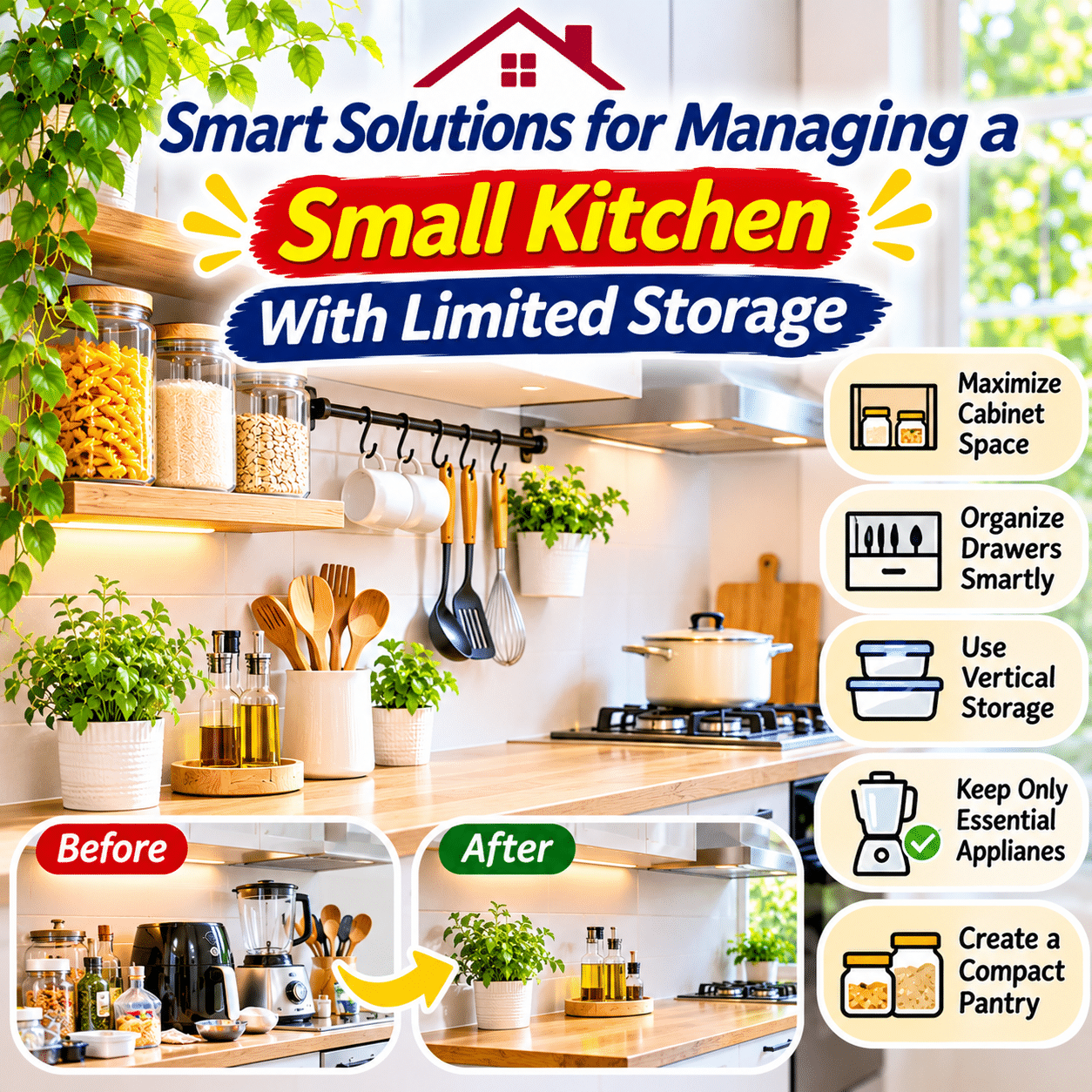
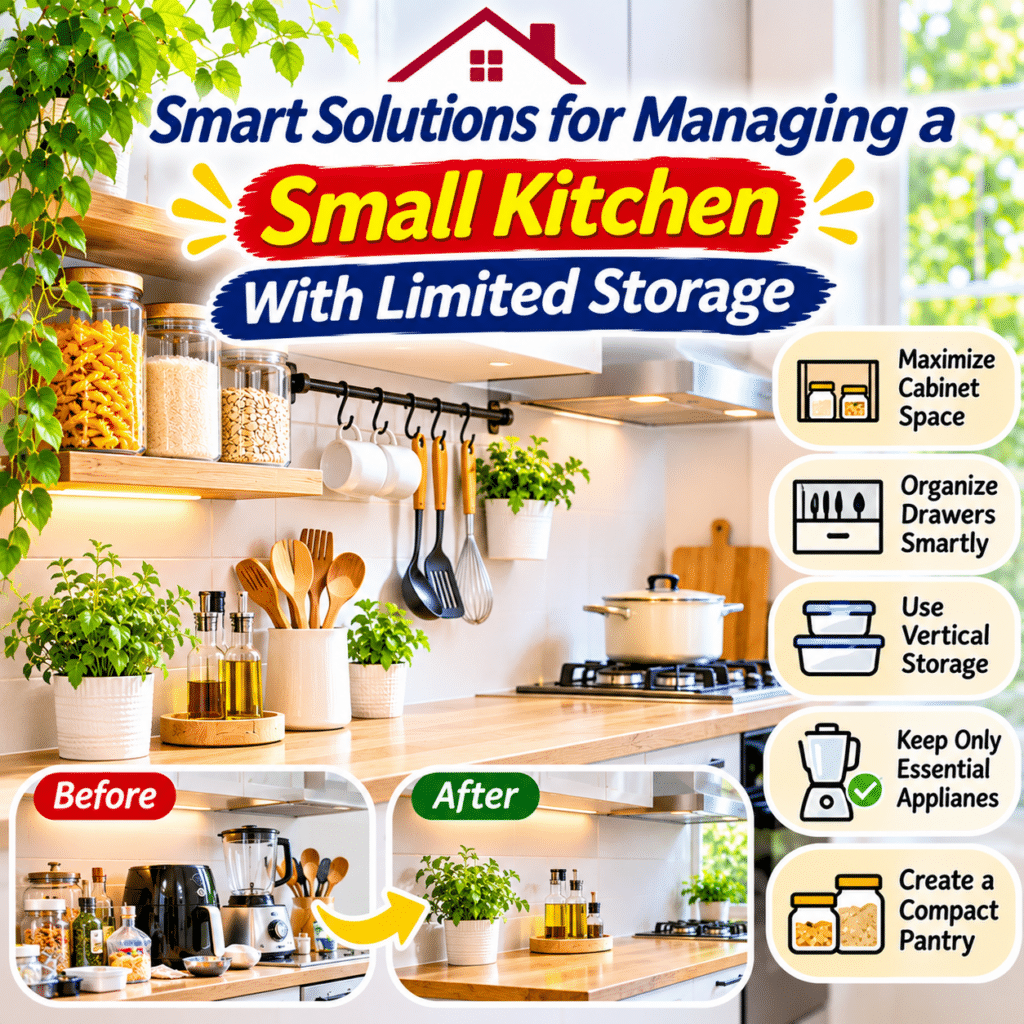
A small kitchen can be comfortable, efficient, and enjoyable to use, even when cabinet space, drawers, and countertops are limited. The key is not necessarily having more storage, but making thoughtful decisions about how existing space is used.
In compact kitchens, everyday essentials often compete for the same limited areas. Cookware fills cabinets, utensils crowd drawers, pantry staples accumulate on shelves, and small appliances occupy valuable countertop space. When everything is stored without a clear system, simple activities such as preparing breakfast or cooking dinner can become unnecessarily complicated.
Limited storage can also encourage clutter. Items without designated locations may remain on countertops, while rarely used equipment takes up space that could be reserved for everyday essentials. Over time, these small inconveniences can make the kitchen feel more crowded than it actually is.
Fortunately, creating a functional small kitchen does not require a major renovation or expensive custom cabinetry. Practical improvements such as organizing storage by activity, making better use of cabinet interiors, reducing unnecessary duplicates, and choosing appropriately sized accessories can make a meaningful difference.
A successful storage system should reflect how the kitchen is used. Someone who cooks daily may need convenient access to cookware and preparation tools, while a household that relies on simple meals may benefit from keeping fewer appliances and kitchen accessories.
The goal is to create a kitchen where essential items are easy to find, food is stored appropriately, countertops remain functional, and daily cleanup feels manageable.
This guide explores smart solutions for managing a small kitchen with limited storage, including practical cabinet organization, space-saving strategies, countertop management, pantry storage, appliance placement, and everyday habits that help compact kitchens work more efficiently.
1. Understand the Real Storage Challenges in a Small Kitchen
Before reorganizing a compact kitchen, it helps to identify what is actually causing the storage problem.
Limited space is only one factor. Poorly arranged cabinets, oversized equipment, unnecessary duplicates, and inconvenient storage locations can make a small kitchen feel even more restrictive.
Common Small Kitchen Storage Problems
| Storage Challenge | Why It Happens | Practical Solution |
|---|---|---|
| Crowded countertops | Too many permanent appliances and accessories | Keep only frequently used essentials accessible |
| Overfilled cabinets | Unnecessary duplicates or inefficient arrangements | Review contents and organize by function |
| Disorganized drawers | Small utensils and gadgets become mixed together | Use simple dividers and categories |
| Limited pantry space | Too many packages or bulk purchases | Store realistic quantities and group ingredients |
| Difficult corner cabinets | Deep or awkward storage areas are hard to access | Use suitable organizers or assign occasional-use items |
| Too many appliances | Equipment occupies more space than available | Prioritize multifunctional and frequently used appliances |
| Poor vertical storage | Upper cabinet space remains unused | Adjust shelves or use suitable shelf risers |
| Excess cookware | Multiple pots and pans compete for space | Keep cookware suited to actual cooking habits |
| Food containers without lids | Containers and lids become separated | Match and organize usable sets |
| Clutter around the sink | Cleaning supplies lack designated locations | Create compact, appropriate cleaning storage |
| Hard-to-reach essentials | Frequently used items are stored inconveniently | Reorganize according to daily activities |
| Temporary clutter | Groceries and personal belongings lack assigned locations | Establish simple put-away routines |
Understanding these problems makes it easier to choose improvements that address actual needs rather than simply adding more storage products.
2. Begin With a Complete Kitchen Storage Assessment
A practical small kitchen organization project should begin with evaluating what is already available.
This helps reveal unused space, overcrowded storage areas, and belongings that no longer serve a useful purpose.
Step 1: Review Each Storage Area
Examine:
- Upper cabinets.
- Lower cabinets.
- Kitchen drawers.
- Pantry shelves.
- Countertops.
- Under-sink storage.
- Suitable wall areas.
- Existing organizers.
- Appliance storage locations.
Step 2: Identify Frequently Used Items
Consider which belongings are used daily or several times each week.
These usually deserve the most accessible locations.
Step 3: Separate Occasional-Use Equipment
Specialty baking tools, seasonal serving dishes, and rarely used appliances may not need prime storage space.
Step 4: Look for Unnecessary Duplicates
Multiple versions of the same utensil or appliance can consume valuable space.
Keep quantities that reflect actual household needs.
Step 5: Identify Storage Obstacles
Notice cabinets that are difficult to open, drawers that become stuck, and shelves where objects must be moved repeatedly.
These areas may benefit from rearrangement rather than additional accessories.
3. Organize the Kitchen Around Everyday Activities
One of the most effective ways to manage limited storage is to arrange belongings according to how they are used.
This approach reduces unnecessary movement and makes everyday cooking more convenient.
Create Functional Kitchen Zones
| Kitchen Zone | Main Activities | Suitable Storage |
|---|---|---|
| Food preparation | Washing, cutting, mixing | Cutting boards, preparation tools, mixing bowls |
| Cooking | Heating and preparing meals | Pots, pans, cooking utensils |
| Food storage | Keeping ingredients fresh and accessible | Pantry staples, containers, refrigerated foods |
| Beverage preparation | Making coffee, tea, and drinks | Mugs, kettle, beverage supplies |
| Cleaning | Washing dishes and maintaining surfaces | Dish soap, brushes, suitable cleaning supplies |
| Serving | Plating and serving meals | Plates, bowls, serving utensils |
| Backup storage | Holding occasional-use supplies | Extra containers and specialty equipment |
Keep Related Items Together
Store cooking utensils near the cooking area when safe and practical.
Keep cutting boards and preparation tools near the main workspace.
Place everyday dishes close to the area where they are commonly used.
Avoid Overcomplicating Zones
A compact kitchen may not have enough space for completely separate areas.
One cabinet can support multiple activities if its contents remain organized.
Prioritize Convenience
The best arrangement minimizes unnecessary reaching, searching, and moving objects.
4. Make Better Use of Upper Kitchen Cabinets
Upper cabinets often provide valuable storage, but their interior space may not be used efficiently.
Adjust Shelf Heights When Possible
Some cabinets have adjustable shelves.
Changing shelf positions can create more practical space for dishes, mugs, and pantry containers.
Use Shelf Risers Carefully
Suitable shelf risers can create an additional storage level for lightweight items.
Follow weight limits and avoid unstable stacking.
Group Similar Belongings
Keep plates, bowls, cups, and other compatible items together.
Reserve Lower Cabinet Shelves for Daily Essentials
Frequently used items should be easy to reach without unnecessary stretching.
Store Occasional-Use Items Higher
Lightweight, rarely used belongings may be suitable for upper storage.
Avoid placing heavy or fragile items where retrieving them could be hazardous.
Keep Cabinets Easy to Access
Do not fill every available space so tightly that objects become difficult to remove.
5. Organize Lower Cabinets for Better Accessibility
Lower cabinets often contain larger and heavier kitchen belongings.
However, deep storage areas can make items difficult to retrieve.
Group Cookware by Function
Possible categories include:
- Everyday pots.
- Frying pans.
- Baking dishes.
- Mixing bowls.
- Food storage containers.
- Small appliances.
Store Heavy Items Low
Heavy cookware and appliances should be kept on stable, suitable lower shelves.
Avoid Excessive Stacking
Stacking too many pots or pans can make everyday cooking inconvenient.
Consider Pull-Out Organizers
Where cabinet dimensions and construction allow, suitable pull-out shelves or baskets can improve access.
Protect Cabinet Hardware
Follow weight limits for shelves, hinges, and drawer slides.
Keep Frequently Used Items Near the Front
Occasional-use equipment can occupy deeper storage areas.
6. Use Kitchen Drawers More Efficiently
Drawers are especially useful for organizing small objects that would otherwise occupy countertops.
Divide Drawers by Purpose
Examples include:
- Everyday cutlery.
- Cooking utensils.
- Measuring tools.
- Small preparation accessories.
- Baking tools.
- Food storage accessories.
Choose Appropriately Sized Dividers
Drawer dividers can prevent objects from becoming mixed together.
Measure the drawer before choosing organizers.
Avoid Overfilling
Drawers should open and close smoothly.
Store Sharp Tools Securely
Use appropriate knife guards, blocks, or other protective storage solutions.
Review Unused Gadgets
Specialized tools that are rarely used may not deserve valuable drawer space.
Keep the System Simple
A small number of practical categories is often easier to maintain than many tiny compartments.
7. Make Use of Vertical Storage Space
Small kitchens often have limited horizontal surfaces but may offer useful vertical storage opportunities.
Consider Wall-Mounted Rails
Properly installed rails can hold suitable lightweight utensils or accessories.
Use Hooks Where Appropriate
Hooks may be useful for kitchen towels, oven mitts, or selected tools.
Explore Cabinet Interior Storage
Some cabinet interiors can accommodate compact organizers.
Keep Storage Away From Heat
Avoid placing hanging items near open flames, hot burners, or appliance ventilation areas.
Check Installation Requirements
Wall-mounted storage must be appropriate for the wall material and expected weight.
Avoid Visual Overcrowding
Too many hanging objects can make a compact kitchen feel busy and difficult to clean.
Use vertical storage selectively.
8. Organize Cabinet Doors Without Creating Obstructions
Cabinet doors may provide opportunities for storing small, lightweight accessories.
However, added organizers must not interfere with cabinet function.
Suitable Uses
Depending on cabinet design, door-mounted storage may hold:
- Lightweight cleaning accessories.
- Suitable small utensils.
- Selected food storage accessories.
- Compact household supplies.
Check Available Clearance
Ensure the door can close completely.
Avoid Excessive Weight
Heavy objects may damage hinges or cause doors to sag.
Consider Moisture Exposure
Organizers installed near sinks should use materials suitable for the environment.
Keep Food and Chemicals Separate
Do not create arrangements that expose food to cleaning products.
Avoid Overloading
A cabinet door should remain easy to open and close.
9. Make Awkward Corner Cabinets More Useful
Corner cabinets can offer substantial storage capacity, but their shape may make access difficult.
Identify the Best Purpose
Deep corner cabinets may work well for items that are not needed daily.
Consider Suitable Rotating Organizers
Some corner cabinets can accommodate rotating shelves or similar accessories.
Check compatibility before purchasing.
Avoid Unstable Stacking
Objects stored in deep corners should remain secure.
Keep Heavy Items Accessible
Do not place heavy cookware where retrieval requires awkward lifting.
Use Simple Grouping
Store related items together so the contents remain predictable.
Avoid Unnecessary Renovation
Sometimes assigning occasional-use items to a difficult cabinet is more practical than installing expensive hardware.
10. Keep Kitchen Countertops as Clear as Possible
Countertop space is especially valuable in a small kitchen.
Even a few permanent objects can reduce the area available for food preparation.
Identify the Main Preparation Surface
Choose the most practical countertop section for chopping, mixing, and assembling meals.
Limit Permanent Appliances
Keep only equipment that genuinely benefits from remaining accessible.
Move Unrelated Objects Elsewhere
Keys, mail, bags, and paperwork should have designated storage locations outside food preparation areas.
Use Compact Organizers Selectively
A small tray or utensil holder may be useful.
Avoid organizers that occupy more space than they save.
Keep Cleaning Simple
Clear surfaces are generally easier to clean thoroughly.
Maintain Appliance Safety
Follow manufacturer instructions for ventilation, electrical connections, and safe operating clearances.
11. Choose Small Appliances Carefully
Small appliances can make cooking convenient, but they often consume significant storage space.
Evaluate Actual Usage
Ask:
- How often is the appliance used?
- Does it perform a function already covered by another appliance?
- Is it easy to store safely?
- Does it justify its countertop footprint?
- Is it difficult to clean or maintain?
Consider Multifunctional Equipment
A suitable multifunctional appliance may reduce the need for several separate devices.
However, it should genuinely meet cooking needs rather than simply offering more features.
Store Occasional-Use Appliances
Equipment used infrequently can be placed in appropriate cabinets or other storage.
Avoid Unsafe Appliance Placement
Do not operate appliances in enclosed cabinets unless specifically designed and approved for that arrangement.
Manage Cords Properly
Keep cords away from water, heat, and sharp edges.
Avoid overloading electrical outlets.
12. Reduce Unnecessary Cookware
Pots, pans, lids, and baking dishes can occupy a large portion of a small kitchen.
Identify Core Cookware
Many households rely primarily on a limited selection of cookware suitable for their normal meals.
Review Duplicates
Several similar pans may not all be necessary.
Match Cookware to Cooking Habits
Keep equipment that supports actual meal preparation.
Organize Lids Separately When Helpful
Suitable lid organizers may reduce awkward stacking.
Protect Cookware Surfaces
Use appropriate separators or storage methods for cookware with delicate finishes.
Avoid Keeping Damaged Equipment
Inspect cookware for damage that affects safe use.
13. Organize Plates, Bowls, and Glassware
Everyday dishes should be easy to retrieve and return.
Keep Daily Dishes Accessible
Place commonly used plates and bowls in convenient cabinets.
Avoid Excessive Quantities
Keep a practical number of dishes for household needs and typical guests.
Group by Size and Function
Organize dinner plates, smaller plates, bowls, and mugs into suitable sections.
Store Fragile Items Securely
Avoid unstable stacks.
Use Cabinet Height Efficiently
Adjust shelves when possible rather than stacking fragile dishes too high.
Separate Occasional Serving Pieces
Specialty dishes may be stored away from daily essentials.
14. Create a Compact Pantry System
A small kitchen may have only one or two cabinets available for pantry staples.
Thoughtful organization can make these areas more functional.
Group Similar Ingredients
Possible categories include:
- Rice and grains.
- Pasta and noodles.
- Flour and baking ingredients.
- Beans and lentils.
- Canned foods.
- Spices.
- Coffee and tea.
- Snacks.
Keep Frequently Used Staples Accessible
Everyday ingredients should be easy to locate.
Avoid Unnecessary Bulk Purchases
Large packages may consume valuable space and increase waste if they cannot be used in time.
Use Suitable Containers
Food-safe containers can help prevent spills and protect dry goods.
Preserve Labels
Keep important product dates, allergen information, and preparation instructions.
Rotate Supplies
Use older suitable products before opening newer equivalents.
15. Store Food Containers and Lids Efficiently
Food storage containers can become one of the most frustrating categories in a compact kitchen.
Match Containers With Lids
Identify usable sets.
Remove Damaged Pieces
Discard or appropriately recycle containers that are cracked, excessively worn, or unsuitable for food use.
Group Similar Shapes
Stack compatible containers when practical.
Store Lids in a Dedicated Area
A drawer section or suitable divider can keep lids organized.
Avoid Excessive Collections
Keep quantities that reflect actual food storage needs.
Consider Nesting Containers
Appropriately designed nesting containers may save cabinet space.
Follow Material Instructions
Not every container is suitable for microwaving, freezing, or hot food.
16. Make the Most of Under-Sink Storage
The cabinet beneath the kitchen sink is often awkward because plumbing occupies part of the available space.
It may also be exposed to moisture.
Inspect for Leaks
Check pipes and cabinet surfaces regularly.
Use Suitable Moisture-Resistant Organizers
Choose materials appropriate for potentially damp environments.
Keep Cleaning Supplies Organized
Group compatible cleaning tools and products.
Follow Chemical Storage Instructions
Keep hazardous products secured and away from food, children, and pets.
Avoid Blocking Plumbing Access
Leave enough room to inspect and maintain pipes.
Do Not Overcrowd
Under-sink storage should remain easy to clean and inspect.
17. Organize the Sink Area Without Extra Clutter
The area around the sink often accumulates dish soap, brushes, sponges, towels, and miscellaneous accessories.
Keep Only Essential Tools Nearby
Avoid leaving multiple rarely used cleaning products on the counter.
Allow Cleaning Tools to Dry
Choose suitable holders that support drainage and airflow.
Replace Worn Sponges and Brushes
Inspect cleaning tools regularly.
Keep Dishwashing Supplies Together
A compact, easy-to-clean arrangement can reduce visual clutter.
Avoid Mixing Food and Cleaning Chemicals
Store cleaning products according to their labels.
Restore the Area After Use
Return tools to their designated locations.
18. Use Movable Storage Only When It Solves a Real Problem
Rolling carts and portable organizers can provide additional storage in some kitchens.
However, they are not suitable for every compact space.
Measure Available Floor Space
Consider whether a cart would interfere with cabinet doors, appliance access, or movement.
Choose Stable Designs
Follow weight limits and use locking wheels where appropriate.
Assign a Specific Purpose
A cart might hold suitable pantry items, lightweight accessories, or other kitchen essentials.
Avoid Turning It Into a Clutter Collection
Additional storage can encourage unnecessary accumulation.
Preserve Safe Walkways
Do not obstruct exits, ventilation, or appliance access.
Consider Alternatives
Reorganizing existing cabinets may be more effective than adding furniture.
19. Choose Storage Accessories That Actually Save Space
Organizers can be helpful, but not every product improves a small kitchen.
Measure Before Buying
Check cabinet dimensions, drawer depth, and available clearance.
Focus on Accessibility
A useful organizer should make items easier to retrieve and return.
Consider Cleaning Requirements
Complex organizers may be difficult to maintain.
Avoid Excessive Compartments
Too many small sections can make storage less flexible.
Choose Durable Materials
Select materials suitable for the intended environment.
Use Existing Storage First
Sometimes rearranging shelves and removing unnecessary objects provides enough improvement.
20. Keep Frequently Used Items Within Easy Reach
Storage efficiency is not simply about fitting more belongings into a cabinet.
It is also about reducing unnecessary effort during everyday activities.
Identify High-Frequency Items
Examples include:
- Everyday cutlery.
- Cooking utensils.
- Cutting boards.
- Frequently used cookware.
- Common seasonings.
- Plates and bowls.
- Food storage containers.
Place Essentials Near Their Point of Use
Store items close to the activities they support when practical.
Avoid Difficult Reaching
Frequently used heavy items should not require overhead lifting.
Keep Storage Predictable
Returning objects to consistent locations makes the kitchen easier to use.
Review Accessibility
If an item repeatedly remains on the countertop because its storage is inconvenient, consider changing its assigned location.
21. Organize a Small Kitchen for One or Two People
Smaller households may not need the same quantities of cookware, dishes, or pantry supplies as larger households.
Keep Practical Dish Quantities
Choose quantities based on everyday use and realistic hosting needs.
Avoid Oversized Cookware Collections
Large specialty equipment may occupy unnecessary space if rarely used.
Purchase Realistic Food Quantities
Smaller packages may reduce waste and storage pressure.
Use Flexible Kitchen Tools
Equipment that supports several common tasks can be useful.
Keep the Layout Simple
A compact kitchen often works best when frequently used items are easy to access without elaborate systems.
Preserve Flexibility
Storage arrangements should allow occasional changes in cooking routines.
22. Manage a Small Kitchen in a Shared Household
When several people use the same kitchen, storage organization becomes a shared responsibility.
Establish Clear Storage Locations
Everyone should know where common items belong.
Group Shared Essentials
Keep frequently used dishes and utensils accessible.
Separate Special Dietary Items When Necessary
Clearly label ingredients and prevent allergen cross-contact.
Agree on Countertop Habits
Avoid leaving unrelated belongings in food preparation areas.
Share Cleanup Responsibilities
Simple expectations can help prevent clutter from accumulating.
Review the System Together
Adjust storage when household needs change.
23. Use Lighting to Make Small Storage Areas Easier to Navigate
Poor lighting can make compact cabinets and countertops feel less functional.
Improve Task Lighting
Adequate lighting helps with food preparation and cleaning.
Consider Cabinet Lighting
Suitable lighting may improve visibility in deep or poorly illuminated cabinets.
Choose Appropriate Electrical Products
Use fixtures designed for the intended location.
Keep Electrical Components Away From Water
Follow installation and safety instructions.
Avoid Unnecessary Decorative Lighting
Prioritize visibility and function.
Make Labels Readable
Clear labels and good lighting can reduce time spent searching for ingredients.
24. Reduce Visual Clutter in a Compact Kitchen
A small kitchen can feel crowded when too many objects remain visible.
Limit Countertop Decorations
Choose a small number of suitable items.
Group Related Essentials
Organized groups often appear calmer than scattered objects.
Keep Packaging Under Control
Store pantry products appropriately rather than leaving loose packages across the counter.
Avoid Excessive Hanging Storage
Wall-mounted accessories should remain practical and easy to clean.
Preserve Open Workspace
Empty countertop space is useful.
Prioritize Function Over Appearance
A visually simple kitchen should still support convenient cooking.
25. Make Kitchen Cleaning Easier Through Better Storage
Storage arrangements influence how easily a kitchen can be cleaned.
Keep Surfaces Accessible
Avoid placing unnecessary objects permanently on countertops.
Choose Easy-to-Clean Organizers
Consider materials and construction.
Prevent Crumb Accumulation
Clean drawers, shelves, and storage containers when necessary.
Manage Moisture
Check under-sink cabinets and other potentially damp areas.
Store Cleaning Tools Appropriately
Allow suitable brushes and sponges to dry.
Avoid Overcrowded Cabinets
Accessible storage makes it easier to inspect and clean shelves.
26. Develop a Simple Daily Kitchen Reset
A compact kitchen can become cluttered quickly because there is little extra space.
A short daily reset can help maintain organization.
After Cooking
- Return ingredients to appropriate storage.
- Refrigerate perishable foods promptly.
- Move used cookware and utensils to the cleaning area.
- Clean food-contact surfaces appropriately.
- Put away clean equipment.
- Return appliances and accessories to their designated locations.
- Clear unrelated belongings from countertops.
Keep the Routine Realistic
The goal is not to maintain a perfectly empty kitchen throughout the day.
Cooking naturally involves temporary activity.
What matters is having a system that allows the space to return easily to a functional condition.
27. Establish a Weekly Small Kitchen Organization Routine
A brief weekly review can prevent storage problems from gradually returning.
Weekly Tasks
- Check refrigerator contents.
- Review pantry supplies.
- Identify unnecessary duplicate purchases.
- Return misplaced items.
- Inspect opened food packages.
- Clean spills in cabinets and drawers.
- Check under-sink storage for moisture.
- Review countertop clutter.
- Remove unnecessary packaging.
- Update the grocery list.
Focus on Problem Areas
Not every cabinet needs attention every week.
Prioritize areas where clutter repeatedly accumulates.
Adjust Storage When Necessary
If a frequently used item remains difficult to access, reconsider its location.
28. Common Mistakes When Organizing a Small Kitchen
Buying Organizers Before Decluttering
Additional containers may occupy more space without solving the underlying problem.
Better approach: Review existing belongings before purchasing storage accessories.
Keeping Every Appliance on the Countertop
Permanent appliances can eliminate valuable preparation space.
Better approach: Prioritize equipment used frequently.
Overfilling Cabinets
Crowded shelves make objects difficult to retrieve.
Better approach: Reduce unnecessary duplicates and preserve access.
Storing Heavy Objects Too High
This can make retrieval uncomfortable or unsafe.
Better approach: Keep heavy cookware on suitable lower shelves.
Using Too Many Wall Hooks
Excessive hanging storage can create visual clutter and interfere with cooking.
Better approach: Use vertical storage selectively.
Buying Oversized Pantry Packages
Large quantities may overwhelm limited storage.
Better approach: Match purchases to consumption and available space.
Ignoring Cabinet Corners
Awkward spaces may remain unused or become cluttered.
Better approach: Assign appropriate storage functions.
Using Complicated Drawer Systems
Too many compartments can reduce flexibility.
Better approach: Organize by a few practical categories.
Keeping Unnecessary Duplicates
Multiple similar tools consume valuable space.
Better approach: Retain items that support actual cooking habits.
Sacrificing Safety for Storage Capacity
Blocking appliance ventilation, overloading shelves, or storing chemicals near food creates hazards.
Better approach: Keep safety requirements central to every storage decision.
29. Troubleshooting Common Small Kitchen Storage Problems
| Problem | Possible Cause | Practical Solution |
|---|---|---|
| Countertops are always crowded | Too many permanent objects | Relocate nonessential appliances and accessories |
| Cabinets are difficult to close | Excess belongings or poor arrangement | Reduce duplicates and reorganize |
| Drawers become messy quickly | No clear categories | Use simple dividers |
| Pots and pans are hard to retrieve | Excessive stacking | Group cookware and improve access |
| Lids are scattered | No dedicated storage | Create a suitable lid section |
| Pantry ingredients are forgotten | Poor visibility | Group and label supplies |
| Deep cabinets are inconvenient | Items are difficult to reach | Assign occasional-use storage or use suitable organizers |
| Corner cabinets remain unused | Awkward shape | Choose compatible storage methods |
| Sink area feels crowded | Too many cleaning accessories | Keep only essentials nearby |
| Under-sink cabinet smells damp | Moisture or plumbing issue | Inspect and address the source |
| Appliances occupy all preparation space | Equipment is not prioritized | Store occasional-use appliances |
| Kitchen feels visually busy | Too many exposed objects | Simplify displays |
| Storage accessories do not fit | Incorrect measurements | Measure before purchasing |
| Heavy items are difficult to access | Poor placement | Move them to suitable lower storage |
| Food containers take too much room | Excess quantities or mismatched lids | Sort usable sets |
| Grocery purchases overwhelm storage | Overbuying | Check inventory before shopping |
| Items repeatedly return to countertops | Storage locations are inconvenient | Move essentials closer to use |
| Kitchen becomes messy after cooking | No reset routine | Establish simple cleanup habits |
| Wall storage feels overcrowded | Too many hanging items | Reduce exposed accessories |
| Organization is difficult to maintain | System is too complicated | Simplify categories and storage locations |
30. A Step-by-Step Plan for Improving a Small Kitchen
A complete kitchen renovation is not necessary to make meaningful storage improvements.
A gradual approach can be more practical.
Step 1: Identify the Main Problems
Determine whether the greatest challenges involve countertops, cabinets, drawers, pantry storage, or appliances.
Step 2: Review Existing Belongings
Separate frequently used essentials from occasional-use and unnecessary items.
Step 3: Remove Unnecessary Duplicates
Keep quantities that match actual household needs.
Step 4: Define Functional Zones
Arrange storage around preparation, cooking, cleaning, and serving.
Step 5: Improve Cabinet Organization
Adjust shelves and group belongings.
Step 6: Organize Drawers
Create simple categories for small utensils and accessories.
Step 7: Review Appliance Placement
Keep frequently used appliances accessible while preserving safe preparation space.
Step 8: Improve Pantry Storage
Group ingredients, protect food quality, and avoid excessive inventory.
Step 9: Consider Selective Storage Accessories
Choose organizers only when they solve a clear problem.
Step 10: Establish Maintenance Habits
Introduce simple daily and weekly routines.
Step 11: Test the Arrangement
Use the kitchen normally for several days.
Step 12: Make Practical Adjustments
Move items that remain inconvenient and simplify storage areas that become cluttered again.
31. Frequently Asked Questions
1. How can I organize a small kitchen with very little storage?
Start by reducing unnecessary belongings, grouping items by function, improving cabinet and drawer organization, and keeping countertops as clear as practical.
2. What is the best way to maximize small kitchen cabinets?
Adjust shelves when possible, group related items, use suitable organizers selectively, and keep frequently used belongings accessible.
3. How do I organize a kitchen without a pantry?
Use suitable kitchen cabinets or shelves for dry ingredients, organize foods by category, and purchase quantities that match available storage.
4. Should I use wall-mounted storage in a small kitchen?
Wall-mounted storage can help when properly installed and positioned safely. Avoid excessive hanging items.
5. How can I organize pots and pans in limited space?
Keep cookware suited to actual cooking habits, reduce unnecessary duplicates, and use suitable cabinet arrangements.
6. What appliances should stay on a small kitchen countertop?
Appliances used frequently may deserve permanent locations if space and safety requirements allow.
7. How do I keep small kitchen countertops clutter-free?
Assign storage locations to utensils, ingredients, and unrelated belongings. Return temporary items after use.
8. Are drawer dividers useful?
Yes. Simple dividers can help keep utensils and small accessories organized.
9. How can I organize food containers and lids?
Match usable sets, remove damaged pieces, stack compatible containers, and store lids in a dedicated section.
10. Should I buy additional storage furniture?
Only when it solves a clear problem without obstructing movement or appliance access.
11. How can I make deep cabinets easier to use?
Keep frequently used items near the front and consider suitable pull-out organizers.
12. How should I organize corner cabinets?
Use them for appropriate items and consider compatible rotating or pull-out accessories when practical.
13. Can I store kitchen items on cabinet doors?
Some lightweight accessories may be suitable if the door can still close properly and hardware weight limits are respected.
14. How can I organize a small kitchen without spending much money?
Rearrange existing storage, remove unnecessary duplicates, simplify categories, and improve everyday habits.
15. Is it better to store utensils in drawers or on the counter?
Drawers can reduce visible clutter, while a small countertop holder may be convenient for selected frequently used utensils.
16. How can I keep a small kitchen from looking crowded?
Limit exposed objects, preserve open preparation space, and organize related items together.
17. How do I store large appliances in a compact kitchen?
Use stable, suitable storage and follow manufacturer instructions for lifting, ventilation, and electrical safety.
18. What should I keep under the kitchen sink?
Appropriate cleaning supplies and accessories may be stored there if they are secured, protected from moisture, and kept away from food.
19. How do I avoid buying too many kitchen organizers?
Identify the specific storage problem, measure the available space, and evaluate existing options before purchasing.
20. How can I make a small kitchen easier to clean?
Reduce permanent countertop clutter, keep cabinets accessible, and choose easy-to-clean storage arrangements.
21. How can I organize a kitchen for one person?
Prioritize frequently used cookware, practical dish quantities, realistic pantry inventory, and convenient storage locations.
22. How do I organize a shared small kitchen?
Establish clear storage locations, agree on cleanup routines, and keep shared essentials accessible.
23. How can I improve a small kitchen without renovation?
Focus on decluttering, shelf adjustments, drawer organization, appliance placement, and practical storage habits.
24. How often should I reorganize my kitchen?
A complete reorganization is not usually necessary. Regular maintenance and occasional adjustments are generally more practical.
25. What is the most important rule for managing limited kitchen storage?
Prioritize the items and activities used most often, preserve safe and functional workspace, and avoid storing more than the kitchen can comfortably accommodate.
32. Practical Checklist for Managing a Small Kitchen With Limited Storage
Use this checklist to create an organized, functional kitchen without unnecessary complexity.
Assess Available Space
- Review upper and lower cabinets.
- Inspect kitchen drawers.
- Identify usable pantry space.
- Evaluate countertop clutter.
- Check under-sink storage.
- Identify awkward corners.
- Review suitable vertical storage opportunities.
- Consider appliance access and safe movement.
Reduce Unnecessary Belongings
- Identify frequently used kitchen essentials.
- Separate occasional-use equipment.
- Review duplicate utensils.
- Reduce unnecessary cookware.
- Sort food containers and lids.
- Remove damaged accessories.
- Reconsider unused appliances.
- Avoid keeping excess packaging.
Improve Cabinet Storage
- Group similar dishes and cookware.
- Adjust shelf heights when possible.
- Keep heavy items on suitable lower shelves.
- Reserve accessible areas for daily essentials.
- Organize deep cabinets.
- Review corner storage.
- Avoid unstable stacking.
- Preserve access to cabinet contents.
Organize Drawers
- Separate everyday cutlery.
- Group cooking utensils.
- Organize measuring tools.
- Store sharp equipment securely.
- Use simple dividers when helpful.
- Avoid overcrowding.
- Remove unnecessary duplicates.
- Keep frequently used tools accessible.
Manage Countertops and Appliances
- Identify the main preparation area.
- Keep essential appliances accessible.
- Store occasional-use equipment appropriately.
- Remove unrelated belongings.
- Limit countertop organizers.
- Maintain appliance ventilation clearances.
- Keep electrical connections away from water.
- Preserve enough open workspace.
Improve Food Storage
- Group pantry ingredients by category.
- Keep frequently used staples visible.
- Use appropriate food-safe containers.
- Preserve important product labels.
- Rotate older suitable ingredients.
- Avoid excessive bulk purchases.
- Maintain appropriate refrigerator and freezer temperatures.
- Prevent cross-contamination.
Organize Cleaning Supplies
- Keep essential cleaning tools together.
- Allow sponges and brushes to dry.
- Inspect under-sink storage for leaks.
- Store cleaning chemicals securely.
- Keep chemicals away from food.
- Avoid blocking plumbing access.
- Clean storage areas regularly.
- Replace worn cleaning tools when necessary.
Maintain Long-Term Organization
- Return belongings after use.
- Clear countertops after cooking.
- Put groceries away promptly.
- Review pantry inventory before shopping.
- Keep storage categories consistent.
- Check problem areas weekly.
- Avoid unnecessary organizer purchases.
- Adjust storage as cooking habits change.
- Prioritize safety, convenience, and functionality.
Final Thoughts
Managing a small kitchen with limited storage is not simply about fitting more belongings into cabinets and drawers. It is about creating a practical environment where everyday cooking activities can take place comfortably and efficiently.
A compact kitchen can function remarkably well when storage decisions reflect actual household needs. Frequently used utensils, cookware, ingredients, and appliances should be accessible, while occasional-use equipment can occupy less prominent locations.
Thoughtful organization also helps preserve valuable countertop space. By moving unnecessary objects into appropriate storage and keeping preparation areas functional, even a modest kitchen can feel more comfortable to use.
Cabinet interiors, drawers, corner spaces, and suitable vertical areas can provide useful storage opportunities. However, additional organizers should be chosen carefully. Products that create more clutter or make belongings harder to retrieve do not necessarily improve the kitchen.
Reducing unnecessary duplicates is equally important. A practical collection of cookware, dishes, appliances, and pantry supplies often serves everyday needs better than overcrowded storage filled with rarely used objects.
Safety should remain central to every arrangement. Heavy items need stable storage, appliances require appropriate ventilation, food must be protected from contamination, and cleaning chemicals should be stored securely.
Long-term organization depends on simple habits rather than constant rearrangement. Returning items after use, putting groceries away promptly, keeping food storage manageable, and clearing countertops after cooking can help prevent clutter from returning.
The most effective small kitchen is not necessarily the one with the most storage accessories or the most elaborate design. It is the one where available space is used thoughtfully, essential items are easy to find, and daily routines can be completed without unnecessary obstacles.
With practical storage choices, realistic inventory management, and consistent everyday habits, a small kitchen can become an organized, welcoming, and highly functional space that supports comfortable daily living.