A comfortable home is not only about the people who live in it. For households with companion animals, creating a welcoming environment also means considering where pets sleep, how they rest, how they move through shared spaces, and whether their surroundings support their physical and emotional needs.
As pets become increasingly integrated into everyday family life, comfort-focused products are taking on a more important role in household planning.
Pet beds, supportive cushions, washable blankets, calming resting spaces, nonslip mats, temperature-conscious accessories, and accessible furniture are no longer viewed simply as optional decorations. Many of these products serve practical purposes that can contribute to animal well-being, household organization, and easier daily care.
The growing attention to pet comfort also reflects a broader understanding of responsible ownership. Providing food, water, exercise, and veterinary care remains essential, but an animal’s quality of life also depends on opportunities to rest safely, move comfortably, and retreat from unwanted stimulation.
A thoughtfully selected pet bed may provide a dedicated resting area. A nonslip runner may help an older dog navigate a smooth floor. A quiet hiding space may allow a cat to withdraw from household activity. A washable blanket can make cleaning easier while offering a familiar surface for relaxation.
These improvements do not necessarily require expensive products or elaborate renovations. In many cases, simple design choices can make a meaningful difference.
However, comfort is highly individual. A product marketed as luxurious, orthopedic, calming, or premium is not automatically appropriate for every animal.
The most useful approach begins with understanding the pet’s natural behavior, physical needs, preferences, and living environment.
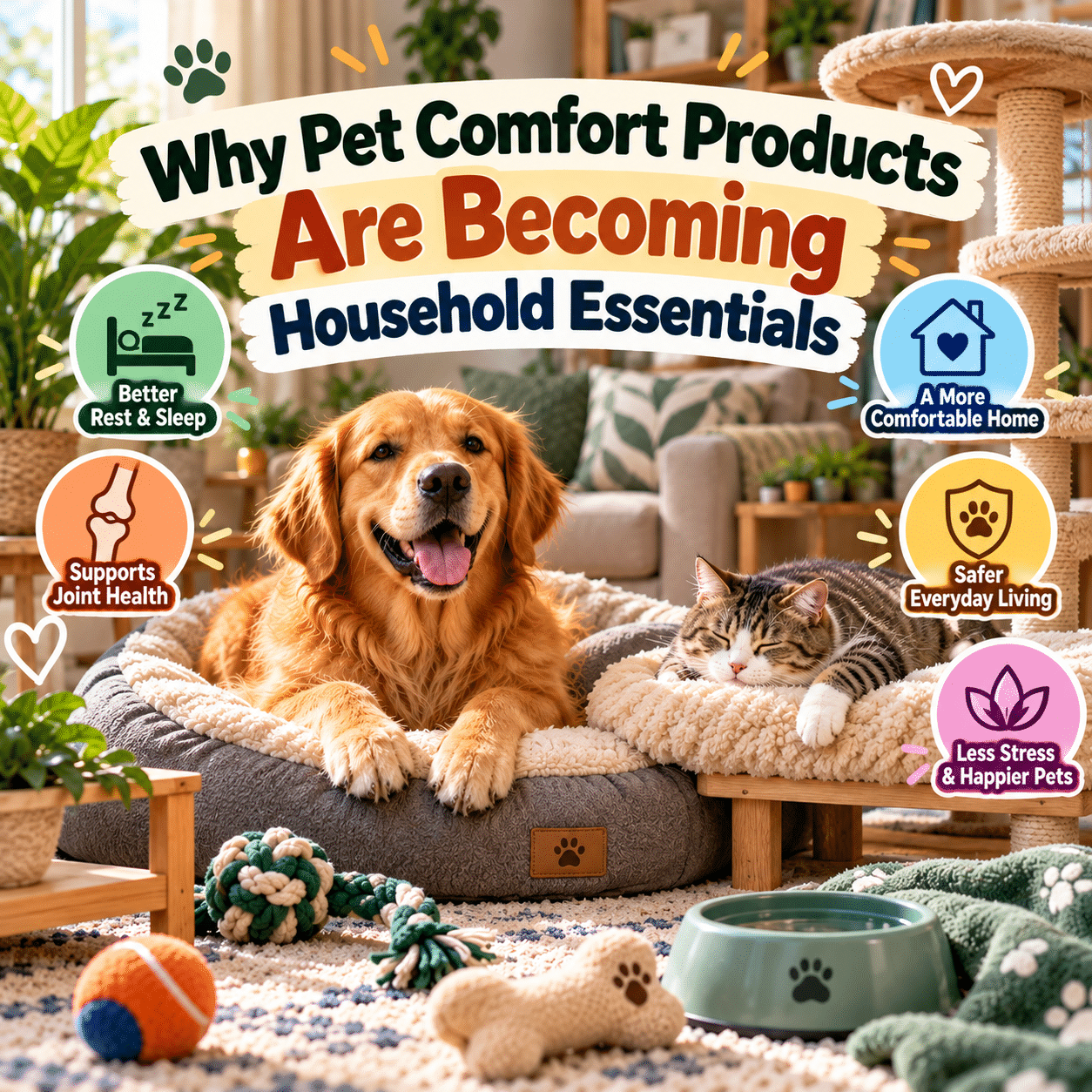
This guide explores why pet comfort products are becoming household essentials, how different designs support everyday care, and what pet owners should consider when creating a comfortable home for their companion animals.

1. The Changing Meaning of Comfort in Pet Care
Pet comfort was once commonly associated with providing a basic sleeping area or a blanket in a convenient corner.
Today, the concept is broader.
Comfort includes physical support, environmental safety, appropriate temperatures, predictable routines, freedom of movement, and access to spaces where animals can rest without disturbance.
Comfort Is More Than Softness
A soft surface may feel pleasant, but softness alone does not determine whether a product is comfortable.
For example, a thick cushion may be difficult for an animal with limited mobility to enter or leave.
A heavily padded bed may retain too much heat in a warm environment.
An enclosed resting space may feel secure to one cat but restrictive to another.
True comfort depends on how well a product supports the individual animal’s needs.
Important considerations include:
- Appropriate body support.
- Suitable temperature and ventilation.
- Ease of access.
- Freedom to change sleeping positions.
- Stability and traction.
- Cleanliness.
- Opportunities for privacy.
- Compatibility with natural behavior.
Why Household Design Matters
Pets spend much of their lives interacting with the home environment.
They sleep on floors, climb onto furniture, walk through hallways, eat in designated areas, and seek quiet places to rest.
Household materials and layouts can influence how comfortably they perform these activities.
For example, slippery flooring may be challenging for an older dog.
A cat may feel more secure when it has access to elevated resting areas.
A small animal may need an appropriate enclosed shelter within its habitat.
Comfort products help households adapt living spaces to these different needs.
The Shift Toward Thoughtful Pet-Friendly Homes
Modern pet-friendly design increasingly considers animal comfort alongside human convenience.
Rather than placing pet equipment wherever space happens to be available, households may create dedicated resting areas, accessible pathways, and organized care stations.
This approach can make the home more functional for everyone.
2. Why Rest Is Essential for Companion Animals
Rest is a fundamental biological need.
Animals require appropriate opportunities to sleep and recover from daily activity.
Sleep patterns vary considerably by species, age, health, and individual behavior.
Dogs and cats often rest at multiple points throughout the day, while other companion animals have different natural activity cycles.
Physical Recovery
Rest allows animals to recover from normal activity.
After walking, playing, climbing, or exploring, pets benefit from comfortable spaces where they can relax.
An appropriate resting surface may help an animal settle without unnecessary pressure from hard or uneven flooring.
However, bedding alone cannot prevent or treat medical conditions.
Persistent discomfort, difficulty lying down, or changes in mobility should be evaluated by a veterinarian.
A Sense of Security
Resting comfortably also depends on feeling safe.
An animal may avoid a soft bed if it is placed in a noisy or exposed location.
A quieter area may be more appealing.
Some pets prefer to rest near household members, while others seek privacy.
Providing suitable choices allows animals to select locations that match their preferences.
Predictable Resting Areas
A familiar resting place can become part of a stable routine.
Pets may associate particular locations with relaxation.
A dedicated bed, blanket, or resting mat can help establish a consistent space, especially when the animal is introduced to it positively.
The goal is to offer a comfortable option rather than force an animal to remain in one place.
3. Pet Beds Are Becoming Everyday Household Furniture
Pet beds are among the most recognizable comfort products.
Modern designs range from simple washable mats to supportive cushions and furniture-inspired structures.
Their growing variety reflects differences in pet size, sleeping behavior, physical needs, and household style.
Flat Cushion Beds
Flat beds provide a simple resting surface.
They may suit animals that prefer stretching out or changing positions frequently.
A useful flat bed should provide enough space for the animal to lie comfortably.
The material should be durable and appropriate for the pet’s behavior.
Bolster Beds
Bolster beds feature raised edges around part or all of the sleeping area.
Some animals enjoy resting their heads against these edges or curling up beside them.
However, high bolsters may make entry difficult for animals with reduced mobility.
Donut-Style Beds
Round beds with raised, cushioned edges are often marketed for pets that enjoy curling up.
They may appeal to certain animals, but their suitability depends on individual preference.
Some pets prefer flatter, more open surfaces.
Orthopedic-Style Beds
Orthopedic-style beds typically use supportive foam or layered cushioning.
They are often marketed for senior animals or pets that need additional support.
The term “orthopedic” does not guarantee a particular medical benefit or standardized performance level.
Owners should evaluate the actual construction, firmness, accessibility, and suitability of the bed.
Animals with arthritis or other mobility conditions may benefit from individualized veterinary guidance.
Elevated Pet Beds
Elevated beds lift the resting surface above the floor.
Some use breathable fabric stretched across a sturdy frame.
These designs may allow air to circulate beneath the animal and can be useful in selected environments.
However, the frame must be stable, and the height should be appropriate.
An elevated bed may be unsuitable for an animal that struggles with climbing or stepping.
4. Comparing Common Pet Bed Designs
Different bed styles offer different practical characteristics.
| Bed Type | Main Characteristics | May Suit | Important Considerations |
|---|---|---|---|
| Flat cushion | Open sleeping surface | Pets that stretch out | Adequate size and support |
| Bolster bed | Raised edges | Pets that enjoy leaning or curling | Entry height and cleaning |
| Donut bed | Circular cushioned design | Some pets that prefer enclosed-feeling spaces | Heat retention and individual preference |
| Supportive foam bed | Firm or layered cushioning | Pets needing a more supportive surface | Foam quality and accessibility |
| Elevated bed | Raised, often breathable surface | Selected pets in suitable environments | Stability and safe entry |
| Covered bed | Partially enclosed resting area | Pets that seek privacy | Ventilation and freedom of exit |
| Washable mat | Lightweight, portable surface | Travel or flexible household use | Thickness and durability |
There is no universally superior design.
The best bed is one the animal can use safely and comfortably.
5. Comfort Products Are Supporting Senior Pets
One of the most meaningful developments in pet comfort is greater attention to aging animals.
As pets grow older, some experience changes in mobility, strength, balance, sensory abilities, and resting preferences.
Comfort products can help households adapt to these changes.
Easier Access to Resting Areas
Older animals may find high-sided beds difficult to enter.
Low-entry beds and flat supportive mats can provide easier access.
A resting area should not require unnecessary jumping or climbing.
Supportive Sleeping Surfaces
A supportive bed may help distribute body weight more comfortably than a hard floor.
However, the ideal firmness depends on the animal.
An excessively soft surface may make standing difficult for some pets.
Owners should observe whether the animal can lie down, change position, and rise comfortably.
Nonslip Flooring
Smooth tile, polished wood, and other slippery surfaces may create difficulties for animals with reduced traction.
Nonslip mats or runners can provide more secure footing in frequently used areas.
They should lie flat and remain stable.
Loose rugs that slide or bunch up may introduce additional hazards.
Ramps and Pet Steps
Ramps and steps may help pets access furniture or vehicles without jumping.
These products should have:
- Stable construction.
- Suitable weight capacity.
- Appropriate dimensions.
- Secure traction.
- Safe positioning.
Animals should be introduced gradually.
Ramps and steps do not replace veterinary evaluation when mobility changes occur.
6. Temperature Comfort Is Becoming a Greater Priority
Temperature influences how animals experience their environment.
Different species, breeds, coat types, ages, and health conditions have different temperature tolerances.
Comfort products increasingly address both warm and cool conditions.
Cooling Mats
Some cooling mats use pressure-activated gels, water, or other materials intended to provide a cooler resting surface.
They may offer temporary comfort in suitable conditions.
However, their effectiveness varies by design and environment.
Cooling mats are not substitutes for shade, ventilation, drinking water, or appropriate temperature control.
Animals should not be left in dangerously hot environments simply because a cooling product is available.
Breathable Bedding
Breathable fabrics and elevated designs may help reduce heat retention.
These features can be useful for animals that prefer cooler resting surfaces.
However, a pet may still choose a hard floor if it feels more comfortable.
Warm Blankets and Insulated Beds
Some animals benefit from warmer resting areas in cool environments.
Washable blankets and insulated bedding can provide additional comfort.
Heated pet products require particular caution.
Electrical cords, temperature controls, and potential overheating hazards must be considered.
Only products specifically designed for appropriate animal use should be considered, and manufacturer instructions must be followed.
Recognizing Temperature Distress
Signs of overheating can include excessive panting, weakness, distress, or collapse.
Heatstroke is a medical emergency.
Comfort accessories cannot replace prompt veterinary attention when serious symptoms occur.
Similarly, animals exposed to excessive cold may require immediate environmental changes and medical care.
7. Washable Comfort Products Are Simplifying Household Care
Comfort and hygiene are closely connected.
Pet bedding can accumulate hair, dirt, skin oils, moisture, and other debris.
Products that are easy to clean can support more consistent maintenance.
Removable Covers
Beds with removable covers allow owners to wash the outer fabric without cleaning the entire cushion.
This can be especially useful for larger beds.
Owners should follow care instructions to avoid damaging materials.
Machine-Washable Blankets
Washable blankets can protect furniture and provide familiar resting surfaces.
They may be useful for pets that move between different areas of the home.
Fabric should be appropriate for the animal and free of loose threads or other hazards.
Waterproof Liners
Water-resistant or waterproof liners can help protect bedding from moisture.
These may be useful for young animals, senior pets, or temporary hygiene challenges.
However, liners should not create excessive heat, noise, or discomfort.
Persistent accidents or changes in elimination habits should be discussed with a veterinarian.
Durable Materials
Durability matters because comfort products often receive daily use.
Strong stitching, suitable fabrics, and replaceable components can extend product life.
A product that remains comfortable after repeated cleaning may offer better long-term value than one that deteriorates quickly.
8. Quiet Spaces and Covered Beds Support Environmental Choice
Comfort is not only physical.
Animals also need opportunities to retreat from unwanted stimulation.
Busy households may include children, visitors, televisions, appliances, and other sources of activity.
Some pets enjoy being near this activity, while others prefer quieter spaces.
Covered Beds and Hideaways
Covered beds provide partially enclosed resting areas.
They may appeal to animals that seek privacy.
Cats, in particular, often use enclosed spaces for resting or observation.
However, covered designs must provide appropriate ventilation and easy access.
Dedicated Quiet Corners
A quiet corner may be more valuable than an expensive bed placed in a busy hallway.
Suitable locations are generally away from constant foot traffic and avoidable disturbances.
The animal should be able to enter and leave freely.
Multiple Resting Options
Providing more than one resting location allows pets to choose between different environments.
For example, a cat may prefer a sunny window perch in the morning and a shaded bed later in the day.
A dog may rest near family members during the evening and move to a quieter room afterward.
Choice can be an important part of a comfortable environment.
Respecting Rest
Household members should avoid repeatedly disturbing animals while they sleep.
Children should be taught to respect resting spaces.
A bed should be associated with safety rather than punishment or forced confinement.
9. Cat Comfort Products Are Becoming More Behavior-Focused
Cats have particular environmental preferences that influence their comfort.
They often seek elevated locations, hiding opportunities, stable resting surfaces, and areas where they can observe their surroundings.
Window Perches
Window perches provide elevated resting locations near windows.
They may offer opportunities for observation and relaxation.
Products must be securely installed and appropriate for the cat’s weight.
Windows should also be secured to prevent falls or escape.
Cat Trees With Resting Platforms
Cat trees combine climbing structures with elevated resting areas.
Some designs include enclosed compartments or padded platforms.
The structure should be stable and suitable for the cat’s mobility.
Enclosed Cat Beds
Some cats prefer covered beds or hideaways.
Others prefer open surfaces.
Providing both options may help owners understand individual preferences.
Scratching and Resting Areas
Scratching is a normal feline behavior.
Providing suitable scratching surfaces near preferred resting areas can support natural routines.
Scratching posts should be stable and appropriately sized.
Litter Area Comfort
Comfort also includes access to appropriate toileting facilities.
Litter boxes should be accessible, clean, and placed in suitable locations.
Strong odors, difficult entry points, or stressful locations may discourage use.
10. Dog Comfort Products Are Adapting to Different Lifestyles
Dogs vary widely in body size, coat type, activity level, and household routine.
Comfort products increasingly reflect this diversity.
Resting Areas for Active Dogs
Active dogs need appropriate opportunities to recover after exercise.
A comfortable bed in a quiet location can provide a dedicated resting space.
Large-Breed Comfort
Large dogs may require beds with sufficient dimensions and supportive construction.
A bed that is too small may limit comfortable sleeping positions.
Small-Dog Accessibility
Small dogs may benefit from appropriately sized beds and accessories that do not require excessive climbing.
However, accessibility needs depend on the individual animal.
Travel Comfort
Portable mats and familiar blankets can provide consistent resting surfaces during travel.
They may help create a recognizable place to settle in unfamiliar environments.
Outdoor Resting Products
Outdoor beds and mats should be appropriate for weather conditions.
They must not be used as substitutes for adequate shelter, temperature protection, and supervision.
11. Pet Comfort and Interior Design Are Becoming More Connected
Modern households often want pet products that function well without making living spaces feel cluttered.
This has encouraged the development of furniture-inspired comfort products.
Coordinated Materials and Colors
Pet beds may feature neutral fabrics, textured upholstery, and simple shapes.
These designs can blend into living rooms and bedrooms.
However, appearance should remain secondary to safety and comfort.
Furniture-Integrated Pet Spaces
Some household furniture includes dedicated pet resting compartments.
Examples include side tables with enclosed sleeping areas or benches with integrated pet beds.
These designs can save space.
However, enclosed areas must provide adequate ventilation, access, and room for the animal.
Minimalist Pet Accessories
Minimalist design often emphasizes simple construction and fewer decorative details.
This can make some products easier to clean.
However, minimalism does not automatically mean better functionality.
Creating a Cohesive Pet-Friendly Home
A practical approach is to select products that meet the animal’s needs first and then consider how they fit the surrounding space.
A comfortable pet bed can be both functional and visually appealing.
The two goals do not need to conflict.
12. Comfort Products for Small Apartments
Limited living space can make household organization more challenging.
Pet comfort products can help create functional environments without requiring large dedicated rooms.
Compact Beds
Compact beds can fit into corners or beside furniture.
However, the bed must still provide adequate space for the animal.
Foldable Mats
Foldable mats can be stored when not needed.
They may be useful for travel or temporary resting areas.
Vertical Resting Spaces for Cats
Cats may benefit from secure elevated platforms that expand usable space.
Wall-mounted shelves and climbing furniture should be installed correctly.
Multifunctional Furniture
Furniture with integrated storage and resting areas may help reduce clutter.
However, the animal should not be confined to a space simply because it is convenient for household organization.
Maintaining Clear Pathways
Pet beds and accessories should not obstruct important walking routes.
This is especially relevant in homes with senior animals or people with mobility limitations.
13. Comfort During Travel and Changes in Routine
Travel, relocation, and temporary changes in household routines can introduce unfamiliar environments.
Comfort products may help provide continuity.
Familiar Bedding
A familiar blanket or mat may carry recognizable scents.
This can make a new resting location more familiar.
However, familiarity alone does not guarantee that an animal will feel relaxed.
Comfortable Carriers
A carrier should be appropriately sized, secure, and well ventilated.
A suitable removable pad may improve comfort.
The animal should have opportunities to become familiar with the carrier before travel whenever possible.
Portable Resting Mats
Portable mats can create a consistent resting surface during visits or trips.
They should be easy to clean and appropriate for the environment.
Avoiding Overstimulation
Travel can be stressful for some pets.
Owners should provide suitable breaks, water, temperature control, and opportunities for rest.
Animals should never be left unattended in vehicles where temperatures may become dangerous.
14. Understanding Products Marketed as Calming
Some pet comfort products are marketed as calming, anxiety-reducing, or stress-relieving.
Examples include weighted-style wraps, pressure garments, enclosed beds, and products containing particular scents.
These claims require careful interpretation.
Pressure Garments
Some pressure garments are designed to apply gentle, consistent contact.
Individual animals may respond differently.
Evidence for their effectiveness varies, and they should not be assumed to treat anxiety disorders.
A garment must fit correctly and should not restrict breathing or movement.
Calming Beds
Soft, enclosed, or bolster-style beds are sometimes advertised as calming.
They may provide a preferred resting surface for certain animals.
However, the shape of a bed does not guarantee a reduction in anxiety.
Scent-Based Products
Some products contain fragrances or essential oils.
These require particular caution because animals may be sensitive to substances that humans tolerate.
Certain essential oils can be toxic to pets.
Products should not be used without confirming species-specific safety.
When Professional Support Is Needed
Persistent fear, separation-related distress, or significant behavioral changes may require veterinary evaluation or qualified behavioral assistance.
Comfort products can support an appropriate environment, but they are not replacements for diagnosis or treatment.
15. How Comfort Products Can Support Household Hygiene
A comfortable home should also be clean and safe.
Pet comfort products can contribute to hygiene when they are designed for regular maintenance.
Designated Resting Surfaces
Providing a preferred resting area may help contain some shedding and dirt in manageable locations.
However, pets may still choose other household surfaces.
Protective Furniture Covers
Washable covers can protect sofas and chairs.
They should remain securely positioned and should not create entanglement hazards.
Easy-Clean Materials
Smooth surfaces, removable covers, and washable fabrics can simplify cleaning.
Regular Maintenance
Comfort products should be inspected and cleaned according to their materials and usage.
A practical routine may include:
- Removing loose hair.
- Washing removable covers.
- Inspecting seams and padding.
- Checking for moisture.
- Replacing damaged components.
- Cleaning surrounding floor areas.
Regular maintenance helps preserve both comfort and hygiene.
16. Sustainability and Durability in Pet Comfort Products
Pet comfort products are also being influenced by broader interest in durability and responsible consumption.
Long-Lasting Construction
A durable bed or blanket may remain useful for years when properly maintained.
Strong seams, suitable materials, and washable components can reduce replacement frequency.
Replaceable Covers
Some beds offer replacement covers.
This can extend the usefulness of the inner cushion.
Recycled Materials
Certain products incorporate recycled textiles or other recovered materials.
Environmental benefits depend on the full production and disposal process.
A recycled material label alone does not establish overall sustainability.
Avoiding Unnecessary Purchases
The most sustainable purchase may be one that is genuinely needed and used regularly.
Buying multiple comfort products that an animal ignores creates unnecessary waste.
Repair and Maintenance
Where safe and practical, replacing a cover or repairing minor damage may extend product life.
However, products with exposed stuffing, unsafe components, or serious structural damage should not continue to be used.
17. Choosing Comfort Products for Different Life Stages
Comfort requirements may change as animals grow and age.
Young Pets
Puppies and kittens may need washable bedding and safe resting areas.
Products should account for chewing, exploration, and accidents.
Loose stuffing, cords, and small detachable parts can create hazards.
Adult Pets
Adult animals may develop clear resting preferences.
Owners can select products that support their established habits.
Senior Pets
Older animals may need easier access, supportive surfaces, and improved traction.
Their needs should be assessed individually.
Pets Recovering From Illness or Injury
Animals recovering from medical procedures may require specific resting arrangements.
Veterinary instructions should take priority over general comfort recommendations.
Some products that seem comfortable may interfere with recovery or wound care.
18. How to Choose the Right Pet Comfort Products
Selecting comfort products should begin with the animal rather than the product’s appearance or marketing.
Step 1: Observe Resting Behavior
Notice where and how the animal prefers to rest.
Does it curl up?
Stretch out?
Seek elevated spaces?
Prefer cooler flooring?
Choose quiet corners?
These observations provide useful clues.
Step 2: Consider Physical Needs
Evaluate body size, mobility, health, and ease of access.
A product should not require uncomfortable movement.
Step 3: Assess Materials
Look for appropriate fabrics, stable construction, and materials that can tolerate regular use.
Avoid unsafe components.
Step 4: Evaluate Cleaning Requirements
Determine whether the product can be cleaned easily.
Removable covers and clear care instructions may be useful.
Step 5: Check the Household Environment
Consider temperature, floor type, available space, and household activity.
A suitable product should fit naturally into daily routines.
Step 6: Introduce the Product Gradually
Allow the animal to investigate voluntarily.
Do not force use.
A familiar blanket or positive reinforcement may help some pets become comfortable with a new resting area.
Step 7: Evaluate Actual Use
Observe whether the animal chooses the product and appears comfortable using it.
If the product is consistently avoided, consider whether its location, texture, size, or design is unsuitable.
19. Common Mistakes When Buying Pet Comfort Products
Several mistakes can reduce the usefulness of comfort accessories.
Choosing a Bed Based Only on Appearance
An attractive bed may be too small, too warm, or difficult to access.
Function should come first.
Assuming Softer Always Means Better
Extremely soft surfaces may provide insufficient support for some animals.
The appropriate firmness varies.
Ignoring Temperature
Thick bedding may be uncomfortable in hot conditions.
Products should suit the environment and the animal.
Buying Products With Difficult Maintenance
A bed that cannot be cleaned adequately may become unhygienic.
Overlooking Accessibility
High edges, unstable steps, or slippery surfaces can create difficulties.
Believing Comfort Products Replace Veterinary Care
Changes in sleeping behavior, movement, or willingness to rest may indicate a medical problem.
Accessories should not delay appropriate veterinary assessment.
Forcing Pets to Use New Products
An animal may need time to investigate.
Some pets may simply prefer a different design.
20. Building a Comfortable Pet-Friendly Home
A comfortable environment does not require a large collection of accessories.
It requires thoughtful planning.
Create a Primary Resting Area
Choose a location that is safe, accessible, and appropriate for the animal’s preferences.
Provide Alternatives
Where practical, offer more than one suitable resting surface.
This allows animals to choose between different temperatures, levels of privacy, and household locations.
Maintain Safe Movement
Keep pathways clear.
Use suitable traction surfaces where needed.
Manage Temperature
Provide appropriate ventilation, shade, and temperature control.
Do not rely solely on cooling or warming accessories.
Support Natural Behavior
Comfort includes more than resting.
Cats may need climbing and hiding opportunities.
Dogs may need suitable exercise and quiet recovery spaces.
Other companion animals require species-specific environments.
Keep Products Clean
Regular cleaning and inspection help maintain comfort and safety.
Respect Individual Preferences
Observe how the animal uses the space.
Adjust arrangements when necessary.
21. A Practical Pet Comfort Checklist
The following checklist can help households evaluate their current setup.
| Comfort Area | What to Check | Practical Improvement |
|---|---|---|
| Sleeping space | Is the resting surface appropriately sized? | Provide suitable bedding |
| Accessibility | Can the pet enter and leave comfortably? | Use low-entry designs or appropriate ramps |
| Temperature | Is the resting area too hot or cold? | Adjust location and environmental conditions |
| Flooring | Are frequently used surfaces slippery? | Add secure nonslip mats |
| Privacy | Can the pet retreat from activity? | Provide a quiet resting area |
| Hygiene | Is bedding easy to clean? | Choose washable materials |
| Safety | Are there damaged or loose components? | Repair or replace unsafe items |
| Choice | Does the pet have suitable alternatives? | Offer different resting locations |
| Travel | Is there a familiar portable resting surface? | Use a suitable travel mat |
| Maintenance | Are products inspected regularly? | Establish a cleaning routine |
The checklist is a starting point rather than a universal prescription.
Different animals require different arrangements.
22. The Future of Pet Comfort Products
Pet comfort products will likely continue evolving as households place greater emphasis on animal welfare, practical design, and long-term usability.
Several developments may shape future products.
More Accessible Designs
Products may increasingly accommodate animals with different mobility levels.
Low-entry beds, stable ramps, and easier-to-use accessories could become more common.
Better Material Performance
Manufacturers may continue improving washable fabrics, supportive cushioning, and durable construction.
More Thoughtful Temperature Management
Breathable materials and temperature-conscious designs may become more refined.
However, environmental temperature control will remain essential.
Greater Integration With Home Design
Pet furniture may continue blending into contemporary interiors while retaining animal-centered functionality.
More Repairable Products
Replaceable covers, modular components, and durable frames could extend product lifespan.
Stronger Focus on Individual Needs
The most meaningful improvements may come from recognizing that comfort varies between animals.
Products that provide flexibility, accessibility, and choice may offer lasting value.
23. Frequently Asked Questions
1. Why are pet comfort products becoming more popular?
Pet comfort products are receiving greater attention because households increasingly consider companion animals’ physical needs, resting preferences, mobility, and environmental well-being.
Many products also offer practical benefits such as easier cleaning and improved home organization.
2. Does every pet need a dedicated bed?
Not every pet requires a commercially manufactured bed.
However, animals should have access to safe, comfortable, and appropriate resting areas.
Some prefer cushions, while others choose mats, blankets, or suitable household surfaces.
3. Are orthopedic pet beds worth buying?
Supportive beds may be useful for some animals, particularly those with specific comfort or mobility needs.
However, the term “orthopedic” does not guarantee medical benefits.
Construction, firmness, accessibility, and individual suitability are more important than the label.
4. What comfort products are useful for senior dogs and cats?
Potentially useful products include low-entry beds, supportive resting surfaces, nonslip mats, and appropriately designed ramps.
The best choices depend on the animal’s mobility and health.
Veterinary advice may be necessary when physical limitations are present.
5. Are cooling mats safe for pets?
Cooling mats can be suitable when they are designed for animals, used according to instructions, and appropriate for the individual pet.
Owners should inspect materials and prevent chewing or ingestion.
Cooling mats do not replace safe environmental temperatures or access to water.
6. How often should pet bedding be washed?
Cleaning frequency depends on the animal, material, and level of use.
Bedding should be cleaned whenever it becomes dirty or develops odors, and according to manufacturer instructions.
Households with particular hygiene concerns may need more frequent washing.
7. How can I make my home more comfortable for pets without spending much money?
Simple improvements can include providing clean blankets, creating quiet resting areas, keeping pathways clear, using secure nonslip surfaces, and allowing pets to choose between suitable locations.
Observing the animal’s preferences is often more valuable than buying expensive accessories.
Conclusion: Comfort Is an Essential Part of Thoughtful Pet Care
Pet comfort products are becoming household essentials because they address everyday needs that influence how companion animals experience their homes.
A suitable resting surface, accessible pathway, quiet retreat, or washable blanket can contribute to a safer, more comfortable environment.
Modern product designs offer more choices than ever, but the best solutions are not necessarily the most expensive or technologically advanced.
They are the ones that respond to real needs.
For a senior dog, that may mean a stable nonslip walkway and an easily accessible bed.
For an indoor cat, it may mean a secure elevated resting area and a quiet hiding place.
For a young pet, it may mean durable, washable bedding in a safe environment.
The most effective pet-friendly households combine appropriate products with observation, regular care, and respect for individual preferences.
Comfort should never be treated as an isolated luxury. It is part of creating an environment where animals can rest, move, explore, and feel secure.
A truly pet-friendly home is not defined by how many pet products it contains, but by how thoughtfully it supports the animals who live there.