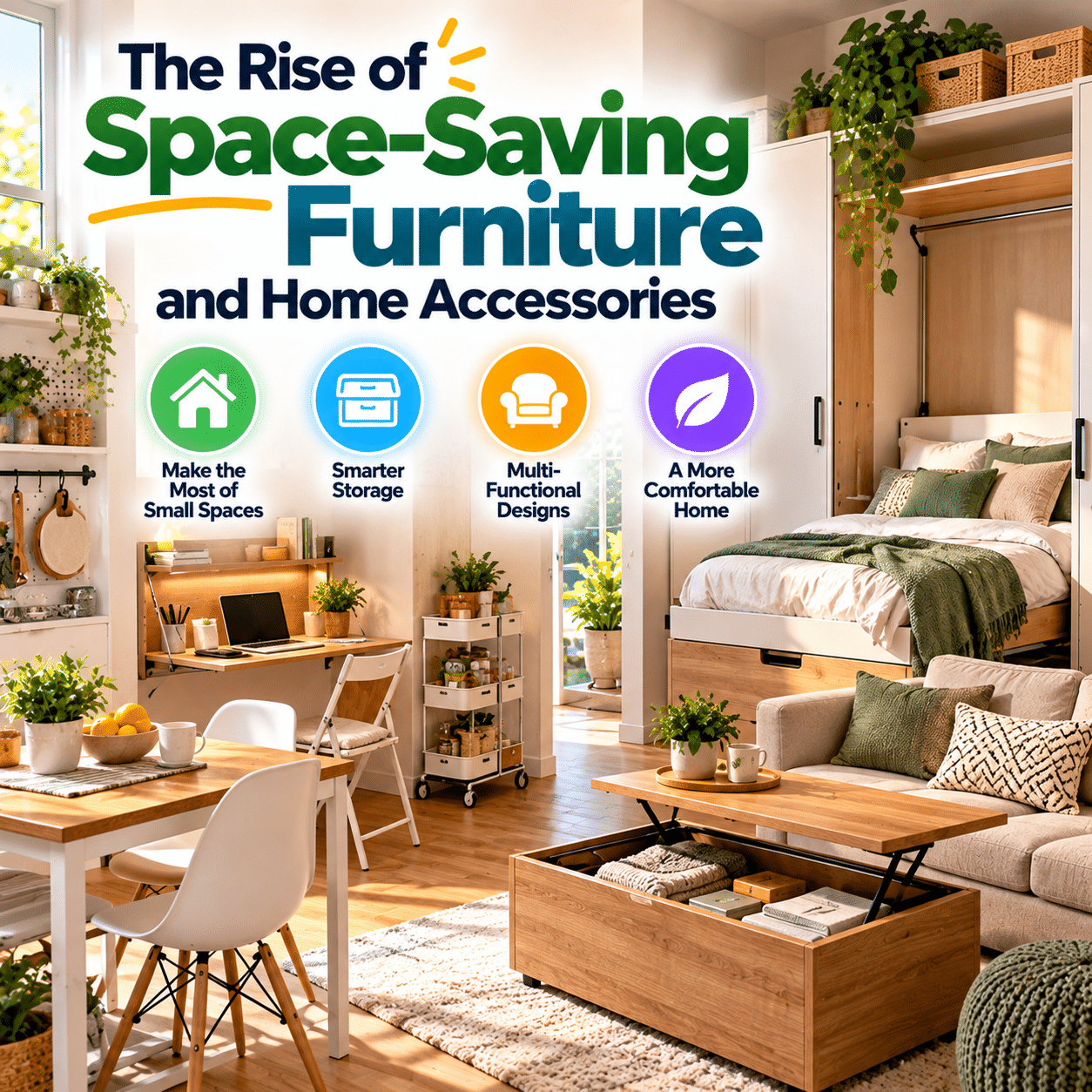
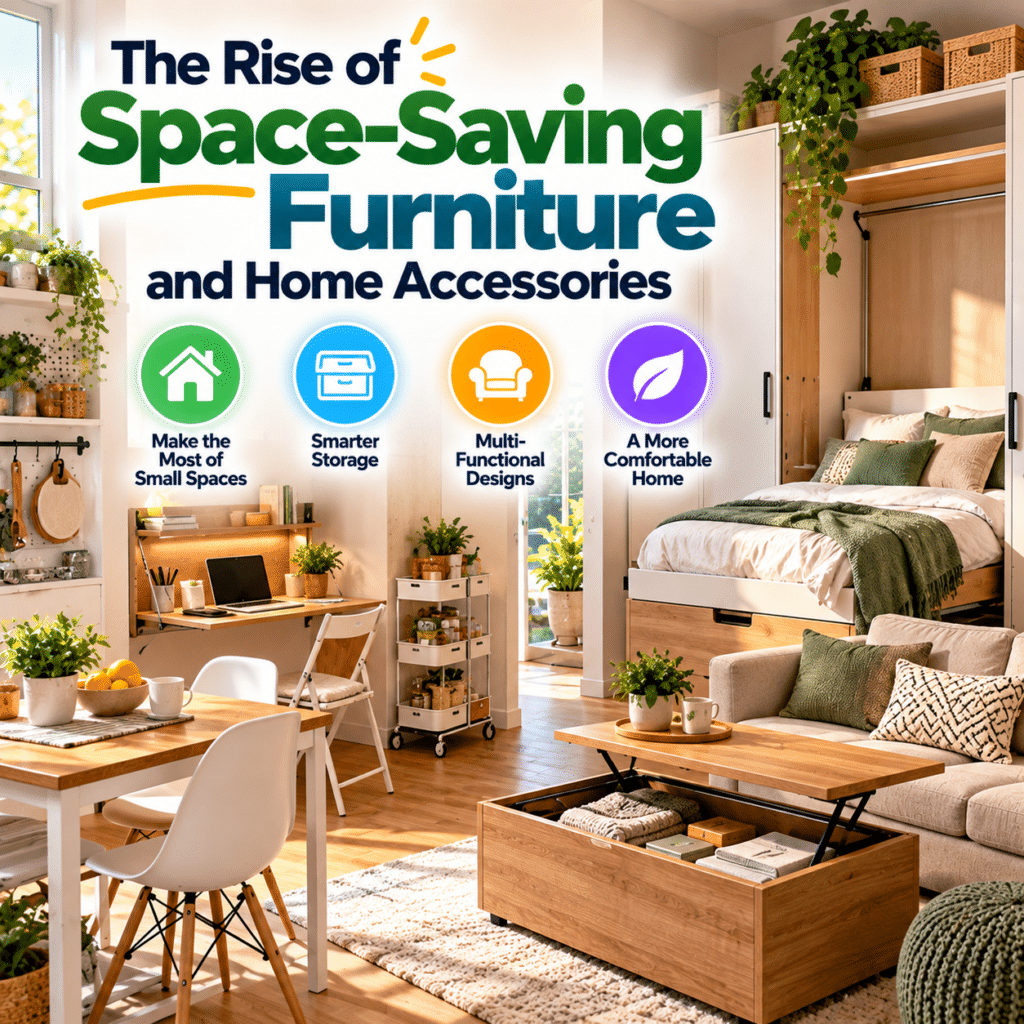
A comfortable home does not necessarily require a large floor plan.
Apartments, studios, shared homes, and compact houses can support a wide range of daily activities when their spaces are designed thoughtfully. The challenge is often finding room for everything people need to do: sleep, work, eat, relax, store belongings, and spend time with others.
Traditional furniture usually serves one primary purpose and occupies a relatively fixed area. A bed takes up bedroom space throughout the day. A dining table may remain unused between meals. Storage cabinets can reduce the amount of open floor available for movement.
Space-saving furniture and home accessories offer alternatives to these arrangements.
Foldable tables, storage beds, nesting furniture, wall-mounted organizers, modular shelving, and convertible seating can help rooms accommodate more activities without requiring more square footage.
Their growing appeal reflects changing expectations about what a home should provide. Rather than dedicating every room to a single purpose, many households want spaces that can adapt to different routines.
Yet space-saving design is not simply about making furniture smaller.
A compact product must still be comfortable, stable, durable, and appropriate for its intended use. Some designs create more work than they save, while others require installation or maintenance that may not suit every home.
Understanding the strengths and limitations of space-saving furniture can help households create interiors that feel organized, flexible, and genuinely livable.
1. What Is Space-Saving Furniture?
Space-saving furniture is designed to reduce the amount of space required for a particular function, either during use, storage, or both.
Some products occupy a smaller footprint than conventional alternatives.
Others transform, fold, stack, nest, or incorporate storage into their structure.
Common Types of Space-Saving Furniture
Examples include:
- Sofa beds and convertible seating.
- Folding and extendable dining tables.
- Wall-mounted desks and drop-leaf work surfaces.
- Storage beds with drawers or lift-up compartments.
- Nesting side tables.
- Stackable or folding chairs.
- Modular shelving and storage systems.
- Storage ottomans and benches.
- Compact furniture with integrated compartments.
Space-saving home accessories support similar goals on a smaller scale.
Examples include wall hooks, drawer dividers, under-shelf baskets, over-door organizers, and suitable vertical storage systems.
Space-Saving Does Not Always Mean Small
A larger piece of furniture can still save space if it replaces several separate items.
For example, a well-designed storage bed may reduce the need for an additional cabinet.
The meaningful question is not simply how large the furniture looks.
It is how effectively the product uses the space it occupies.
2. Why Space-Saving Furniture Is Becoming More Appealing
Interest in space-saving furniture reflects several long-term changes in household needs.
Compact Urban Housing
In many cities, housing costs and limited available space encourage people to consider smaller homes.
Furniture that performs several functions can make these homes more practical.
However, housing conditions vary widely between regions, and not every household faces the same constraints.
Flexible Work and Study Routines
Some people use the same room for work, study, relaxation, and other activities.
Furniture that can be folded away or rearranged may help support these changing uses.
Smaller and Changing Households
Individuals, couples, families, and shared households have different space requirements.
Flexible furniture may help a home adapt when those requirements change.
Interest in Organized Living
Storage-focused designs can reduce visible clutter and make belongings easier to manage.
More Deliberate Purchasing
Some households prefer furniture that performs several useful tasks rather than purchasing many separate pieces.
These factors help explain the appeal of space-saving design without suggesting that every home needs transforming furniture.
The best solutions respond to real household needs.
3. Multifunctional Furniture Makes Rooms More Flexible
Multifunctional furniture combines two or more practical purposes in one product.
Its main advantage is the ability to reduce the need for separate pieces.
Sofa Beds
A sofa bed provides seating and can convert into a sleeping surface.
This may be useful in a studio apartment or a room that occasionally accommodates guests.
However, comfort, mattress support, conversion effort, and durability vary significantly between designs.
Storage Ottomans
An ottoman with an internal compartment can provide a place to sit or rest feet while storing suitable items.
It may be useful for blankets, small accessories, or other frequently needed belongings.
Storage Benches
A bench with integrated storage can combine seating with organization.
Such designs may work well in entryways or at the foot of a bed.
Desks With Shelving
A compact desk with integrated shelves can reduce the need for separate storage furniture.
However, shelves should not interfere with comfortable working posture or safe access.
Why Multifunctionality Has Limits
Combining functions can introduce compromises.
A sofa bed may not provide the same long-term sleeping comfort as a dedicated bed.
A storage ottoman may be less convenient to open when objects are placed on top.
Multifunctional furniture is most successful when its functions complement one another naturally.
4. Folding Furniture Creates Space When It Is Not Needed
Folding furniture is particularly useful when an activity occupies a room only part of the time.
Folding Dining Tables
A folding table can provide a dining surface when needed and occupy less space afterward.
Some designs use drop leaves, while others fold into a narrow storage position.
Wall-Mounted Desks
A wall-mounted folding desk may create a temporary work surface.
When closed, it can leave more floor area available for other activities.
Folding Chairs
Folding chairs can provide additional seating for guests without permanently occupying a room.
They should be stored safely and used within their intended load limits.
Foldable Workstations
Certain compact workstations can be moved or folded between uses.
Their stability and ergonomic suitability are important considerations.
The Importance of Easy Conversion
A folding product should be simple enough to operate regularly.
If opening or closing it requires excessive effort, the furniture may remain permanently unfolded.
Safety Considerations
Hinges, locking mechanisms, and wall attachments must be appropriate for the intended load.
Users should follow manufacturer instructions and keep hands clear of pinch points.
A folding design is valuable only when it remains safe and convenient throughout repeated use.
5. Convertible Furniture Helps One Room Serve Multiple Purposes
Convertible furniture changes configuration to support different activities.
It may be particularly useful in studios and multipurpose rooms.
Murphy Beds and Wall Beds
A wall bed folds into a vertical cabinet or other housing when not in use.
This can free floor space during the day.
However, these systems require suitable installation, adequate clearance, and appropriate anchoring.
They are not ordinary freestanding furniture and should not be installed casually.
Extendable Tables
An extendable table can provide a smaller surface for daily use and a larger one when needed.
This may suit households that occasionally entertain guests.
Convertible Desks and Tables
Some furniture changes between working, dining, or storage configurations.
The usefulness of these systems depends on how often each function is needed.
Modular Seating
Certain seating arrangements can be rearranged into different configurations.
This can support changing room layouts.
Consider the Complete Transformation Process
A convertible product may require moving chairs, clearing objects, or rearranging nearby furniture.
These extra steps should be considered before purchase.
The best convertible furniture supports natural routines instead of creating complicated ones.
6. Vertical Storage Makes Better Use of Wall Space
Floor space is often the most limited resource in a compact home.
Walls can provide additional storage opportunities when used appropriately.
Wall Shelves
Shelves can hold books, decorative items, and other suitable belongings without requiring a full cabinet footprint.
They must be installed with hardware appropriate for the wall construction and expected load.
Tall Storage Cabinets
Tall cabinets use vertical space rather than spreading storage across a wide floor area.
However, tall furniture may require anti-tip anchoring and careful load distribution.
Pegboards and Wall Rails
Pegboards and rails can organize lightweight accessories, tools, or other suitable objects.
Their usefulness depends on secure installation and convenient placement.
Floating Desks and Consoles
Wall-mounted work surfaces may leave floor space open beneath them.
However, they require adequate structural support.
Avoid Overloading Walls
Drywall, masonry, timber framing, and other wall materials have different fastening requirements.
A product’s rated capacity is meaningful only when installed correctly.
Keep Frequently Used Items Accessible
High storage can be useful for infrequently needed objects.
Heavy or regularly used items should generally be stored where they can be retrieved safely.
Vertical storage works best when it improves access without creating hazards.
7. Hidden Storage Helps Reduce Everyday Clutter
Furniture with integrated storage can make belongings easier to organize without adding separate cabinets.
Storage Beds
Drawers or lift-up compartments beneath a bed can hold bedding, clothing, or other suitable items.
This may reduce the need for additional storage furniture.
Storage Sofas
Some sofas include compartments for blankets or accessories.
These may be useful in living rooms where separate storage is limited.
Entryway Benches
A bench with storage can combine seating with a place for shoes or everyday accessories.
Coffee Tables With Storage
Certain coffee tables include drawers, shelves, or lift-up compartments.
They can help keep small items organized.
Hidden Storage Should Remain Accessible
A compartment that is difficult to open may become inconvenient.
Heavy lids, awkward hinges, and complicated mechanisms can reduce usability.
Avoid Treating Storage as a Reason to Keep Everything
More storage does not automatically produce a more organized home.
Belongings still need to be reviewed and arranged according to actual use.
The most effective hidden storage supports simple habits rather than concealing unnecessary clutter.
8. Modular Furniture Adapts to Changing Needs
Modular furniture consists of components that can be combined or rearranged in different configurations.
This approach can be useful when household needs change over time.
Modular Shelving
A shelving system may allow sections to be added, removed, or repositioned.
This can help accommodate changing storage requirements.
Modular Sofas
Separate seating sections may be arranged to suit different room layouts.
However, dimensions and connection mechanisms vary.
Configurable Storage Units
Some storage systems use interchangeable drawers, shelves, and compartments.
This can make them adaptable to different belongings.
Advantages of Modular Design
Modular furniture may support:
- Changes in room layout.
- Different household sizes.
- Reorganization without replacing an entire system.
- More efficient use of irregular spaces.
Potential Limitations
Modular components may depend on proprietary dimensions or connection systems.
Replacement parts may become unavailable.
Some designs also require secure anchoring or careful assembly.
A modular system is most valuable when its flexibility is practical and likely to be used.
9. Space-Saving Accessories Improve Everyday Organization
Not every small-space improvement requires a large furniture purchase.
Accessories can make existing storage areas more efficient.
Drawer Dividers
Dividers help separate small items and make them easier to locate.
Adjustable designs can accommodate different drawer dimensions.
Under-Shelf Organizers
Some accessories create an additional storage level beneath an existing shelf.
Their load capacity and attachment method must be suitable.
Over-Door Storage
Door-mounted organizers can hold lightweight items where clearance allows.
However, they should not interfere with door operation or damage the mounting surface.
Hooks and Rails
Hooks can provide convenient storage for bags, coats, towels, or other suitable belongings.
Cable Organizers
Cable management accessories can reduce tangling around desks and entertainment areas.
They should not conceal damaged cords or create unsafe electrical arrangements.
Storage Baskets
Baskets can group related items and make shelves easier to manage.
However, too many containers can create unnecessary complexity.
Small accessories are most effective when they solve specific organizational problems.
10. Space-Saving Design Works Differently in Every Room
The most useful furniture solutions depend on how each room is used.
Living Room
A compact living room may benefit from nesting tables, storage ottomans, modular seating, or appropriately sized shelving.
The goal is to preserve comfortable movement and seating.
Bedroom
Storage beds, narrow bedside tables, and wall-mounted shelves may help reduce clutter.
However, sleeping comfort and safe access around the bed remain priorities.
Home Office
A folding desk, compact workstation, or vertical storage system can support work in a shared room.
Ergonomics should not be sacrificed to save space.
Dining Area
An extendable table or folding chairs may accommodate occasional guests without requiring a permanently large dining setup.
Entryway
A storage bench, wall hooks, and narrow organizers can help manage everyday items.
Bathroom
Wall shelves and suitable organizers may improve storage, provided they are appropriate for moisture exposure.
Children’s Rooms
Furniture must be chosen with particular attention to stability, entrapment hazards, age suitability, and anti-tip requirements.
Space-saving solutions should always be adapted to the needs and safety requirements of the room.
11. Measuring Space Correctly Prevents Expensive Mistakes
Furniture dimensions are one of the most important considerations in small homes.
A product may fit physically but still make a room difficult to use.
Measure the Available Floor Area
Record the width and depth of the intended location.
Account for baseboards, wall projections, and nearby fixtures.
Include Clearance
Doors, drawers, reclining mechanisms, and folding sections may require additional space.
Consider Walking Routes
Furniture should not obstruct normal movement or required exits.
Check Doorways and Stairs
Large furniture must be able to reach the intended room.
Measure relevant entrances, corridors, staircases, and elevators.
Evaluate Furniture in Every Configuration
A sofa bed or extendable table may occupy much more space when opened.
Both the stored and operating dimensions matter.
Use a Simple Floor Plan
A basic sketch with approximate dimensions can help compare furniture arrangements before purchase.
The purpose of measuring is not merely to fit more furniture into a room.
It is to preserve enough usable space for comfortable daily activities.
12. Space-Saving Furniture Compared With Conventional Furniture
Different designs offer different advantages.
| Household need | Conventional option | Space-saving alternative | Main tradeoff |
|---|---|---|---|
| Guest sleeping | Separate guest bed | Sofa bed | Sleeping comfort and conversion effort |
| Occasional dining | Large fixed table | Folding or extendable table | Moving parts and setup |
| Bedroom storage | Separate cabinet | Storage bed | Access and mechanism complexity |
| Extra seating | Permanent chairs | Folding or stackable chairs | Comfort and storage |
| Living room tables | Multiple fixed tables | Nesting tables | Surface size and stability |
| Home workspace | Dedicated desk | Wall-mounted folding desk | Installation and ergonomics |
| General storage | Wide cabinet | Tall shelving or wall storage | Anchoring and accessibility |
| Flexible seating | Fixed sofa | Modular seating | Connections and component availability |
No design is universally superior.
The right choice depends on frequency of use, comfort, available space, maintenance, and household routines.
13. Comfort and Ergonomics Should Never Be Sacrificed
A smaller piece of furniture is not necessarily a better one.
Comfort matters because furniture is used for sitting, sleeping, working, and other activities over extended periods.
Seating Comfort
Compact chairs and sofas should provide appropriate support for their intended use.
A narrow seat or awkward height may be uncomfortable.
Sleeping Support
A convertible bed should be evaluated for mattress quality, support, and suitability for the expected frequency of use.
An occasional guest bed may have different requirements from a primary sleeping surface.
Working Posture
A foldable desk should still provide sufficient space for a comfortable working position.
Screen height, keyboard placement, chair support, and legroom remain important.
Accessibility
Some folding or lifting mechanisms may be difficult for people with limited strength or mobility.
Ease of operation should be assessed realistically.
Everyday Convenience
Furniture that requires repeated heavy lifting or complicated adjustments may become frustrating.
Good space-saving design should make life easier, not simply make a room look larger.
14. Safety Is Essential With Transforming and Wall-Mounted Furniture
Space-saving furniture often includes mechanisms or installations that require particular care.
Anti-Tip Protection
Tall cabinets, dressers, and other tip-prone furniture should be anchored according to applicable safety guidance and manufacturer instructions.
This is especially important in homes with children.
Secure Wall Installation
Wall beds, shelves, desks, and similar products require fasteners appropriate for the wall structure and expected loads.
Some installations should be performed by qualified professionals.
Moving Mechanisms
Hinges, springs, and lifting systems can create pinch or crush hazards.
Users should keep hands and objects clear of moving parts.
Load Limits
Seating, shelves, folding tables, and wall-mounted furniture have specific capacity limits.
These limits should not be exceeded.
Safe Conversion
Furniture should be fully locked or secured in its intended operating position before use.
Clear Exits
Furniture should not block doors, walkways, or required escape routes.
Product Recalls
Consumers should check relevant safety notices and recalls when purchasing furniture, particularly secondhand products.
Safety is a fundamental part of furniture quality.
A space-saving product is not successful if its design introduces avoidable hazards.
15. Durability and Repairability Affect Long-Term Value
Transforming furniture may contain more moving parts than conventional furniture.
This makes durability an important purchasing consideration.
Hinges and Hardware
Folding and convertible designs rely on mechanisms that must withstand repeated use.
Hardware quality and proper assembly matter.
Surface Materials
Furniture surfaces should suit the expected level of wear, cleaning, and moisture exposure.
Replaceable Components
Products with available replacement parts may be easier to maintain.
Assembly Quality
Poor assembly can affect stability, operation, and service life.
Follow instructions carefully and use appropriate tools.
Repair Versus Replacement
A durable product that can be repaired may provide better long-term value than a cheaper item that must be replaced frequently.
Consider the Full Cost
Purchase price is only one factor.
Installation, maintenance, replacement components, and expected lifespan also influence value.
A well-designed piece of furniture should remain useful beyond its initial novelty.
16. Is Space-Saving Furniture More Sustainable?
Space-saving furniture may reduce the number of separate items a household needs.
However, that does not automatically make it environmentally preferable.
Fewer Products May Reduce Material Demand
A multifunctional piece that replaces several separate products may reduce some material requirements.
The actual effect depends on the products being compared.
Durability Is Important
A long-lasting item can spread its manufacturing impacts across many years of use.
Furniture that fails quickly may create additional waste.
Materials and Manufacturing Matter
Wood products, metals, textiles, foams, coatings, and adhesives have different environmental characteristics.
No single material is universally best for every application.
Repairability Can Extend Use
Replaceable hardware, removable covers, and serviceable mechanisms may help furniture remain useful longer.
Avoid Unnecessary Replacement
Rearranging existing furniture or improving storage may be more sensible than replacing functional items.
Think Beyond Marketing Labels
Terms such as eco-friendly or sustainable should be supported by meaningful information.
The most practical sustainability approach is to choose durable furniture that meets real needs and remains useful over time.
17. Common Mistakes When Choosing Space-Saving Furniture
Several purchasing mistakes can reduce the benefits of compact furniture.
Buying Based Only on Appearance
A beautiful folding desk may be impractical if it provides insufficient working space.
Ignoring Opened Dimensions
Convertible furniture can occupy much more space when fully extended.
Overestimating Storage Needs
Buying too many storage products may encourage clutter rather than solve it.
Choosing Complex Mechanisms Without Testing Them
A difficult transformation process may discourage regular use.
Overlooking Installation Requirements
Wall-mounted furniture may require structural support or professional installation.
Ignoring Comfort
A compact sofa or bed still needs to suit the people using it.
Purchasing Too Many Multifunctional Products
Combining several complicated pieces can make a room harder to manage.
Forgetting Long-Term Maintenance
Moving parts and specialized components may require servicing or replacement.
The best decisions balance space efficiency with everyday usability.
18. How to Choose Space-Saving Furniture for Your Home
A practical selection process begins with the room rather than the product.
Step 1: Identify the Main Space Problem
Is the room difficult to move through?
Is there insufficient storage?
Does one room need to support several activities?
Step 2: Review Existing Furniture
Consider whether rearranging current pieces could improve the layout.
Step 3: Measure Carefully
Record the available dimensions and necessary clearance.
Step 4: Prioritize Frequently Used Functions
Choose furniture that supports daily activities before occasional ones.
Step 5: Evaluate Comfort and Stability
A product should remain comfortable and safe in every intended configuration.
Step 6: Check Installation and Maintenance
Review anchoring requirements, assembly instructions, cleaning needs, and replacement parts.
Step 7: Consider Long-Term Flexibility
Think about whether the furniture could remain useful if household routines change.
Step 8: Avoid Unnecessary Purchases
Buy only when a product solves a meaningful problem that existing arrangements cannot address.
This approach helps create a functional home rather than simply a room filled with clever furniture.
19. A Practical Example: Making One Room Serve Several Purposes
Imagine a compact apartment where the living room also needs to accommodate occasional work and overnight guests.
A conventional arrangement might include a large sofa, a permanent desk, a coffee table, and a separate guest bed.
These pieces could leave little open floor space.
A more flexible arrangement might use:
- A comfortable sofa bed suitable for occasional guests.
- A folding desk that can be closed after work.
- Nesting tables that provide additional surfaces when needed.
- A storage ottoman for blankets and accessories.
- Secure wall shelving for frequently used belongings.
The room could then support relaxation, work, and occasional guest accommodation without requiring every piece of furniture to remain fully deployed.
However, the arrangement would still need sufficient walking space, appropriate electrical access, comfortable seating, and safe furniture operation.
This example illustrates the central value of space-saving design: making room for activities rather than simply making room for objects.
20. The Future of Space-Saving Furniture and Home Accessories
The development of compact furniture is likely to continue through improvements in mechanical design, materials, modularity, and usability.
Easier Transformation Mechanisms
Future designs may place greater emphasis on smooth, reliable conversion between functions.
More Adaptable Modular Systems
Furniture that can be reconfigured may help households respond to changing needs.
Better Integrated Storage
Designers may continue finding ways to incorporate storage without making furniture bulky or difficult to access.
Greater Attention to Accessibility
Mechanisms that require less effort and provide clearer controls may make transforming furniture useful to more people.
Repairable and Durable Construction
Long-term product support and replaceable components may become increasingly important.
Thoughtful Integration With Home Technology
Some furniture may incorporate lighting, cable management, or other useful features.
However, technology should not compromise safety, repairability, or simplicity.
Design Focused on Everyday Living
The most meaningful innovation may be furniture that adapts naturally to how people use their homes.
The future of space-saving design is not necessarily about fitting the greatest number of objects into the smallest area.
It is about creating interiors that support more activities with less unnecessary complexity.
Frequently Asked Questions
What is the best type of space-saving furniture for a small apartment?
The best choice depends on the apartment’s layout and daily activities. Storage beds, folding tables, modular shelving, and convertible seating can be useful when they solve specific space problems.
Is multifunctional furniture worth buying?
It can be worthwhile when the combined functions are used regularly and the product remains comfortable, stable, and durable. A simpler piece may offer better value when the extra functions are rarely needed.
Are wall beds safe?
Wall beds can be used safely when the product is appropriate for the space and installed, anchored, operated, and maintained according to manufacturer instructions and applicable safety requirements.
How can I save space without replacing furniture?
Rearranging existing pieces, clearing unnecessary items, improving storage access, and using suitable organizers may create more usable space without major purchases.
Does space-saving furniture work for families?
Yes, but the design must suit household needs and safety requirements. Stability, anti-tip protection, load capacity, and age-appropriate use are especially important in homes with children.
Is modular furniture better than fixed furniture?
Modular furniture can offer flexibility, but fixed furniture may provide simpler construction and fewer connection points. The better option depends on expected use, durability, and the need for reconfiguration.
Conclusion: Better Space-Saving Design Creates More Room for Living
The growing appeal of space-saving furniture and home accessories reflects a practical desire to make homes more flexible, organized, and comfortable.
Folding tables, storage beds, convertible seating, modular shelves, and vertical organizers can help limited spaces accommodate a wider range of daily activities.
But successful space-saving design requires more than compact dimensions.
Furniture must be comfortable, stable, easy to use, appropriately installed, and durable enough for repeated use.
The most effective choices begin with understanding how a room is used and what problems need to be solved.
Sometimes a multifunctional product is the answer. In other cases, rearranging existing furniture or improving storage may be enough.
A well-designed small home is not one that contains the most furniture. It is one that makes the best use of available space while leaving room for comfort, movement, and everyday life.