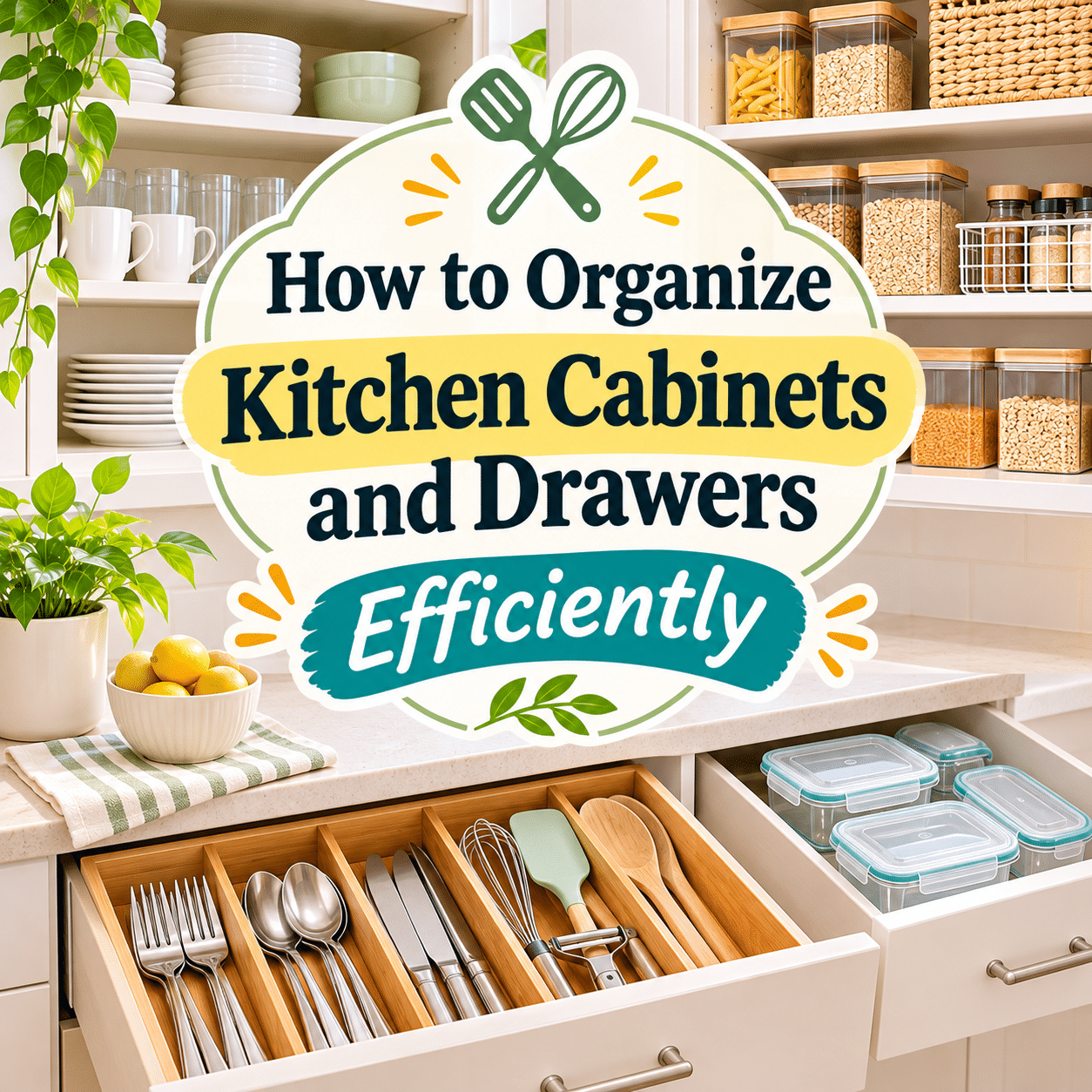
A well-organized kitchen makes everyday cooking, meal preparation, and cleanup more convenient. When cabinets are overcrowded, utensils are difficult to find, and frequently used ingredients are stored in inconvenient locations, even simple kitchen tasks can take more time and effort than necessary.
Kitchen cabinets and drawers are designed to keep essential items accessible while protecting them from unnecessary exposure to dust, moisture, and everyday household activity. However, these storage spaces can gradually become disorganized as new cookware, dishes, appliances, food containers, and accessories are added.
The solution is not always to install more cabinets or purchase additional organizers. In many kitchens, the greatest improvements come from evaluating existing belongings, grouping similar items, and arranging storage according to how the kitchen is actually used.
Efficient kitchen organization should make it easier to locate ingredients, retrieve utensils, prepare meals, and return items to their designated places. It should also account for safety, accessibility, available space, and the different storage requirements of food, cookware, and household supplies.
Whether you have a compact apartment kitchen, a spacious family kitchen, or a small cooking area with limited cabinetry, the following guide provides practical steps for organizing cabinets and drawers, choosing suitable storage solutions, and maintaining an arrangement that works over time.
1. Understand the Purpose of Efficient Kitchen Organization
Efficient kitchen organization is about creating a practical relationship between storage space, everyday activities, and the belongings you use.
The goal is not simply to make every cabinet look attractive.
A functional kitchen should allow you to:
- Find frequently used utensils quickly.
- Access ingredients without unnecessary searching.
- Store cookware safely.
- Keep food storage containers organized.
- Reduce unnecessary duplicates.
- Make cleaning easier.
- Avoid overcrowded drawers and shelves.
- Return belongings to their proper locations.
- Adapt storage as household needs change.
A kitchen can look visually tidy while still being inconvenient to use.
For example, placing everyday plates on a high shelf may create a neat appearance but make regular meals unnecessarily difficult.
The most effective arrangement prioritizes practical access over decorative perfection.
2. Assess Your Current Kitchen Storage
Before reorganizing cabinets and drawers, examine how the kitchen currently functions.
Open each cabinet and drawer.
Notice which spaces are overcrowded, which items are difficult to reach, and where unused space may exist.
Consider the following questions:
- Which utensils do you use every day?
- Where do you usually prepare food?
- Which cabinets contain unrelated items?
- Are frequently used dishes stored conveniently?
- Do you own unnecessary duplicates?
- Are food containers and lids difficult to match?
- Which drawers regularly become messy?
- Are heavy items stored safely?
- Do any cabinets contain moisture or damaged surfaces?
Write down the most inconvenient storage problems.
This helps you focus on improvements that will make a meaningful difference.
3. Divide Your Kitchen Into Functional Zones
Organizing cabinets according to kitchen activities can reduce unnecessary movement.
Common functional zones include food preparation, cooking, food storage, serving, cleaning, and occasional-use equipment.
| Kitchen Zone | Common Items | Recommended Storage Approach |
|---|---|---|
| Food preparation | Knives, cutting boards, measuring tools | Near the main preparation area |
| Cooking | Pots, pans, spatulas, cooking utensils | Near the cooking area, away from unsafe heat exposure |
| Food storage | Dry ingredients, packaged foods, containers | In suitable cabinets or pantry spaces |
| Serving | Plates, bowls, glasses, serving utensils | Near dining or dishwashing areas |
| Cleaning | Sponges, cleaning supplies, dishwashing accessories | Secure storage near the sink when appropriate |
| Occasional-use equipment | Specialty appliances, large serving dishes | Less accessible cabinets or higher shelves when safe |
These zones do not require separate cabinets for every category.
In a small kitchen, one cabinet may support several related activities.
The important principle is to store belongings near where they are most useful.
4. Measure Cabinets and Drawers Before Making Changes
Accurate measurements help prevent wasted purchases and poorly fitting organizers.
Measure the interior width, depth, and usable height of cabinets.
For drawers, measure the space available when the drawer is fully closed.
Remember to account for hinges, shelf supports, drawer slides, plumbing, and other obstructions.
Important measurements include:
| Storage Feature | What to Measure | Why It Matters |
|---|---|---|
| Cabinet interior | Width, depth, and height | Determines usable storage capacity |
| Adjustable shelves | Available clearance between shelves | Helps accommodate different item heights |
| Drawer interior | Width, depth, and height | Helps select suitable dividers |
| Cabinet opening | Clear access width | Ensures organizers can be inserted and removed |
| Under-sink cabinet | Space around plumbing | Prevents interference with pipes |
| Corner cabinet | Accessible depth and opening | Helps identify practical storage options |
Measure more than once if the cabinet has irregular dimensions.
Keep these measurements available before purchasing storage accessories.
5. Gather Basic Organization Supplies
You do not need expensive equipment to begin.
Useful supplies include:
- Sorting baskets or boxes.
- A cleaning cloth.
- Mild cleaning products suitable for cabinet surfaces.
- A measuring tape.
- Labels and a marker.
- Donation bags.
- Existing storage containers.
- A small basket for items that belong elsewhere.
Optional accessories may include drawer dividers, shelf risers, turntables, or pull-out organizers.
Avoid purchasing these until you understand what you intend to keep.
Decluttering first may reveal that your existing storage is sufficient.
6. Empty One Cabinet or Drawer at a Time
Removing belongings makes it easier to see the available space and evaluate what has accumulated.
However, emptying an entire kitchen simultaneously can create unnecessary disruption.
Begin with one manageable section.
Place its contents on a clean, stable surface.
Group similar items together.
Inspect the empty cabinet or drawer for crumbs, dust, moisture, or damage.
Clean and dry the space before returning anything.
Complete that section before moving to another.
This approach keeps the kitchen usable throughout the organization process.
7. Sort Kitchen Items Into Categories
Grouping similar items helps reveal duplicates and makes storage decisions easier.
Common categories include:
- Cooking utensils.
- Cutlery.
- Pots and pans.
- Baking equipment.
- Measuring tools.
- Plates and bowls.
- Drinking glasses and mugs.
- Food storage containers.
- Pantry ingredients.
- Small appliances.
- Cleaning accessories.
- Specialty equipment.
If an item does not fit into an obvious category, consider whether it belongs in the kitchen.
Avoid allowing cabinets to become permanent storage for unrelated household objects.
8. Declutter Before Organizing
Decluttering is an important step because no organizer can fully solve the problem of storing more belongings than the available space can reasonably accommodate.
Evaluate each item according to its usefulness, condition, and frequency of use.
Ask:
- Do I use this regularly?
- Is it still functional?
- Does it serve a purpose that another item already covers?
- Is it suitable for my current cooking habits?
- Is it worth the storage space it occupies?
- Would I realistically use it again?
Do not automatically discard occasional-use equipment.
Specialty baking tools, holiday serving dishes, and equipment for particular cooking traditions may remain valuable even when used infrequently.
However, broken utensils, unnecessary duplicates, and unsuitable containers may be candidates for removal.
| Category | Description | Recommended Action |
|---|---|---|
| Keep | Functional items you use or value | Organize appropriately |
| Repair | Items worth restoring safely | Arrange repair when practical |
| Donate | Clean, usable items no longer needed | Give to an appropriate recipient |
| Sell | Items with realistic resale value | List within a reasonable timeframe |
| Recycle | Materials accepted by local services | Follow local requirements |
| Discard | Unusable items without suitable recovery options | Dispose of responsibly |
9. Clean Cabinets and Drawers Before Restocking
Once a cabinet or drawer is empty, clean the interior.
Remove crumbs and loose debris.
Wipe surfaces with a product appropriate for the cabinet material.
Pay attention to corners, shelf edges, and drawer tracks.
Avoid saturating wood-based cabinetry with water.
Dry surfaces thoroughly before returning food, utensils, or storage containers.
If you notice persistent moisture, mold, pest activity, or structural damage, address the underlying problem rather than simply covering it with shelf liners.
Clean storage provides a better foundation for long-term organization.
10. Place Everyday Items Within Easy Reach
Frequently used belongings should occupy the most accessible storage locations.
Examples include:
- Everyday plates and bowls.
- Drinking glasses.
- Common cooking utensils.
- Frequently used cookware.
- Measuring tools.
- Regularly used pantry ingredients.
Avoid storing daily essentials behind large appliances or beneath heavy stacks.
Keep items at comfortable reaching heights whenever possible.
Reserve less accessible locations for occasional-use belongings.
This simple principle can improve kitchen efficiency without requiring additional storage equipment.
11. Organize Drawers According to Their Purpose
Drawers work best when each has a clearly defined function.
For example:
- One drawer for everyday cutlery.
- One for cooking utensils.
- One for preparation tools.
- One for baking accessories.
- One for miscellaneous kitchen essentials.
Not every kitchen has enough drawers for separate categories.
In smaller kitchens, use dividers to create sections within shared drawers.
Avoid mixing sharp tools loosely with frequently handled utensils.
The objective is to make drawer contents easy to identify and retrieve.
12. Use Drawer Dividers Effectively
Drawer dividers can prevent utensils from shifting and becoming tangled.
Choose dividers based on the size and quantity of the items being stored.
Adjustable dividers may be useful when drawer dimensions are unusual.
For cutlery, use compartments that separate forks, spoons, knives, and other everyday pieces.
For cooking utensils, longer sections may accommodate spatulas, tongs, and ladles.
Do not overfill compartments.
Leave enough space to remove items without pulling several others along.
If existing small containers work well, you may not need specialized drawer organizers.
13. Organize Everyday Cutlery
Cutlery is usually among the most frequently used kitchen categories.
Store it near the dishwasher, dish-drying area, or dining preparation space when practical.
Separate utensils by type.
Keep sharp table knives positioned safely.
Place occasional-use serving utensils in a secondary section if drawer space is limited.
Avoid mixing unrelated small objects with cutlery.
A simple arrangement makes setting the table, unloading dishes, and returning utensils more convenient.
14. Store Cooking Utensils Near the Preparation Area
Spatulas, ladles, tongs, whisks, and similar tools should be accessible during cooking.
A nearby drawer may be the most practical location.
Some households prefer countertop utensil holders for frequently used tools.
This can work well when sufficient counter space is available and the holder is positioned away from unsafe heat exposure or contamination.
Group utensils according to purpose or frequency of use.
Keep specialty tools in secondary storage if they are rarely needed.
Avoid overcrowding utensil containers, which can make individual tools difficult to retrieve.
15. Organize Kitchen Knives Safely
Kitchen knives require careful storage.
Loose sharp knives in crowded drawers can create injury risks and damage cutting edges.
Suitable options may include:
- Properly fitted knife blocks.
- Protective blade guards.
- Dedicated in-drawer knife organizers.
- Secure magnetic knife holders installed appropriately.
Choose a method that protects blades and prevents accidental contact.
Keep knives away from children and others who should not have unsupervised access.
Avoid placing knives where they may fall or be knocked loose.
Clean and dry knives according to their care instructions before storage.
Safety should take priority over appearance or storage density.
16. Organize Pots and Pans Efficiently
Pots and pans often occupy substantial cabinet space.
Begin by grouping cookware according to size, type, and frequency of use.
Keep everyday cookware in accessible lower cabinets when possible.
Larger or less frequently used pieces can occupy secondary storage areas.
Stacking may save space, but it should not damage cookware surfaces.
Use appropriate protective separators for finishes that require them.
Consider vertical dividers for suitable pans or lids.
Avoid unstable stacks that could fall when a lower item is removed.
17. Create a Dedicated Storage System for Pot Lids
Pot lids can become difficult to organize because they vary in diameter and shape.
Common storage options include:
- Vertical lid racks.
- Suitable cabinet dividers.
- Dedicated drawer compartments.
- Secure door-mounted holders.
- Carefully arranged shelf storage.
Choose a system that allows you to identify and retrieve the correct lid without moving an entire stack.
Check the weight and installation requirements of door-mounted accessories.
Do not attach heavy storage systems to cabinet doors that cannot safely support them.
18. Organize Baking Equipment
Baking supplies may include mixing bowls, measuring cups, rolling pins, baking sheets, cooling racks, and specialty tools.
Group these items according to their function.
Store frequently used baking tools near preparation areas.
Keep flat baking sheets and suitable trays vertically when secure dividers are available.
Nest compatible mixing bowls to conserve space.
Protect delicate or nonstick surfaces from scratching.
If baking is an occasional activity, some equipment can be stored in less accessible cabinets.
The storage arrangement should reflect how often you bake.
19. Store Plates and Bowls for Easy Access
Everyday dishes should be stored where they can be retrieved comfortably.
Avoid placing heavy stacks on high shelves.
Group plates and bowls by type and size.
Use stable shelves and respect cabinet weight limits.
Shelf risers may help separate different dish categories when sufficient clearance exists.
However, avoid creating tall or unstable stacks simply to maximize storage.
If you regularly unload dishes from a dishwasher, consider placing everyday dishes near that area.
This can make cleanup more convenient.
20. Organize Glasses, Cups, and Mugs
Drinking vessels can occupy considerable shelf space.
Group them by purpose, such as everyday glasses, coffee mugs, tea cups, and occasional-use drinkware.
Keep frequently used pieces within easy reach.
Store delicate glasses securely, away from unstable stacks or crowded shelf edges.
Avoid hanging heavy mugs from hooks unless the hardware and supporting structure are suitable.
Consider whether you need every duplicate cup or mug currently stored.
A thoughtful selection can free space without reducing everyday convenience.
21. Organize Food Storage Containers and Lids
Food storage containers are a common source of kitchen cabinet clutter.
Gather all containers and lids in one location.
Match compatible pieces.
Inspect containers for cracks, damage, persistent odors, or deterioration.
Remove items that are no longer suitable for food storage.
Nest containers of compatible shapes and sizes when practical.
Store lids vertically or in a dedicated compartment.
Avoid separating lids so far from their containers that matching them becomes difficult.
Choose storage arrangements that make it easy to retrieve complete container-and-lid sets.
22. Organize Pantry Cabinets by Food Category
Pantry cabinets benefit from clear categories and good visibility.
Group dry foods according to their purpose.
Possible categories include:
- Rice, grains, and pasta.
- Baking ingredients.
- Canned foods.
- Breakfast items.
- Snacks.
- Cooking oils.
- Sauces and condiments.
- Tea and coffee.
- Packaged beverages.
Keep frequently used ingredients accessible.
Position older usable products toward the front when appropriate.
Check food condition and labeling regularly.
Avoid storing food in locations exposed to excessive heat, moisture, or contamination.
23. Use Clear Containers When They Add Practical Value
Transparent containers can improve visibility and make some pantry items easier to manage.
However, transferring every ingredient into matching containers is not necessary.
Consider whether a container provides meaningful benefits.
Suitable containers may help with:
- Protecting appropriate dry ingredients.
- Reducing packaging clutter.
- Identifying contents.
- Improving shelf arrangement.
- Managing frequently used staples.
Choose food-contact materials suitable for the intended use.
Retain important information such as product identity, allergens, preparation instructions, and relevant dates.
Do not assume that transferring food into a container automatically extends its shelf life.
24. Organize Spices and Seasonings
Spices are most useful when they can be identified quickly during cooking.
Group them according to frequency of use, cuisine, or another system that matches your habits.
Store spices away from excessive heat, moisture, and direct sunlight when recommended.
Avoid placing delicate ingredients immediately beside hot cooking equipment.
Use clear labels when containers look similar.
A tiered organizer or suitable drawer insert may improve visibility.
However, a simple row of labeled containers can work equally well.
The best arrangement is one that makes frequently used seasonings easy to locate.
25. Make Better Use of Deep Cabinets
Deep cabinets can hide belongings behind other items.
This often leads to forgotten supplies and unnecessary duplicate purchases.
Possible solutions include:
- Grouping similar items in removable baskets.
- Using suitable pull-out organizers.
- Placing occasional-use items toward the back.
- Keeping everyday essentials near the front.
- Using clear labels.
- Avoiding excessive stacking.
Pull-out systems should be installed according to manufacturer instructions and appropriate load limits.
For a budget-friendly approach, removable containers may provide sufficient accessibility without permanent modifications.
26. Organize Corner Cabinets
Corner cabinets can be difficult to use because their interiors may extend beyond comfortable reach.
Begin by measuring the opening and accessible depth.
Consider storing occasional-use cookware or equipment in these spaces.
Specialized rotating or pull-out organizers may help, but they are not always necessary.
If using a rotating system, ensure that items remain stable during movement.
Avoid placing heavy objects where they are difficult to retrieve safely.
A simple arrangement with fewer, larger categories may work better than densely packed storage.
27. Use Vertical Cabinet Space Carefully
Cabinets sometimes contain unused height between shelves.
Adjustable shelves, suitable risers, or vertical dividers can improve space utilization.
However, additional storage should not compromise stability.
Keep heavy items on lower shelves.
Avoid placing fragile objects above head height when they may be difficult to retrieve.
Check shelf weight limits and the condition of supporting hardware.
Leave enough clearance to remove items comfortably.
Efficient vertical storage is about improving access, not filling every available gap.
28. Organize Under-Sink Cabinets Safely
Under-sink cabinets often contain plumbing, cleaning supplies, and household accessories.
Because these spaces may be exposed to moisture, they require special attention.
Begin by inspecting for leaks or dampness.
Address plumbing problems before installing storage.
Keep cleaning chemicals in their original labeled containers.
Store hazardous products securely away from children and pets.
Do not place food or food-contact items where they could be contaminated by cleaning chemicals.
Use organizers that allow access to plumbing when maintenance is necessary.
Avoid blocking shutoff valves or creating storage arrangements that make leaks difficult to detect.
29. Separate Cleaning Supplies From Food and Utensils
Kitchen cleaning products should have designated storage locations.
Do not store hazardous chemicals where they could leak onto food, dishes, or cooking utensils.
Keep products in suitable labeled containers.
Follow manufacturer instructions regarding storage temperature, ventilation, and compatibility.
Never mix cleaning chemicals.
In particular, bleach should not be combined with ammonia, acids, or other incompatible cleaners.
If space is limited, prioritize secure separation rather than placing all household products in one crowded cabinet.
30. Organize Small Kitchen Appliances
Small appliances may include blenders, mixers, coffee grinders, food processors, and specialty cooking equipment.
Evaluate each appliance according to frequency of use and available storage.
Daily-use appliances may deserve accessible locations.
Occasional-use equipment can often be stored in secondary cabinets.
Keep cords organized without tightly wrapping them in ways that may cause damage.
Ensure appliances are clean, dry, and cool before storage.
Avoid placing heavy appliances on high shelves where lifting them could be unsafe.
Follow manufacturer instructions for storage and maintenance.
31. Make Small Kitchen Cabinets More Functional
Compact kitchens require careful prioritization.
Focus on essential belongings and frequently used tools.
Use existing cabinet space efficiently before adding organizers.
Consider:
- Nesting compatible cookware.
- Storing suitable flat items vertically.
- Grouping small accessories in containers.
- Folding or arranging kitchen textiles neatly.
- Using adjustable shelves where practical.
- Keeping occasional-use equipment elsewhere when appropriate.
Avoid purchasing large organizers that consume more space than they save.
In a small kitchen, accessibility is often more important than maximum storage capacity.
32. Organize Kitchen Cabinets on a Limited Budget
Kitchen organization does not need to involve expensive custom cabinetry.
Start with what you already own.
Reuse suitable baskets, boxes, and containers.
Rearrange shelves to accommodate different item heights.
Use simple labels.
Group utensils according to function.
Remove unnecessary duplicates.
If you need additional accessories, purchase them gradually and only after identifying a specific problem.
A low-cost solution that works reliably is often more valuable than a complicated storage system.
33. Create an Efficient Cabinet Layout for Everyday Cooking
An example kitchen layout can help illustrate how storage zones work together.
| Kitchen Location | Suggested Contents | Main Benefit |
|---|---|---|
| Near preparation counter | Knives, cutting boards, measuring tools | Convenient food preparation |
| Near cooking area | Pots, pans, spatulas, suitable seasonings | Easier cooking access |
| Near dishwashing area | Everyday plates, bowls, glasses | Convenient unloading and cleanup |
| Pantry cabinet | Dry ingredients and packaged foods | Clear food organization |
| Lower cabinets | Heavy cookware and appliances | Safer access |
| Upper cabinets | Lightweight dishes and occasional-use items | Practical use of vertical space |
| Secure cleaning storage | Cleaning supplies and accessories | Better separation and safety |
This is a flexible example.
Your ideal layout depends on the location of appliances, cabinet dimensions, and everyday cooking habits.
34. Follow a Step-by-Step Kitchen Organization Plan
Use the following process to reorganize cabinets and drawers systematically.
Step 1: Identify Your Main Problems
Determine which cabinets or drawers are overcrowded, difficult to access, or poorly arranged.
Step 2: Measure the Available Space
Record interior dimensions and note obstructions.
Step 3: Choose One Storage Area
Begin with a manageable cabinet or drawer.
Step 4: Remove Its Contents
Place items on a clean surface.
Step 5: Group Similar Items
Sort belongings into practical categories.
Step 6: Declutter Unnecessary Items
Evaluate condition, usefulness, and duplication.
Step 7: Clean and Dry the Storage Space
Remove debris and inspect for moisture or damage.
Step 8: Assign a Clear Purpose
Decide what the cabinet or drawer should contain.
Step 9: Arrange Items by Frequency of Use
Place everyday essentials within easy reach.
Step 10: Add Suitable Organizers if Needed
Use accurate measurements and avoid unnecessary purchases.
Step 11: Check Safety and Accessibility
Confirm that heavy, sharp, fragile, and hazardous items are stored appropriately.
Step 12: Test the Arrangement
Use the kitchen normally and make adjustments where necessary.
Repeat the process with the next storage area.
35. Adapt Kitchen Storage for Different Household Needs
Not every household uses its kitchen in the same way.
A frequent home cook may need extensive cookware and ingredient storage.
A household that prepares simple meals may benefit from fewer tools and more open cabinet space.
Families may require accessible everyday dishes and secure storage for hazardous items.
People with limited mobility may benefit from lower shelves, pull-out storage, or other accessible arrangements.
Consider who uses the kitchen and which activities occur most frequently.
Organization should support actual household needs rather than follow a single decorative standard.
36. Make Cabinets and Drawers Easy to Maintain
A storage system is most useful when it remains practical after the initial organization project.
Give each category a designated location.
Avoid overfilling drawers.
Return utensils after cleaning.
Keep food storage containers and lids together.
Review pantry contents periodically.
Remove damaged or unnecessary items when discovered.
If a drawer repeatedly becomes messy, consider whether its categories are too broad or its compartments are inconvenient.
A simple system that is easy to maintain usually works better than an elaborate arrangement.
37. Establish a Regular Kitchen Storage Review
Kitchen storage needs change over time.
New appliances, different cooking habits, and changing household routines may affect what belongs in each cabinet.
Review frequently used storage areas periodically.
Look for:
- Unnecessary duplicates.
- Expired or spoiled food.
- Damaged utensils.
- Missing container lids.
- Overcrowded shelves.
- Items stored in inconvenient locations.
- Organizers that no longer serve their purpose.
- Moisture or maintenance concerns.
Small adjustments can prevent major reorganization projects later.
38. Avoid Common Kitchen Cabinet Organization Mistakes
Several mistakes can make kitchen storage less functional.
1. Buying organizers before measuring.
Check dimensions and storage needs first.
2. Keeping unnecessary duplicates.
Evaluate whether extra items serve a realistic purpose.
3. Storing everyday items too high.
Prioritize comfortable access.
4. Overcrowding drawers.
Leave enough room to retrieve utensils easily.
5. Mixing unrelated categories.
Group items according to function.
6. Ignoring deep cabinet space.
Use removable containers or suitable pull-out solutions when helpful.
7. Stacking heavy cookware unsafely.
Choose stable, accessible storage.
8. Storing sharp knives loosely.
Use appropriate protective storage.
9. Separating food containers from their lids.
Keep compatible pieces easy to match.
10. Placing cleaning chemicals near food.
Maintain secure separation.
11. Choosing appearance over practicality.
Focus on everyday usability.
12. Failing to adjust the arrangement.
Review storage when household needs change.
39. Troubleshoot Common Kitchen Storage Problems
| Problem | Possible Cause | Practical Solution |
|---|---|---|
| Drawers become messy quickly | Categories are mixed or compartments are too full | Add suitable dividers and reduce overcrowding |
| Cabinets are difficult to access | Items are stacked or hidden | Rearrange by frequency of use |
| Food containers lose their lids | Containers and lids are stored separately | Create a matching system |
| Cookware is difficult to retrieve | Heavy or nested stacks are inconvenient | Use lower shelves or suitable dividers |
| Pantry items are forgotten | Poor visibility | Group categories and review contents |
| Deep cabinets become cluttered | Items are hidden behind others | Use removable baskets or appropriate pull-outs |
| Upper cabinets are inconvenient | Everyday items are stored too high | Move frequently used belongings lower |
| Organizers do not fit | Measurements were inaccurate | Recheck interior dimensions |
| Cabinet interiors smell musty | Possible moisture or ventilation problem | Investigate and address the cause |
| Organization does not last | Storage locations do not match daily routines | Simplify the arrangement |
40. Design Kitchen Storage That Can Adapt Over Time
An efficient kitchen should remain functional as your needs change.
Avoid creating rigid systems that cannot accommodate new cooking habits or household circumstances.
Use adjustable shelves where appropriate.
Choose organizers that can be repositioned.
Keep categories clear but flexible.
Leave enough room for comfortable access rather than filling every available space.
Review storage periodically and make small improvements when necessary.
A well-organized kitchen is not a fixed display.
It is a practical working environment that should evolve alongside the people who use it.
Practical Kitchen Cabinets and Drawers Organization Checklist
Use this checklist to organize your kitchen systematically.
Planning and Preparation
- Identify overcrowded cabinets and drawers.
- Define functional kitchen storage zones.
- Measure cabinet and drawer interiors.
- Gather sorting and cleaning supplies.
- Choose one manageable starting area.
- Plan safe storage for sharp, heavy, and hazardous items.
Decluttering
- Group similar kitchen belongings.
- Review unnecessary duplicates.
- Inspect utensils and cookware for damage.
- Match food storage containers and lids.
- Check pantry food condition.
- Remove unrelated items from kitchen storage.
Cabinet Organization
- Place everyday dishes within comfortable reach.
- Store heavy cookware on suitable lower shelves.
- Organize pots, pans, and lids.
- Arrange pantry ingredients by category.
- Improve access to deep cabinets.
- Use vertical space safely.
- Keep occasional-use equipment in secondary storage.
Drawer Organization
- Separate everyday cutlery.
- Group cooking utensils.
- Store knives safely.
- Organize measuring tools and baking accessories.
- Use dividers where helpful.
- Avoid overcrowding compartments.
Long-Term Maintenance
- Return items to designated locations.
- Review pantry contents regularly.
- Clean spills and cabinet interiors as needed.
- Inspect storage for moisture or damage.
- Reevaluate unnecessary duplicates.
- Adjust storage as cooking habits change.
Frequently Asked Questions
1. What is the best way to organize kitchen cabinets and drawers?
Begin by decluttering, grouping similar items, and assigning storage zones based on kitchen activities. Keep frequently used belongings accessible and use organizers only when they solve a specific problem.
2. How should I decide what goes in each kitchen cabinet?
Store items near where they are most often used. Keep cookware near cooking areas, preparation tools near work surfaces, and everyday dishes near convenient serving or dishwashing locations.
3. How do I organize kitchen cabinets without buying organizers?
Remove unnecessary items, group belongings by function, adjust existing shelves, nest compatible cookware, and reuse suitable containers. Many storage improvements require no additional purchases.
4. What should be stored in upper kitchen cabinets?
Upper cabinets are generally suitable for lightweight dishes, glasses, pantry items, and occasional-use belongings that can be retrieved safely. Avoid placing heavy objects where they are difficult to lift.
5. What should be stored in lower kitchen cabinets?
Lower cabinets are often appropriate for pots, pans, heavy appliances, and other substantial kitchen equipment. Their exact use depends on cabinet design and accessibility.
6. How can I organize deep kitchen cabinets?
Group similar items in removable containers, keep frequently used belongings toward the front, and consider suitable pull-out organizers when necessary.
7. What is the best way to organize kitchen drawers?
Assign each drawer a clear purpose, group similar utensils, and use appropriately sized dividers. Avoid overcrowding and store sharp objects securely.
8. How should I organize pots and pans?
Group cookware by type and frequency of use. Use stable lower shelves, appropriate stacking protection, and suitable dividers for pans or lids when helpful.
9. How do I organize food storage containers and lids?
Match compatible containers and lids, remove damaged pieces, nest suitable containers, and create a dedicated location for lids.
10. Are clear pantry containers necessary?
No. Clear containers can improve visibility and organization, but original packaging may be perfectly suitable. Choose containers based on practical needs and food storage requirements.
11. How can I organize a small kitchen with limited cabinets?
Prioritize essential belongings, reduce unnecessary duplicates, use existing vertical space carefully, and keep frequently used items accessible. Avoid oversized organizers that reduce usable space.
12. How should I organize spices in kitchen cabinets?
Group spices by frequency of use or cooking purpose. Store them according to product recommendations, away from excessive heat and moisture, and label containers clearly.
13. Is it safe to store cleaning supplies under the kitchen sink?
It can be appropriate when products are stored securely, separated from food-contact items, protected from leaks, and kept away from children and pets. Follow product labels and maintain access to plumbing.
14. How often should I reorganize kitchen cabinets?
There is no fixed requirement. Review storage when it becomes inconvenient, cooking habits change, or unnecessary items accumulate. Periodic small adjustments are often sufficient.
15. How do I keep kitchen cabinets organized long-term?
Give belongings designated locations, avoid overcrowding, return items after use, review food and utensils periodically, and simplify storage systems that are difficult to maintain.
Final Thoughts
Organizing kitchen cabinets and drawers efficiently is about creating a storage system that supports everyday cooking, meal preparation, and household routines.
The process begins with understanding how your kitchen is used, evaluating what belongs in each storage area, and arranging items according to their purpose and frequency of use.
Simple changes can make a meaningful difference. Grouping similar utensils, placing everyday dishes within easy reach, organizing cookware safely, and keeping pantry ingredients visible can improve convenience without requiring expensive renovations.
Storage accessories can be helpful, but they should solve genuine problems rather than simply create a more decorative appearance.
Safety and accessibility are equally important. Heavy cookware, sharp knives, fragile dishes, and household chemicals require thoughtful storage arrangements that protect everyone using the kitchen.
As your cooking habits and household needs evolve, your organization system can evolve with them. Periodic reviews, practical storage categories, and manageable daily habits help maintain the benefits of your efforts.
An efficient kitchen does not need to look perfectly arranged at every moment. It needs to make everyday activities easier while remaining comfortable, functional, and safe.
The most effective kitchen organization system is not the one that stores the most items, but the one that makes everything you genuinely need easier to find, use, and put away.