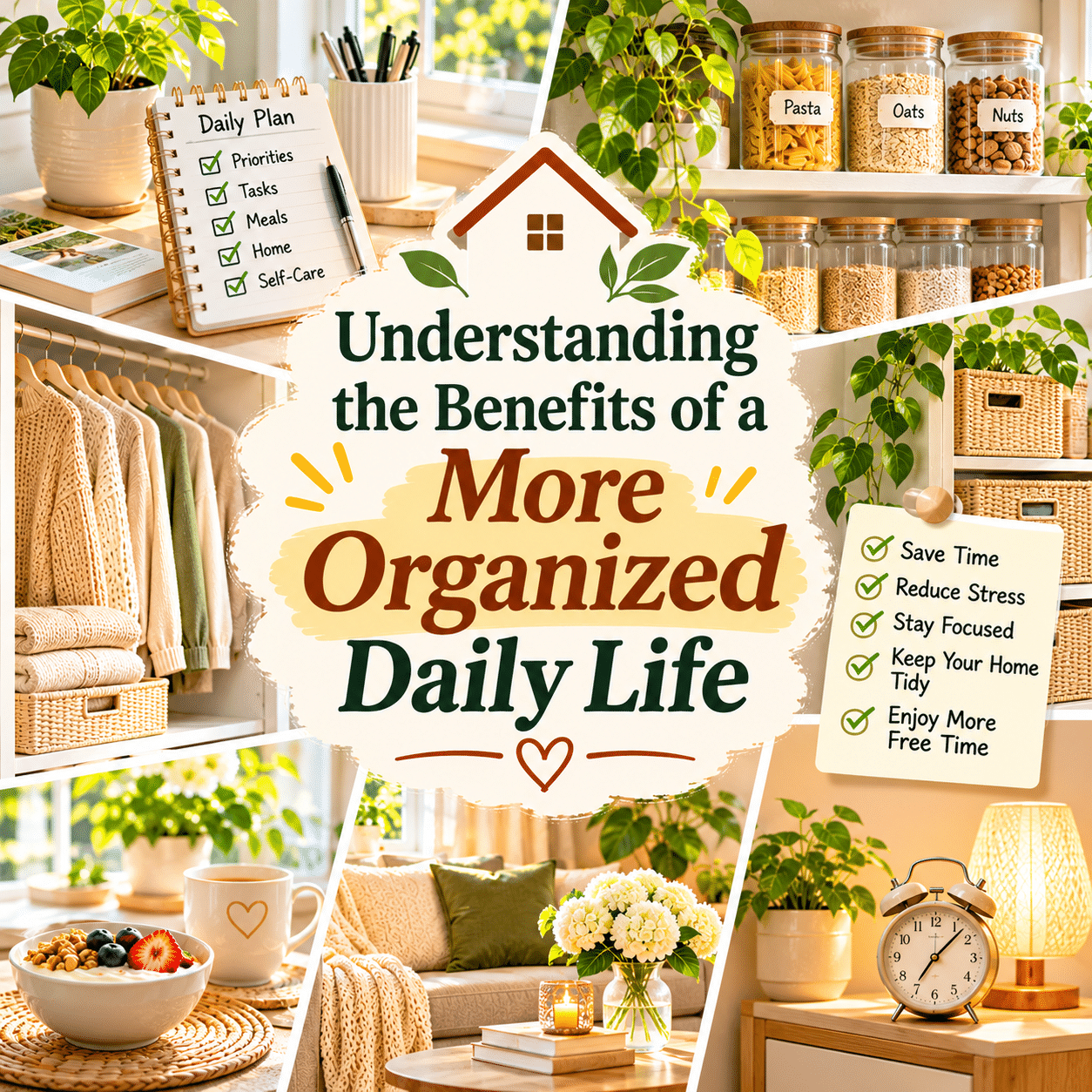
Everyday life involves countless activities, decisions, and responsibilities. From preparing breakfast and managing work to maintaining a home, organizing personal belongings, and finding time for relaxation, even an ordinary day can involve many moving parts.
When these activities are poorly coordinated, small inconveniences can gradually accumulate. Misplaced keys may delay leaving home, forgotten appointments can interrupt plans, and crowded living spaces may make simple household tasks more demanding than necessary.
A more organized daily life can help reduce these difficulties.
Organization is not about creating a perfect schedule, maintaining an immaculate home, or completing every possible task. Instead, it involves developing practical systems that make everyday responsibilities easier to understand, manage, and complete.
Simple habits such as keeping frequently used belongings in designated places, reviewing important commitments, preparing meals thoughtfully, and maintaining manageable household routines can make daily activities more predictable.
An organized lifestyle may also create more opportunities for personal interests, meaningful relationships, and rest by reducing avoidable interruptions.
However, organization should remain flexible. Different people have different responsibilities, energy levels, preferences, and living arrangements. A system that works well for one household may not be suitable for another.
The most valuable approach is one that supports real life rather than demanding constant attention.
Understanding the benefits of a more organized daily life can help individuals develop simple, sustainable habits that improve everyday convenience, comfort, and personal satisfaction.
1. Organization Makes Everyday Activities More Predictable
Many daily activities occur repeatedly.
Preparing meals, getting dressed, completing household chores, and managing appointments are familiar responsibilities.
When these tasks follow practical patterns, they become easier to anticipate.
For example, keeping work essentials in one location can simplify morning preparation.
A regular place for household supplies can make cleaning more convenient.
Predictability does not mean every day must follow an identical schedule.
It means recurring activities have reliable arrangements that reduce unnecessary complications.
2. Organized Routines Can Reduce Unnecessary Decision-Making
Daily life involves numerous small decisions.
People decide what to wear, what to prepare for meals, which tasks to complete first, and where to store belongings.
While these choices are normal, repeatedly reconsidering familiar activities can consume time and attention.
Simple routines can reduce some of this effort.
Preparing clothing in advance or maintaining a short list of regular meal options may simplify everyday preparation.
The goal is not to eliminate choices.
It is to make repetitive responsibilities easier while preserving flexibility for more meaningful decisions.
3. Keeping Essentials Accessible Saves Time
Frequently used belongings are most convenient when they have predictable storage locations.
Keys, wallets, glasses, charging cables, stationery, and household tools can become sources of frustration when misplaced.
A designated tray, drawer, hook, or shelf may solve recurring problems.
The storage location should reflect how and where the item is used.
For example, keeping reusable shopping bags near the entrance may make them easier to remember.
Small improvements in accessibility can reduce repeated searching throughout the week.
4. A More Organized Morning Can Make Preparation Easier
Mornings often involve several responsibilities within a limited period.
Getting dressed, preparing breakfast, gathering belongings, and leaving for work or school can become rushed when essential items are difficult to find.
Simple preparation habits can help.
Organizing clothing, checking appointments, and preparing necessary supplies the previous evening may reduce morning inconvenience.
However, organization should not require waking earlier than necessary.
Adequate rest and realistic preparation times remain important.
The purpose is to make mornings manageable rather than excessively structured.
5. Clear Priorities Help Manage Busy Days
A busy day may contain more possible activities than available time.
Without clear priorities, people may spend effort on less important tasks while overlooking urgent responsibilities.
A short daily review can help identify what requires attention.
Appointments, work commitments, household needs, and personal obligations may take priority over optional activities.
Not every task needs to be completed immediately.
Organized planning helps distinguish between essential responsibilities and activities that can reasonably wait.
6. Simple Planning Can Reduce Scheduling Confusion
Appointments, meetings, errands, and deadlines can be difficult to remember when information is scattered.
A calendar or planner provides a central place to record important commitments.
Digital calendars, paper notebooks, and basic task lists can all be useful.
The best system is one that is easy to access and maintain.
Reviewing upcoming responsibilities periodically can help prevent scheduling conflicts.
Avoid creating complicated planning systems that require more effort than the activities they support.
7. Organized Living Spaces Make Household Tasks Easier
A home is easier to use when belongings are arranged according to everyday activities.
Kitchen tools should be accessible during cooking.
Cleaning supplies should be stored appropriately.
Frequently worn clothing should be easy to retrieve.
When items are scattered or storage areas are overcrowded, ordinary tasks may require additional preparation.
Thoughtful organization reduces these obstacles.
The objective is not to make every room look identical but to ensure each space supports its intended purpose.
8. Clear Surfaces Improve Everyday Functionality
Countertops, desks, and tables are most useful when they provide enough room for their intended activities.
A kitchen counter covered with unrelated objects may leave little space for preparing food.
A crowded desk can make writing or computer work inconvenient.
Keeping some surface space available allows activities to begin more easily.
Meaningful decorations and frequently used belongings can remain visible.
The important consideration is whether objects support or interfere with the space’s practical use.
9. Organized Storage Reduces Repeated Searching
Storage systems are effective when their contents are understandable and accessible.
A cabinet filled with unrelated belongings may technically provide storage but still be inconvenient.
Grouping similar items together can make them easier to locate.
Labels may help in shared households or areas containing numerous small objects.
However, excessive categorization can make storage complicated.
Simple, logical arrangements are often easier to maintain.
10. Household Organization Can Simplify Cleaning
Cleaning becomes more demanding when numerous objects must be moved before surfaces can be reached.
Crowded shelves, floors, and countertops may increase the effort required for routine maintenance.
Keeping belongings in designated locations can simplify dusting, sweeping, and wiping surfaces.
This does not eliminate the need for appropriate cleaning.
Instead, it removes some avoidable obstacles.
A practical organization system should make cleaning easier without requiring constant tidying.
11. Organized Kitchens Support More Convenient Cooking
Kitchens contain cookware, utensils, ingredients, appliances, and food-storage containers.
When these items are arranged without considering how they are used, meal preparation can become inefficient.
Keep frequently used utensils near suitable preparation areas.
Store ingredients according to their requirements.
Maintain enough counter space for food handling.
Review duplicate or damaged equipment when necessary.
An organized kitchen supports convenient cooking while helping maintain appropriate hygiene and food safety.
12. Pantry Organization Makes Food Supplies Easier to Manage
Pantries can become crowded with duplicate ingredients, opened packages, and products that are difficult to see.
Grouping similar foods together helps residents understand what is available.
Frequently used ingredients should be accessible.
Food should be stored according to package instructions and appropriate safety guidance.
Reviewing supplies before shopping may help avoid unnecessary purchases.
A practical pantry system supports meal preparation and more informed food management.
13. Meal Planning Can Reduce Everyday Preparation Effort
Deciding what to cook can become inconvenient when ingredients or schedules are uncertain.
Flexible meal planning provides a useful starting point.
Some households benefit from identifying several possible meals for the coming days.
Others prefer maintaining a selection of familiar ingredients that can be combined in different ways.
Meal plans should reflect nutritional needs, budgets, preferences, and available time.
They should also allow changes when circumstances require them.
14. Organized Refrigerators Help Improve Food Visibility
Refrigerators often contain leftovers, ingredients, beverages, and prepared foods.
Without clear organization, products may become difficult to locate.
Use appropriate containers and arrange food according to safe storage requirements.
Keep perishable items at suitable temperatures.
Avoid overcrowding areas where airflow is necessary.
Regularly review stored foods and follow appropriate food-safety guidance.
Better visibility can make meal preparation and household food management more convenient.
15. Clothing Organization Simplifies Getting Dressed
Crowded wardrobes can make clothing difficult to see and retrieve.
Grouping garments by type or frequency of use may help.
Keep regularly worn clothing accessible.
Store seasonal items appropriately when they are not needed.
Review garments that no longer fit or serve a purpose.
A practical wardrobe system helps residents understand available options without requiring an elaborate closet arrangement.
16. Laundry Routines Prevent Clothing From Accumulating
Laundry can become difficult to manage when dirty clothes, clean garments, and household textiles are mixed together.
Designated baskets and storage areas can help separate these categories.
Choose washing schedules according to household size, clothing use, and equipment availability.
Follow garment care instructions.
Putting clean laundry away regularly may prevent it from occupying chairs, beds, or other living spaces.
The goal is a manageable process rather than unnecessary washing.
17. Organized Bathrooms Make Personal Care More Convenient
Bathrooms often contain toiletries, grooming tools, cosmetics, and cleaning products.
Crowded counters and drawers can complicate ordinary routines.
Keep frequently used items accessible.
Store occasional-use products appropriately.
Review expired or unwanted supplies and follow relevant disposal guidance.
Medicines and hazardous products should be stored safely according to their instructions.
A practical bathroom arrangement supports personal care without excessive clutter.
18. Entryway Organization Simplifies Arrivals and Departures
Entryways are transition spaces between the home and the outside world.
Shoes, bags, keys, coats, and deliveries often accumulate near the door.
A small number of designated storage locations can make the area easier to use.
Hooks, trays, and suitable shoe storage may help.
Keep walking paths and exits clear.
An organized entryway can reduce repeated searching while supporting household safety.
19. Organized Workspaces Support More Efficient Tasks
Home offices and study areas often contain documents, electronic devices, cables, and stationery.
When these items are scattered, beginning work may require unnecessary preparation.
Keep essential equipment within reach.
Store unrelated belongings elsewhere.
Organize documents so important information can be retrieved.
Arrange lighting, seating, and equipment for comfortable use.
A functional workspace supports concentration by reducing practical interruptions.
20. Digital Organization Makes Information Easier to Find
Everyday organization extends beyond physical belongings.
Digital files, photographs, emails, and documents can become difficult to manage when stored without clear systems.
Simple folder structures and descriptive filenames may help.
Important files should be backed up appropriately.
Sensitive information requires suitable security measures.
Avoid creating so many categories that retrieving documents becomes complicated.
Digital organization should make technology more convenient rather than create additional maintenance work.
21. Managing Notifications Can Reduce Unnecessary Interruptions
Phones and computers provide access to useful communications and information.
However, frequent nonessential notifications can interrupt activities.
Reviewing notification settings may help distinguish important messages from less urgent alerts.
Work, family, and safety responsibilities should remain accessible.
Some people benefit from checking nonurgent messages at convenient intervals.
The purpose is to make digital communication more manageable without imposing unnecessary restrictions.
22. Organized Paperwork Helps Protect Important Information
Bills, receipts, warranties, manuals, and official documents may require different storage arrangements.
When paperwork accumulates without a system, important information can become difficult to retrieve.
Create simple categories according to purpose.
Separate documents requiring action from records intended for long-term retention.
Protect sensitive information.
Dispose of unnecessary documents securely and retain originals when legally or practically required.
A manageable filing system can prevent repeated searching.
23. Financial Organization Supports More Informed Decisions
Household finances often involve recurring expenses, bills, subscriptions, and planned purchases.
A simple system for reviewing these responsibilities can improve awareness.
Record important due dates and maintain access to relevant documents.
Budgeting methods should reflect individual circumstances.
Financial organization does not require constant monitoring.
Periodic reviews may be sufficient to support practical household decisions.
24. Shopping Lists Can Prevent Forgotten Essentials
Shopping becomes easier when necessary items are recorded before leaving home.
A simple list can include groceries, cleaning supplies, toiletries, and other household needs.
Reviewing existing supplies before shopping may prevent unnecessary duplicates.
Digital lists can be convenient for shared households.
Paper lists work equally well when preferred.
The best approach is one that makes purchasing decisions easier without requiring elaborate inventory systems.
25. Organized Supplies Can Reduce Unnecessary Purchases
People sometimes purchase replacements because they cannot locate belongings they already own.
This may occur with batteries, stationery, cleaning products, kitchen accessories, or craft materials.
Keeping similar supplies together makes existing inventory easier to understand.
Before purchasing replacements, check designated storage areas.
Avoid storing excessive quantities simply because products are discounted.
Organization can support more intentional purchasing and better use of available resources.
26. Better Organization Can Support Household Budget Awareness
Organized belongings and purchasing habits may help households identify unnecessary duplication.
Clear pantry storage can reveal ingredients already available.
Organized closets can make existing clothing easier to see.
Accessible household supplies may reduce accidental repeat purchases.
However, organization does not automatically produce financial savings.
Its value depends on how information influences purchasing and household decisions.
27. Shared Household Systems Improve Coordination
In households with multiple residents, responsibilities and belongings may overlap.
A simple shared system can help everyone understand where essential items belong.
Common cleaning supplies, kitchen utensils, and household documents can have agreed storage locations.
Responsibilities should reflect household members’ abilities and schedules.
Communication is necessary when arrangements need to change.
Organization works best when it supports cooperation rather than creating unnecessary rules.
28. Family Calendars Help Coordinate Responsibilities
Families may need to manage school activities, work commitments, appointments, and shared events.
A common calendar can make important information easier to access.
Digital or physical formats can both be useful.
Choose a location or platform that relevant household members can use.
Avoid adding unnecessary details that make the calendar difficult to understand.
A shared planning system supports coordination while respecting individual privacy and preferences.
29. Children’s Organization Habits Can Develop Gradually
Children may benefit from simple systems that make belongings easier to identify.
Accessible shelves, picture labels, and designated toy containers can support age-appropriate routines.
Adults should provide suitable guidance and supervision.
Storage furniture should be stable and appropriately secured.
Expectations should reflect children’s developmental abilities.
The purpose is to encourage practical habits without demanding adult standards of tidiness.
30. Pet-Care Organization Supports Consistent Responsibilities
Pets may require food, grooming supplies, toys, medication, and other care items.
Designated storage makes these belongings easier to locate.
Food should be stored according to manufacturer instructions.
Medicines and hazardous products should remain securely out of reach.
Care routines should reflect the animal’s species, age, health, and individual needs.
A practical pet-care area can simplify responsibilities while maintaining household safety.
31. Organized Hobbies Make Creative Activities Easier to Enjoy
Hobbies often involve tools, materials, and ongoing projects.
Drawing supplies, sewing equipment, gardening accessories, and craft materials can become difficult to manage.
Grouping supplies by activity helps make them accessible.
Dedicated project containers may be useful.
Store sharp tools and hazardous materials safely.
A practical hobby area reduces preparation time and allows creative activities to remain enjoyable.
32. Seasonal Organization Helps Homes Adapt to Changing Needs
Household requirements vary with weather, activities, and seasonal conditions.
Clothing, bedding, decorations, and outdoor equipment may need different storage arrangements throughout the year.
Separate seasonal items from frequently used essentials when practical.
Use suitable containers and storage conditions.
Review belongings before returning them to active use.
Seasonal organization can make limited storage space more functional.
33. Organized Home Maintenance Supports Reliability
Household equipment and fixtures require different forms of care.
Appliances, ventilation systems, plumbing, and other components may need periodic attention.
A simple maintenance calendar can help residents remember important tasks.
Follow manufacturer instructions and use qualified professionals for specialized work.
Keep warranties and relevant manuals accessible.
Organization can support maintenance planning without replacing appropriate technical expertise.
34. Clear Walkways Improve Practical Household Safety
Cluttered floors, stairs, and hallways can create obstacles.
Shoes, boxes, loose cables, and miscellaneous belongings may increase tripping risks.
Keeping frequently used pathways clear supports safer movement.
Avoid blocking doors, emergency exits, or access to essential equipment.
Households with children, older adults, or people with mobility limitations may require additional consideration.
Safety is an important part of functional organization.
35. Organization Can Make Small Homes More Functional
Limited space increases the importance of practical storage.
In smaller homes, crowded furniture and belongings may interfere with everyday activities.
Prioritize clear movement areas and accessible essentials.
Vertical storage and multifunctional furniture may help when suitable.
However, storage solutions should be stable, safe, and appropriate for the available space.
A small home does not need to be minimalist.
It needs arrangements that support the activities taking place there.
36. Organized Living Can Create More Opportunities for Personal Time
Repeated searching, unnecessary preparation, and poorly coordinated tasks can consume time.
Reducing these inconveniences may leave more room for hobbies, relationships, or relaxation.
For example, an organized kitchen may make cooking easier to begin.
A prepared work bag may reduce morning delays.
These benefits are cumulative possibilities rather than guaranteed time savings.
The objective is to make everyday responsibilities less demanding so personal time remains available.
37. Simple Systems Are Often Easier to Maintain
Complicated organization systems can create additional work.
Too many storage categories, elaborate planners, and excessive tracking may become difficult to sustain.
Simple systems often provide greater practical value.
Choose a few clear storage locations and manageable routines.
Use labels or reminders only where they help.
A system should require less effort than the inconvenience it is intended to solve.
38. Organization Should Reflect Personal Preferences
Different people feel comfortable with different levels of structure.
Some enjoy detailed schedules and carefully arranged spaces.
Others prefer flexible routines and visually rich environments.
Neither approach is automatically better.
The most useful organization system reflects personal needs, household responsibilities, and preferred activities.
Meaningful belongings and spontaneous experiences should still have a place in everyday life.
39. Organized Living Requires Periodic Adjustment
Life circumstances change.
Work schedules, household arrangements, interests, and responsibilities may evolve.
An organization system that once worked well may become inconvenient.
Periodic reviews can identify areas needing adjustment.
Storage locations may need to change.
Routines may need to become shorter or more flexible.
Organization should evolve with daily life rather than remain fixed indefinitely.
40. The Best Organized Lifestyle Is Practical, Not Perfect
An organized daily life does not require completing every task or maintaining spotless surroundings.
Ordinary activities naturally create temporary messes and unexpected demands.
A practical system makes it reasonably easy to return to a functional condition.
It allows responsibilities to be managed without excessive effort.
It also preserves opportunities for rest, creativity, relationships, and enjoyment.
The ultimate purpose of organization is to support everyday living rather than control it.
Understanding the Main Benefits of an Organized Daily Life
Organization can support several areas of everyday living through practical improvements.
| Area of Daily Life | Potential Benefit | Practical Example |
|---|---|---|
| Morning Preparation | Reduces avoidable searching | Keep keys, clothing, and bags organized |
| Daily Planning | Clarifies important responsibilities | Review appointments and priorities |
| Household Cleaning | Makes surfaces easier to access | Return belongings to designated storage |
| Kitchen Activities | Simplifies food preparation | Keep frequently used utensils accessible |
| Grocery Shopping | Improves awareness of supplies | Review pantry contents before shopping |
| Clothing Care | Makes laundry and dressing more manageable | Separate clean and dirty clothing |
| Work and Study | Reduces practical interruptions | Maintain an organized workspace |
| Digital Activities | Makes information easier to retrieve | Use clear folders and file names |
| Household Finances | Improves awareness of obligations | Record bill due dates |
| Family Coordination | Clarifies shared responsibilities | Use a common household calendar |
| Home Maintenance | Helps track recurring tasks | Maintain appliance service records |
| Personal Interests | Makes hobbies easier to begin | Organize creative supplies |
| Small-Space Living | Improves use of available space | Keep pathways clear and storage accessible |
| Personal Time | May reduce unnecessary preparation | Simplify recurring household routines |
The value of organization depends on whether these improvements address genuine everyday needs.
How to Create a More Organized Daily Life Step by Step
Improving organization does not require transforming every part of life simultaneously.
A gradual approach is often more manageable.
Step 1: Identify Recurring Inconveniences
Observe ordinary daily activities.
Notice where time or effort is repeatedly lost.
Examples include misplaced belongings, crowded counters, forgotten appointments, or disorganized supplies.
Step 2: Choose One Area to Improve
Begin with a specific problem.
An entryway, kitchen drawer, desk, or planning routine may provide a practical starting point.
Step 3: Define the Area’s Purpose
Consider what activities should take place there.
A desk should support work, while a kitchen counter should provide food preparation space.
Step 4: Review Existing Belongings
Identify what is useful, meaningful, or necessary.
Avoid purchasing additional storage before understanding what needs to be kept.
Step 5: Create Logical Storage Locations
Keep frequently used items accessible.
Group related belongings together.
Step 6: Establish One Simple Habit
Connect organization to an existing routine.
For example, return keys to a tray when arriving home.
Step 7: Use Planning Tools Only When Helpful
Choose a calendar, notebook, or digital list according to personal preferences.
Avoid unnecessary complexity.
Step 8: Allow Flexibility
Unexpected events and changing responsibilities are normal.
Do not create systems that require perfect conditions.
Step 9: Review the Results
Notice whether the changes make activities easier.
A useful system should reduce inconvenience.
Step 10: Adjust and Expand Gradually
Modify arrangements that do not work.
Introduce additional improvements only when they serve a practical purpose.
Room-by-Room Organization for Easier Everyday Living
Different household areas benefit from different priorities.
| Room or Area | Common Organization Challenge | Practical Improvement |
|---|---|---|
| Entryway | Misplaced keys, shoes, and bags | Designated trays, hooks, and shoe storage |
| Living Room | Scattered accessories and crowded surfaces | Accessible storage for frequently used items |
| Kitchen | Disorganized utensils and limited preparation space | Group tools by use and maintain clear counters |
| Dining Area | Accumulated paperwork and unrelated objects | Separate storage for non-dining belongings |
| Bedroom | Clothing and bedside clutter | Practical wardrobe and bedside organization |
| Bathroom | Crowded toiletries and grooming supplies | Appropriate drawers, cabinets, and containers |
| Home Office | Scattered documents and equipment | Simple filing and workspace systems |
| Laundry Area | Mixed clothing and supplies | Dedicated baskets and storage |
| Pantry | Hidden ingredients and duplicate purchases | Grouped food storage and periodic reviews |
| Storage Closet | Seasonal items mixed with essentials | Labeled containers and accessible arrangements |
| Hobby Area | Scattered materials and unfinished projects | Category-based storage and project containers |
| Outdoor Area | Gardening tools and seasonal equipment | Suitable weather-protected storage |
The goal is to make each area easier to use, not to impose identical organization standards throughout the home.
A Flexible Daily Organization Routine
The following example demonstrates how small habits can support everyday organization.
| Part of the Day | Simple Organization Habit | Purpose |
|---|---|---|
| After Waking | Return personal belongings to appropriate places | Maintain a functional bedroom |
| Morning Preparation | Gather essentials from designated locations | Reduce searching |
| Breakfast | Keep preparation areas clear and clean appropriately | Support kitchen convenience |
| Beginning Work | Review important priorities and prepare equipment | Simplify task preparation |
| Midday | Check immediate responsibilities if necessary | Adjust plans |
| Afternoon | Complete relevant errands or household tasks | Manage recurring obligations |
| After Dinner | Store food safely and clean essential kitchen areas | Maintain hygiene and functionality |
| Evening | Return frequently used belongings to storage | Reduce accumulated clutter |
| Before Bed | Prepare important items for tomorrow | Simplify the following morning |
This routine is an illustration rather than a universal schedule.
Activities should be adapted to individual responsibilities, preferences, and available time.
Organization Ideas for Different Lifestyles
An effective organization system should reflect real circumstances.
| Lifestyle | Common Challenge | Useful Organization Approach |
|---|---|---|
| Office Worker | Limited time before commuting | Prepare essentials in advance |
| Remote Worker | Overlapping work and home activities | Establish practical workspace boundaries |
| Student | Managing assignments and materials | Use a simple calendar and organized study supplies |
| Parent | Coordinating multiple schedules | Shared planning and age-appropriate storage |
| Caregiver | Managing ongoing responsibilities | Keep important supplies and information accessible |
| Retiree | Balancing personal interests and household needs | Flexible routines and convenient storage |
| Shift Worker | Irregular activity schedules | Organize around actual work and rest periods |
| Person Living Alone | Managing household tasks independently | Simple, sustainable household systems |
| Frequent Traveler | Changing locations and schedules | Portable packing and document organization |
| Hobby Enthusiast | Managing specialized supplies | Dedicated project storage |
| Small-Space Resident | Limited storage and movement areas | Prioritize accessibility and multifunctional space |
| Pet Owner | Managing food, supplies, and care schedules | Designated pet-care storage and routines |
No single system works equally well for everyone.
How to Stay Organized Without Following a Strict Schedule
Organization and rigid scheduling are not the same thing.
A person can maintain practical systems while allowing daily activities to vary.
Focus on Essential Responsibilities
Identify tasks that genuinely require attention.
Avoid planning every possible activity.
Use General Time Periods
Morning, afternoon, and evening categories may be sufficient for many responsibilities.
Keep Important Belongings Accessible
Physical organization can reduce inconvenience without requiring a detailed timetable.
Allow Unplanned Activities
Leave space for hobbies, social opportunities, and unexpected needs.
Adjust Priorities When Necessary
A changed schedule does not mean the day has failed.
Simplify Planning Tools
Use a short list or basic calendar rather than an elaborate system.
Review Only When Useful
Organization should support decisions, not require constant monitoring.
A flexible approach can provide structure without sacrificing personal freedom.
Budget-Friendly Ways to Become More Organized
Many useful organization improvements cost little or nothing.
No-Cost Improvements
- Return frequently used belongings to consistent locations.
- Rearrange existing shelves and drawers.
- Group similar household supplies.
- Review pantry contents before shopping.
- Prepare essential belongings in advance.
- Use an existing calendar or notebook.
- Remove unnecessary duplicates.
- Clear frequently used surfaces.
- Organize digital files into simple categories.
- Establish manageable household routines.
Low-Cost Improvements
- Add small drawer dividers.
- Use suitable storage baskets.
- Introduce wall hooks where appropriate.
- Purchase basic document folders.
- Use labels for shared storage.
- Add simple desk organizers.
- Choose appropriate containers for small accessories.
Larger Improvements
- Upgrade unsuitable storage furniture.
- Improve closet organization.
- Add secure shelving.
- Create a dedicated workspace.
- Introduce multifunctional furniture.
- Improve kitchen storage arrangements.
Before purchasing new products, consider whether an existing item or a change in habits could solve the problem.
Common Organization Mistakes to Avoid
Trying to Organize Everything at Once
Large projects can become exhausting.
Begin with manageable areas.
Buying Storage Before Reviewing Belongings
Additional containers may simply hold unnecessary items.
Evaluate existing possessions first.
Creating Too Many Categories
Complicated systems can become difficult to maintain.
Choose clear, practical arrangements.
Planning Every Minute
Excessive scheduling may leave little flexibility.
Focus on essential priorities.
Using Too Many Productivity Tools
Multiple planners and tracking applications may create additional work.
Choose only what is useful.
Expecting Permanent Tidiness
Everyday activities naturally create temporary messes.
Focus on easy maintenance rather than perfection.
Ignoring Household Preferences
Shared systems should respect different needs and personal belongings.
Moving Clutter Instead of Resolving It
Transferring unwanted items between rooms does not solve the underlying problem.
Choose appropriate next actions.
Failing to Review Changing Needs
Storage and routines may need adjustment as circumstances evolve.
Treating Organization as a Measure of Personal Worth
An organized home or schedule does not determine someone’s value or success.
Organization is a practical tool, not a personal judgment.
A Practical Daily Organization Checklist
Use this checklist to identify opportunities for improvement.
Personal Preparation
- Frequently used belongings have designated locations.
- Important appointments are easy to identify.
- Clothing and personal essentials are accessible.
- Morning preparation allows reasonable flexibility.
- Daily priorities reflect actual responsibilities.
Household Organization
- Walking paths remain clear.
- Kitchen counters provide usable preparation space.
- Cleaning supplies are stored appropriately.
- Laundry has a manageable system.
- Shared belongings have understandable storage locations.
Food and Shopping
- Pantry supplies are reasonably easy to identify.
- Perishable foods are stored safely.
- Grocery purchases reflect actual household needs.
- Meal preparation arrangements are practical.
- Food-storage containers are suitable and usable.
Work and Digital Life
- Work or study materials are accessible.
- Important documents can be retrieved.
- Digital files have a manageable structure.
- Essential information is appropriately protected.
- Notifications reflect personal priorities.
Long-Term Sustainability
- Organization systems are simple enough to maintain.
- Household members’ preferences are respected.
- Routines can adapt to unexpected changes.
- Unnecessary purchases and duplicate belongings are reviewed.
- Personal time and rest remain part of everyday life.
The checklist is a flexible guide rather than a requirement to maintain perfect organization.
Frequently Asked Questions About an Organized Daily Life
1. What does it mean to live a more organized life?
An organized daily life involves using practical systems to manage belongings, responsibilities, schedules, and recurring activities with less unnecessary effort.
2. What are the main benefits of being organized?
Potential benefits include easier access to belongings, clearer priorities, more manageable household tasks, fewer avoidable interruptions, and improved awareness of responsibilities.
3. Does being organized mean following a strict schedule?
No. Organization can involve simple storage systems, flexible routines, and basic planning without scheduling every activity.
4. How can I become more organized if I am very busy?
Start with one recurring inconvenience. For example, designate a location for keys or prepare essential belongings the previous evening.
5. Can an organized home make daily life easier?
Yes. Practical storage and clear activity areas can simplify cooking, cleaning, dressing, and other household responsibilities.
6. Does organization improve productivity?
Organization may reduce unnecessary searching, preparation, and interruptions. However, productivity depends on many factors, and results vary.
7. Can being organized help save money?
It may help prevent duplicate purchases and improve awareness of existing supplies. Actual savings depend on household decisions and purchasing habits.
8. How do I organize my day without feeling overwhelmed?
Identify a few important responsibilities, use simple planning tools, and allow flexibility for unexpected events.
9. What is the best way to organize a small home?
Prioritize clear movement areas, accessible essentials, suitable storage, and furniture arrangements that support everyday activities.
10. How can I maintain organization with children?
Use age-appropriate storage, simple shared routines, and realistic expectations. Adults should provide guidance and respect children’s developmental needs.
11. Do I need expensive organizers?
No. Rearranging existing storage, grouping belongings, and creating simple habits can provide meaningful improvements without major purchases.
12. How often should I reorganize my home?
There is no required schedule. Review systems when storage becomes inconvenient or household needs change.
13. What should I do when my daily plan changes?
Adjust priorities and continue with necessary activities. Flexibility is an important part of practical organization.
14. Is decluttering the same as organizing?
Not exactly. Decluttering involves reviewing and reducing unnecessary belongings, while organizing focuses on arranging and managing what remains. The two processes often complement each other.
15. What is the most important principle of an organized lifestyle?
The best organization system is one that makes everyday responsibilities easier while preserving personal comfort, flexibility, and enjoyment.
Final Thoughts
A more organized daily life can make ordinary responsibilities easier to manage by reducing unnecessary searching, simplifying recurring tasks, and improving access to important belongings and information.
Its benefits extend beyond tidy rooms and carefully arranged schedules.
Practical organization can support smoother mornings, more convenient meal preparation, manageable household maintenance, clearer planning, and easier coordination of shared responsibilities.
These improvements do not require elaborate productivity systems, expensive storage products, or constant attention.
Often, the most meaningful changes are small.
Keeping keys in a designated place, maintaining a usable kitchen counter, reviewing upcoming appointments, and organizing essential supplies can reduce recurring inconveniences.
However, organization should never become an inflexible standard.
Different lifestyles require different approaches, and unexpected events will always be part of everyday life.
A successful system allows room for personal preferences, changing responsibilities, meaningful relationships, and rest.
Ultimately, the purpose of organization is not to control every detail of the day.
It is to create a practical foundation that makes ordinary living more comfortable, adaptable, and enjoyable.
By developing simple habits and thoughtful arrangements that fit real needs, individuals can experience the lasting value of a more organized daily life—one manageable improvement at a time.